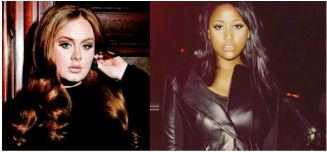
 Adele, Jazmine Sullivan, and privilege in soul music stardom. Adele, Jazmine Sullivan, and privilege in soul music stardom.
Tags: art/music, culture, inequality, race/ethnicity, black culture, meritocracy, pop culture, privilege, soul, 00 to 05 mins
Year: 2015 Length: 5:44 Access: YouTube Summary: This video examines the history and legacy of soul music, and the advantage "blue-eyed soul" singers may have over Black soul singers in today’s music scene. The video begins noting the traditional dimensions of soul, including ad-libbing, belting, and unpredictability, which "historically symbolized resistance against racist oppression" and the idea of soul music as a form of racial protest and activism. But the history of black music shows that it has been underrated, uncredited, stolen, and absorbed into other genres. At the same time, white artists like Adele and Sam Smith dominate the genre. An argument of meritocracy falsely suggests this is a result of fewer Black artists, that they are not trying hard enough, or they are not writing and making enough soul music (a similar argument was made about the lack of black performances on the 2016 Academy Award nominees). Several examples (e.g. Leon Bridges) are offered to show that this argument of a meritocracy in soul music is a myth, and that black artists tend to get rejected from music competitions and awards at early stages, despite their ability. It explores the role of privilege in the process. It notes that Adele and Sam Smith do indeed deserve success, but emphasizes that all people, regardless of their race, should have an equal shot at it. This video is the third episode from a series by Amraj Lally, called "POPTOPICS". This series is a critical and theoretical analysis on trending pop culture topics, aiming to stimulate intellectual discussion. For a multimedia analysis of the institutionalization of white privilege and how to fight against it, check out our blog post. Submitted By: Amraj Lally
62 Comments
 The latent vs. manifest functions of education. The latent vs. manifest functions of education.
Tags: art/music, children/youth, education, inequality, knowledge, adolescence, hidden curriculum, latent functions, manifest functions, pedagogy, performance poetry, spoken word, structural functionalism, youth studies, 00 to 05 mins
Year: 2014 Length: 3:46 Access: YouTube Summary: In this spoken word performance entitled “Somewhere in America,” three high school students share their experiences as youth in America’s educational system. The video can be used to illustrate features of the structural-functionalist perspective, and specifically how sociologists working within this framework—e.g., Emile Durkheim, Robert Merton, and Talcott Parsons—distinguished between the manifest and latent functions (and dysfunctions) of various social phenomena. Here, the teenagers discuss the functions and implications of the manifest versus latent curriculum, and how these two curriculums play out in the lives of children. The poets argue that the manifest curriculum, which is the content teachers are required to teach, is not what students remember most; rather, the girls suggest that the latent or hidden curriculum is the knowledge that becomes more deeply embedded in students’ memories and daily interactions. The hidden curriculum refers to the values, beliefs, and attitudes that are transmitted to students through the education system; a latent function of these hidden lessons is that these help to socialize young individuals to form a more “cohesive” society. In doing so, the views and values of the dominant culture are coached into the minds of young school-goers. Arguing that the biggest lessons in school “won’t come from a syllabus,” the words of these poets reinforce decades of social scientific research stating that schools go farther than simply advancing the academic success of children; schools also instill social and cultural ideas within students (for one prominent example, see Ann Arnett Ferguson’s research on the role of public schools in constructing Black masculinity). The group closes by saying, “The greatest lessons [in school] are the ones you don’t remember learning.” While we’ve chosen to highlight the structural-functionalist contours of the poem, viewers are encouraged to think about how the teens’ poem can be read through other foundational sociological lenses, namely, social conflict theory and symbolic interactionism. For example, the students’ attention to power inequalities that emerge from the education system resemble a social conflict approach. This supplementary video explaining the three foundational sociological perspectives and how they relate to education can help viewers with this analysis. Submitted By: Jordan Grier and Valerie Chepp 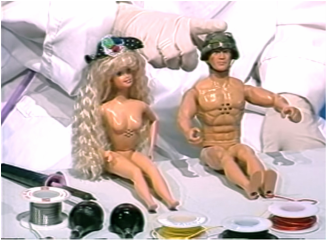 An early example of culture jamming using new media strategies. An early example of culture jamming using new media strategies.
Tags: art/music, consumption/consumerism, gender, marketing/brands, media, science/technology, social mvmts/social change/resistance, activism, culture jamming, new media art, gender socialization, 21 to 60 mins
Year: 1993 Length: 28:29 Access: YouTube Summary: How does social change happen? For more than a century, this question has inspired much sociological research. Within the study of social change, sociologists have often focused their attention on social movement activism and various forms of contentious politics. More recently, some sociologists have sought to move beyond these parameters to ask what other things might “count” as activism. For example, Notre Dame’s Center for the Study of Social Movements Mobilizing Ideas blog recently featured a two-part series entitled “New Ways to Define Activism” (Part I and Part II). Often, sociologists cite new digital media environments and technologies as timely reasons for why we must revisit “old” definitions of activism. While this question might be relevant in the contemporary context, this video illustrates how activists began to strategically draw upon digital media technologies more than twenty years ago. In 1993, a group of artist-activists launched a multi-faceted media campaign call the Barbie Liberation Organization (BLO) in reaction to Mattel’s new talking Barbie, which contained an electronic voice box that played stereotypical phrases such as “Math class is tough” (listen to talking Barbie). The campaign mixed traditional and electronic media, hardware hacking, and “boots on the ground” activism, resulting in this video, which sought to raise awareness of gender stereotypes in a normally difficult-to-reach population of Americans. This video would become one of the earliest and most influential demonstrations of electronic media culture jamming. Instructors can use this video to elicit discussion of successful culture jamming in several ways. First, the video is presented as a legitimate news report, which begs larger questions about the trust we place in news media or the authority of corporations in general. Second, the purported newscast is peppered with clips from actual investigative news reports, such as A Current Affair, to further enhance the legitimacy of BLO’s report. However, many of the clips are taken out of context and edited to subvert the original message, such as when one toy expert’s words are used to accuse Mattel of "terrorism against children” when she was instead accusing BLO of such tactics. Here, we see the artist-activists employing the very medium they challenge to contradict the intended message, which is the crux of culture jamming practice. Finally, the video serves as a DIY tutorial—no different than the myriad of how-to videos populating the web today—which instructs viewers how to perform the voice box swap at home, thus giving consumers and activists alike agency to subvert the toy’s intended message. For a culture jamming video assignment, also posted on The Sociological Cinema, click here. Submitted By: Josh Gumiela and Valerie Chepp 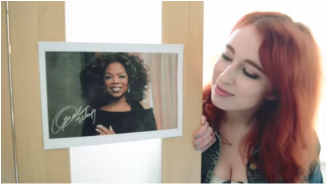 In this video, racism is fine, as long as you love Oprah In this video, racism is fine, as long as you love Oprah
Tags: art/music, race/ethnicity, color-blind racism, microaggression, stereotypes, white fragility, 00 to 05 mins
Year: 2015 Length: 3:02 Access: YouTube Summary: This light hearted music video from singer Eden might be a nice way to begin an unavoidably heavy conversation about race and racism. The music video pokes fun at the way in which many whites are unknowingly racist. As the singer notes in the video's YouTube description, the song is "an R&B anthem for the obliviously racist." With tongue in cheek, the song's lyrics draw attention to the kind of racist stereotypes and microaggressions many non-white people routinely face, as well as the excuses whites routinely offer in order to defend their racism. Taking the persona of the oblivious racist, Eden sings, "You know how it is when the party's begun, sometimes you wear blackface just for the fun. And a racial slur, it can just slip out..." Then a few lines later she assures us in the refrain, "It's alright. It's all fine. Everybody calm down. I didn't cross any line. Don't be so quick to label me, I love Oprah, and I hate slavery." Submitted By: Anonymous 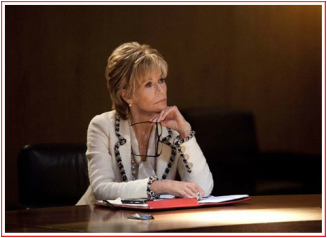 Power and money can shape what gets disseminated as "news". Power and money can shape what gets disseminated as "news". Tags: art/music, media, politics/election/voting, big business, censorship, ideology, political inequality, power, 06 to 10 mins Year: 2012 Length: 6:58 Access: YouTube Summary: This scene from the HBO series The Newsroom effectively captures how people in high-ranking institutional positions may exercise their incredibly great power. The clip illustrates how raw power serving vested interests can affect what is communicated to the masses as news. In this case, the owner of the media corporation (Leona played by Jane Fonda) is demanding that news division president, Charlie (Sam Waterston), straighten out the lead anchor, Will (played by Jeff Daniels), because of Will's efforts to report how big business has taken over the Tea Party. She specifically threatens to fire Will if he continues to follow the story. Art often imitates life, and notice that Leona references the Koch brothers in her tirade, and indeed they were targets of Will in this episode and another during 2012 (see this Wall Street Journal piece for criticism of the show's "Koch-kicking," and this AFL-CIO story for an opposite take). Also see how life imitates art as evident in this Salon.com article detailing the Koch brothers' efforts to censor public television programming. (Plans to produce a full-length documentary, Citizen Corp, which in part critically examined their political activities, were scrapped after the brothers threatened to withhold major funding from PBS. Nevertheless, the filmmakers were still able to raise enough money to complete the film, and then distribute it as Citizen Koch through theaters.) (Note: A version of this post originally appeared on SoUnequal.) Submitted By: Rene Gonzalez 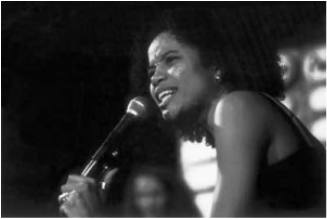 Poet Stayceyann Chin performs "Feminist or a Womanist" Poet Stayceyann Chin performs "Feminist or a Womanist" Tags: art/music, community, discourse/language, intersectionality, lgbtq, multiculturalism, race/ethnicity, categories, labels, spoken word poetry, 00 to 05 mins Year: 2007 Length: 3:32 Access: YouTube Summary: I had to watch Stayceyann Chin’s video several times before her message began resonating within me. She critiques the notion that we must side with one group over another, arguing that we need to have a sense of understanding about each other that transcends differences. She does a phenomenal job in challenging the common claim that "if you are not for us, you are against us.” She well articulates that we miss the beauty of our being by living in fear of ridicule, and when "people get scared enough, they pick a team" that may satisfy others, but not themselves. Our need to box-in and stereotype what we cannot understand or agree with only limits our ability to see each other as common creatures. Child star Raven Symone makes a similar point in her adamant denial about the personal relevance of labels. Oprah warns her during the interview that she will get push-back for doing this, and she indeed did receive significant adverse publicity in claiming the she is neither lesbian nor black/African-American. Such reactions to a pronouncement from a person who seems before her time, from a generation that believes they are ahead of their time, indicate how uncomfortable people are when group labels are deemed irrelevant for establishing personal identity. It also suggests associated questions, including: What is wrong about failing to identify as either black/African-American or lesbian? Does it betray those who are otherwise like her, but who do see themselves as belonging to such categories? Moreover, are we truly free to be individuals, even in a society held to promote the value of individual autonomy? (Note: A version of this post originally appeared on SoUnequal.) Submitted By: Ayanna Allen  The Healing Blues Project communicates the struggles of homelessness. The Healing Blues Project communicates the struggles of homelessness. Tags: art/music, community, economic sociology, inequality, media, affordable housing, empowerment, homelessness, 00 to 05 mins Year: 2014 Length: 5:05 Access: YouTube Summary: This music video, "I Die a Little," offers a first person narrative written and created by a sociology professor, media theorist, journalist, and a woman experiencing homelessness. Amidst the lyrics describing the struggles of homelessness, facts and statistics about homelessness appear throughout the video. It notes, for example, that "teens age 12 to 17 are more likely to become homeless than adults" and that "1 in 6 Americans live on incomes that put them at risk for hunger." Accordingly, it conveys both the structural causes of homelessness (e.g. lack of affordable housing and low-wage jobs) and its human face. The video is part of The Healing Blues Project, a community based project spearheaded by Greensboro College that partners local musicians, artists, and philanthropists with individuals from the homeless community in order to share their experience, strength, and hope. The larger collection (Healing Blues Vol 1) tells the stories of 13 individuals, all different yet somehow the same; they are joined together through the messages of humanity, hope, and love expressed in their songs. Proceeds from the Healing Blues Project go to the Interactive Resource Center, a community based outreach and resource provider, in Greensboro, North Carolina. The musicians from Haymarket Riot donated their performances to the project, and the homeless storytellers, as co-authors of the songs, receive a share of the royalties. It is also an example of the authors' use of cybertheory, which they describe as using the current technologies of postmodernity "to produce a multimedia theoretical 'text.'” Submitted By: HayMarket Riot  An arts-based exploration of global capitalism's contradictions. An arts-based exploration of global capitalism's contradictions. Tags: art/music, capitalism, class, globalization, historical sociology, inequality, marx/marxism, race/ethnicity, social mvmts/social change/resistance, alienation, counter-hegemony, crisis, ideology, patriarchy, social justice, subtitles/CC, 06 to 10 mins Year: 2013 Length: 6:20 Access: YouTube Summary: Blind Eye Forward (BEF) is an attempt to convey in words, music, and imagery the contradictory character of contemporary global capitalism, with attention to its historical formation, the social and ecological maladies that issue from its logic of dispossession and commodification, and the movements that, in response to those maladies, are struggling for a better world. A minor blues accompanied by still images and popular-cultural video clips, BEF begins at an ideological juncture and moves successively through issues of militarism, alienation and reification, and the challenge of creating the new within an obdurate present. In its middle part, which is carried musically by an extensive guitar solo, the piece moves through a world-historical narrative of colonial dispossession, slavery and the construction of "race", patriarchy, and capital and class. The final verse, though pessimistic, invites us to keep a red rose fastened to our chest, and to temper our pessimism with a Gramscian optimism of the will. Blind Eye Forward is useful as a discussion piece in learning contexts that problematize social inequality and the irrationalities of capitalism, within a broadly Marxist perspective. Pedagogically, it employs an arts-based approach, which can complement more expository communicative styles. Students generally find it both inspiring and troubling. It is important to reserve time after showing it in class for comments, questions, and dialogue. (Note: The piece does not have subtitles but the complete lyrics can be accessed by clicking "show more" under the description on the YouTube site.) Submitted By: William K. Carroll 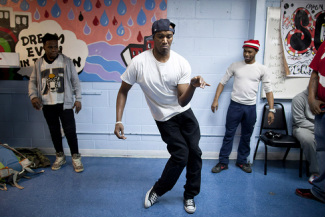 Photo credit: Brian Harkin, www.brianharkin.com Photo credit: Brian Harkin, www.brianharkin.com Tags: art/music, culture, race/ethnicity, cultural appropriation, memes, popular culture, subtitles/CC, 00 to 05 mins Year: 2013 Length: 4:13 Access: msnbc Summary: In early 2013, YouTube videos of people dancing to a track called the “Harlem Shake” went viral (see an example here). At the height of this meme’s popularity, thousands of videos from users across the globe were being uploaded every day. In this clip, Melissa Harris-Perry responds to the viral video phenomenon, arguing that labeling the videos as the “Harlem Shake” constitutes cultural appropriation. She provides a quick overview of the history of the Harlem Shake, which emerged in urban New York in the 1980s, arguing, “when communities create original art, they have a right to some creative control over its interpretation.” This clip also includes responses from Harlem residents who are surprised and in some cases offended by the viral videos. Harlem residents also offer their reactions to the videos in this longer clip. Harris-Perry concludes the segment with a performance by a Harlem dance troupe demonstrating the complex dance moves that make up the original Harlem Shake. The viral “Harlem Shake” videos can be used as an example of how effortlessly, and unintentionally, cultural appropriation can occur in popular and internet culture. Although the appropriation here may seem innocuous at first glance, Harris-Perry’s segment and the responses from Harlem residents suggest that cultural appropriation, even if casual and misinformed, has consequences. Instructors can have students consider: What are other examples of cultural appropriation in mainstream/popular culture? Why is cultural appropriation so prevalent? What are the consequences of cultural appropriation? How can we identify and/or respond to cultural appropriation? Submitted By: Anya M. Galli 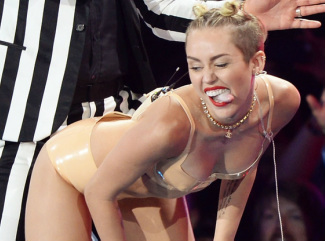 Miley Cyrus twerks during an MTV performance. Miley Cyrus twerks during an MTV performance. Tags: art/music, culture, media, race/ethnicity, bell hooks, cultural appropriation, othering, popular culture, racism, representation, 00 to 05 mins Year: 2013 Length: 3:33 Access: YouTube Summary: The music video for Miley Cyrus’ hit 2013 song “We Can’t Stop” is full of hip-hop tropes, from beats and backtracks to the twerk dance move for which Cyrus became infamous. Instructors can use this clip as a touchstone for classroom discussions about cultural appropriation and representations of otherness in popular media. Instructors can direct students to watch the video while keeping an eye out for how Black women are represented. Black women appear in the video, but only as a backdrop for Cyrus’ twerking along to the line “all my homegirls here with the big butts.” Cyrus' performance at the MTV Video Music Awards also featured Cyrus performing on stage with all Black female dancers around her. Although the use of hip-hop and Black culture by white musicians isn’t anything new, Cyrus’ performance functions as the appropriative practice bell hooks calls “eating the other.” In hooks’ terms, ethnicity serves as a spice or seasoning to give more flavor to an otherwise bland and mainstream/white performance. In the context of mainstream consumer culture, otherness is commodified and used as a way of adding value to a product. For example, when Cyrus was asked about the song, she said, "I want urban, I just want something that just feels Black.” Instructors can have students consider: What does it mean for something to “feel Black” in the context of popular culture? Is Cyrus’ appropriation of twerking problematic? Why or why not? Submitted By: Anya M. Galli |
Tags
All
.
Got any videos?
Are you finding useful videos for your classes? Do you have good videos you use in your own classes? Please consider submitting your videos here and helping us build our database!
 |
 RSS Feed