 Jessica Alba Jessica Alba
Tags: biology, knowledge, race/ethnicity, social construction, subtitles/CC, 00 to 05 mins
Year: 2011 Length: 3:33 Access: YouTube Summary: In this short video from 2011, Jessica Alba appears on the talk show Lopez Tonight and endures George Lopez's comedic preamble before hearing the results of her ancestry DNA test. According to Lopez and the language used by the testing company, Alba is 87 percent European and 13 percent Native American. But to the astute observer, the show is actually claiming to reveal more than the details of Alba's genetic composition. It is also claiming to reveal information about her "true" race, and therein lies the problem. • As I have noted elsewhere on The Sociological Cinema, racial categories do not consistently correspond to biological observations (see here and here). To put it another way, race is not based on biology; it merely claims to be. This point often confuses people, for they reason that in some sense race must be biological. After all, skin color is largely a genetically determined characteristic, and so the thinking goes, race must be too. But while genetic instructions largely determine the amount of melanin a body produces, it is through socialization that people become predisposed to notice skin color as one of the most salient features a body can have. The thickness of one's eyebrows, the shape of their ears, or the color of their of eyes—these are also genetically determined characteristcs, but people mostly discount these features as the bearers of useful information. To socially construct race, then, is to teach people which physical characteristics are the salient markers of a racial group, and racism becomes possible once people begin assigning meanings to those salient racial markers. • At about the 45-second mark, Lopez explains that the DNA analysis distinguishes between four ancestral groups, and perhaps sensing that it would resonate with his audience, he incorrectly equates each ancestral group with a race. The Europeans, according to Lopez, are white, Sub-Saharan Africans are black, East Asians are Asian, and the Indigenous American group refers to Native Americans. The results confuse Alba, who racially identifies as Latina and knows her last name comes from Spain. But it is instructive to dwell a bit on the basis of her confusion, for it highlights the incompatibility between ancestral DNA and race. In the United States people with Spanish heritage tend to be racially categorized as Hispanic or Latino, which is a category believed to be distinct from white. However, DNA analyses show that the original inhabitants of the Iberian Peninsula (i.e. Spain, Portugal, the small UK overseas territory of Gibraltar, and the Principality of Andorra) are a part of the same general migratory group of homo sapiens that settled the rest of Europe. As with all racial categories, contemporary distinctions between whites and Hispanics in the United States are socially created and not based on some deeper biological truth. Submitted By: Lester Andrist 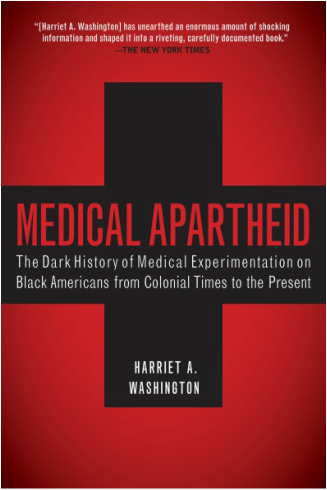 Harriet Washington discusses the history of the Tuskegee Syphilis Study in her book, Medical Apartheid. Harriet Washington discusses the history of the Tuskegee Syphilis Study in her book, Medical Apartheid.
Tags: biology, bodies, health/medicine, inequality, prejudice/discrimination, race/ethnicity, science/technology, violence, informed consent, institutionalized discrimination, eugenics, medical ethics, scientific racism, slavery, tuskegee syphilis experiment, 21 to 60 mins
Year: 2013 Length: 28:27 Access: YouTube Summary: This short interview on Democracy Now with author and scholar Harriet A. Washington provides useful entrée into a discussion about racial discrimination within the medical establishment. Drawing on work from her book Medical Apartheid: the Dark History of Medical Experimentation on Black Americans from Colonial times to the Present, Washington shines a light on many of the systematic abuses African Americans and other People of Color have endured at the hands of scientists and medical professionals. • As Washington explains, the story of medical apartheid begins with scientific racism, the origins of which are often traced to 1779, when German scientist Johan Friedrich Blumenbach is credited with attempting to establish a race-based system of classification among humans (find more on Blumenbach's efforts here, and click on this link for information about how the scientific effort to find a biological basis for race continues into the present). Much has been written about how the legitimacy and authority of science allowed white slaveholders to justify the torture and confinement of their Black slaves; however, as Washington notes, there is a lesser known history of white medical professionals using Blacks as subjects in medical experiments. • In the above clip, Washington discusses The Tuskegee Study of Untreated Syphilis in the Negro Male, as one of the most notorious examples of Blacks being used as subjects in medical experiments. The study was conducted between 1932 and 1972 in Macon County, Alabama, and it tracked 399 poor and mostly illiterate Black sharecroppers who were diagnosed with syphilis. The study subjects were deceived by medical professionals into believing that they were being treated for “bad blood," when in fact the documented intentions of those leading the study was to allow the disease to run its course, which often meant a very painful death. By 1947 penicilin was recognized as a cure for syphilis, but study clinicians denied the antibiotic to subjects and instead gave them a placebo. • As Washington notes, the racism that made something like the Tuskegee Syphilis Study possible was systemic and could be located at all levels of the medical establishment. Seated at the top of the medical hierarchy was the U.S. Surgeon General, Thomas Parran, Jr. Even when presented with the penicillian cure, Parran opted to continue experimentation with the Black men of Macon County. By his assessment, their lives were less valuable than knowledge about syphilis. • For images related to the Tuskegee Syphilis Study, check out our Pinterest board titled "Race: Health/Health Care." Submitted By: Lester Andrist 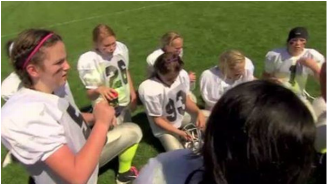 Girls gather for practice in their all-girls tackle football league. Girls gather for practice in their all-girls tackle football league.
Tags: biology, children/youth, gender, social construction, sports, american football, girls, 06 to 10 mins
Year: 2015 Length: 6:45 Access: ESPN Summary: This ESPN video explores the first all-girls tackle football league. They are changing what it means to "play like a girl" and the video shows girls excited to play a physically aggressive sport, which is more traditionally associated with boys and masculinity. But the video does more than challenge gender norms by providing an opportunity to think about the distinctions between sex and gender on shaping the body and body perceptions. Dr. Robert Cantu, Clinical Professor of Neurosurgery and Co-Director of the Center for the Study of Traumatic Encephalopathy, is an outspoken critic of boys (and girls) playing football before high school. He argues that children under the age of 12 that play tackle football have a "significantly greater late life chance to have cognitive problems, depression, and lack of impulse control, compared to the same group of people that started playing football at a later age." He goes on to argue that "young ladies [i.e. girls under 12] have much weaker necks than guys ... so that it takes less of a hit to produce a greater amount of shaking of the brain inside the skull" (the girls wear lighter helmets than those worn by the boys, and the football they use is smaller). But are these differences based in sex or gender? We might consider the degree to which weaker necks are a result of sex-based differences in average neck size and strength, or to what degree girls are socialized to do different types of activities in which they do not build comparable neck muscles? A further implication is that football is more dangerous for girls than boys, which begs the question of how we, as a society react to this claim about different neck sizes. Should we treat girls unequally and disallow them to play a sport that may carry greater risk for them, or should we promote gender equality in giving them equal opportunity to play a sport for which they have great passion? Towards the end of the clip, one of the girls interviewed receives a big hit during a game and "black[s] out." The mother discusses her concern for her daughter, but the young girl says "this is girls tackle football, and I need to toughen up." Submitted By: Paul Dean  Vox debunks the race myth in a new video Vox debunks the race myth in a new video
Tags: biology, immigration/citizenship, inequality, knowledge, prejudice/discrimination, race/ethnicity, science/technology, social construction, caucasian, mexican, racial formations, scientific racism, subtitles/CC, 00 to 05 mins
Year: 2015 Length: 3:08 Access: YouTube; Vox Summary: It often surprises students to learn that sociologists and other social scientists regard race as little more than a creation of the collective imagination, or as the above video from Vox argues, race isn't real. Contrary to popular belief, racial categories do not consistently correspond to biological observations; nor are the racial categories used today a particularly ancient means of categorizing human societies. They are, in fact, both flimsy and recent. • The social theorist David Theo Goldberg argues that starting in the sixteenth century racial thinking and racist articulation became increasingly common in European societites. As Vox explains in the above video, one crucial moment of racist articulation appears to have occurred nearly two centuries later when in 1779 German scientist Johan Friedrich Blumenbach is credited with attempting to establish a scientific, race-based system of classification. Although his work has long been discredited, it is worth noting that he arrived at five hierarchically organized racial categories: "Caucasian, the white race; Mongolian, the yellow race; Malayan, the brown race, Ethiopian, the black race, and American, the red race." Not surprisingly, he ranked Caucasians highest on his racial hierarchy. • For those who remain unimpressed by the fact that racial thinking is a relatively recent phenomenon in human history, consider the fact that racial categories and their hierarchical arrangement have been shown to change with political priorities. In academic parlance, racial formations have continued to be created, transformed, and destroyed. For instance, the video explains that the U.S. Census categorized people with Mexican ancestry as white until 1930, at which point the Census began categorizing these whites as an emergent racial category known simply as "Mexican." The change in Census categories reflected a developing racial discourse in the American Southwest but it also played a role in temporarily limiting immigration from Mexico, and fewer immigrants from Mexico meant higher wages for whites. • Properly contextualized, the reason for the emergence of racial thinking in Western Europe seems fairly clear. Although it is assumed race is based on natural, biological differences, the truth is that racial thinking has had very little to do with accurately describing natural variation in human populations and far more to do with whites maintaining power, privilege, and resources at the expense of nonwhites. Although race isn't real in a biological sense, as the video explains, it has become hugely important in a social sense. The racial categories to which we're assigned can determine real life experiences. Submitted By: Lester Andrist 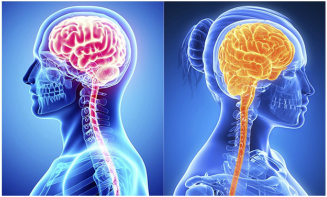 When it comes to infidelity, does gender and biology matter? When it comes to infidelity, does gender and biology matter?
Tags: abortion/reproduction, biology, bodies, culture, emotion/desire, gender, sex/sexuality, biological determinism, infidelity, sociobiology, 06 to 10 mins
Year: 2008 Length: 6:21 Access: today.com Summary: This segment from the Today Show explores whether humans are “wired”—or, biologically predisposed—to cheat on their mates. The clip can be used to teach biological determinist perspectives of gender, and specifically those rooted in sociobiology. In short, biological determinism argues that the social world is predetermined by biological factors. Sociobiology stems from this tradition of thought, but focuses more specifically on genetic reproduction and evolutionary processes. Often relying on observations of animal behaviors to make claims about human behaviors, sociobiology argues that a fundamental human drive is to ensure genetic reproduction, and many human activities can be reduced to this drive. Using the case of infidelity, this video clip is helpful for shedding light on sociobiological explanations of gender difference. The segment opens with a sociobiological perspective, using Barash and Lipton's (2001) book The Myth of Monogamy as a point of reference. Here, the authors argue that monogamy is not natural; from an evolutionary standpoint, humans have a stake in having multiple sexual partners. Sexual promiscuity is prevalent throughout the animal kingdom, they argue, and humans are not exempt from the same biological urges that drive other animals to be promiscuous. After the opening segment (minute mark 2:17), host Meredith Vieira speaks with Jeffrey Kluger, TIME magazine’s science editor, and psychologist David Buss; the conversation quickly turns to a discussion of gender difference. Kluger represents a fairly classical sociobiological argument when he states: “Nature wants one thing, and what it wants are babies. It also wants lots of them. And it wants variety, because the greater the genetic variety, the greater the likelihood that the babies are going to survive into adulthood and do well.” Kruger goes on to assert that men will look for women who are young and fertile, and women look for men who are good providers, such as those who are rich and powerful. Buss introduces more socio-cultural elements into the discussion, such as strong social norms against cheating, and argues that both men and women feel attraction to others outside of their relationships. He also points to psychological pathologies, namely narcissism, as an explanation for infidelity, and draws attention to infidelity in a cross-cultural context where polygamy is common (that is, cultures where men are legally entitled to have multiple wives). Although Buss mostly draws upon socio-cultural explanations, he also suggests that biological impulses to be non-monogamous are a part of our “human nature.” Asked why men cheat more, Kruger draws upon biological and sociological arguments, arguing that: (1) biologically, men have the ability to breed more, and could conceivably breed offspring everyday; from this he argues that men are “tripwired" for infidelity; and (2) in a patriarchal society such as ours, men are more likely to be in positions of power and feeling entitled to be unfaithful. After screening the video, viewers can be encouraged to identify messages in the clip that cohere with, and deviate from, the sociobiological perspective. Viewers can also be encouraged to explore feminist and/or sociological critiques of biological determinism, such as those outlined in Carmen Schifellite’s (1987) essay, "Beyond Tarzan and Jane Genes: Towards a Critique of Biological Determinism.” Submitted By: Valerie Chepp  In Both, Rebeca learns the truth about a childhood surgery. In Both, Rebeca learns the truth about a childhood surgery. Tags: biology, bodies, gender, lgbtq, science/technology, sex/sexuality, bisexuality, intersex, sexual expression, sexual identity, sexual orientation, 61+ mins Year: 2005 Length: 86:20 Access: Vimeo Summary: [Trigger warning for those who might be traumatized by depictions of the sex reassignment surgery many intersex people experience as children] People often want to know how many people are born intersex? Unless one is specific about the many physical features that often get named "intersex," the question is difficult to answer. For instance, based on research from Blackless et. al. (and reported here), in the medicalizing language of late onset adrenal hyperplasia, 1 in 66 people are intersex; however, only 1 in about 150,000 are intersex if you restrict the label to include only those who have what medical doctors refer to as complete gonadal dysgenesis. The frequency of people receiving surgery to "normalize" the appearance of their genitals is about 1 or 2 people in 1,000. Frequencies are perhaps an interesting place to start a discussion on intersex, but in themselves, numbers do little to give voice to those who are born intersex within a culture and society that upholds a strictly dimorphic understanding of sex. The above film, Both, is a compelling drama, based on the experiences of many intersex adults, and the film tells a story of an issue that has been widely silenced through shame and secrecy. In the film, Rebeca Duarte, played by Jackie Parker, works as a stunt double for indie action films in San Francisco. From rolling out of cars to setting herself on fire, she puts her life at risk on a daily basis. Work, lovers and friends take up most of her time, but deep inside, she feels something is missing. Rebeca feels strangely disconnected from her own body and can’t figure out why. One day she mysteriously receives a photo album from someone in Peru, where she had spent her childhood. The album contains pictures of her parents and her brother who had supposedly died, but no images of herself. Feeling unsettled, Rebeca sets out to discover the mystery and unravel the web of lies that both the doctors and her parents have spun her whole life. Through her fight to uncover the truth, Rebeca discovers her own identity and a renewed passion for life. Both works by posing compelling questions about gender and sexuality through the experiences of its intersex protagonist. For those considering showing the film in class, note that nudity, masturbation, and sexual intercourse are depicted at 17:50 mins, 21:30 mins, and 53:20 mins. Submitted By: Leslie Jaye 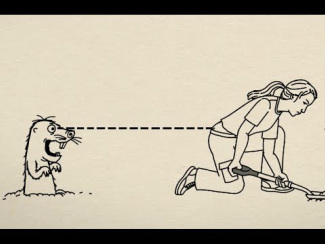 Women are often held responsible when others objectify them. Women are often held responsible when others objectify them. Tags: biology, bodies, gender, marketing/brands, sex/sexuality, biological determinism, dress negotiation, gender blame, sexism, sexual objectification, 00 to 05 mins Year: 2013 Length: 0:30 Access: YouTube Summary: This commercial from Duluth Trading Company is an accurate example of the ways in which women are subtlety encouraged to participate in forms of security from men’s seemingly-natural demeanor. Indeed, through the purchase and use of a Duluth Trading Company "Longtail" t-shirt, women are promised the security from the "gawking gopher," a character that stares as the fictional female character bends to perform a task. The blame, in this case, is placed on women for not covering up, perhaps framed as a feminine task to help men sooth their "inherent" tendencies to be hypersexual. From this born-this-way perspective, men avoid responsibility for their objectification of women. This means that, among other things, men are also excluded as solutions to such an issue. Instead of discouraging men to “gawk” through a deconstruction of the relationship between masculinity and objectification, this commercial delicately—yet notably—places the male response to a women’s body as a natural reaction that can only be solved through the further policing of women’s bodies. Submitted By: Peter Rydzewski 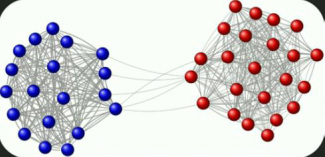 The complex social network of a bat colony The complex social network of a bat colony Tags: biology, science/technology, animals, society, 11 to 20 mins Year: 2013 Length: 13:45 Access: TED Talks Summary: In this TED talk, Nicolas Perony shows how animal groups have many interacting parts that follow simple individual rules to make up complex societies. He works through examples of dogs humorously moving synchronously, the social network dynamics of bat colonies, and how subordinate and dominant meerkats interact to successfully navigate risky physical space (see also this NYT video on "elephant empathy"). His talk first illustrates an important feature of society: the whole is greater than the sum of its parts. By working together, individual animals maintain stable social structures that meet the needs of the community and can help a species’ adaptability to their environment. The animals are highly dependent on one another for survival, and often adopt distinct behaviors that enable them to contribute to the whole. The second point is cautionary and comes at the very end of the video. When Perony concludes his presentation, the host joins him on stage and asks him: “Is it okay to do these associations [between animals and humans]? Are there stereotypes … that can be valid across all species?” Perony deftly responds that “there are also counter-examples to these stereotypes. For example, in the seahorses and koalas, these are males that take care of the young—always. The lesson is that it’s often difficult and sometimes dangerous to draw parallels between humans and animals.” Viewers might be urged to consider why such parallels are dangerous. For example, these arguments are often evoked to justify inequalities (e.g. that males dominate women within society, or with the pseudo-science of eugenics), although such parallels have also been used to legitimate equality and social solidarity in human societies (see Wilkinson and Pickett’s The Spirit Level, especially chapter 14). Submitted By: Paul Dean 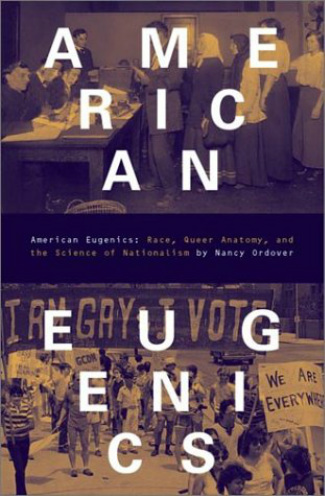 Eugenic thinking is woven into the fabric of American society Eugenic thinking is woven into the fabric of American society Tags: biology, bodies, class, crime/law/deviance, demography/population, disability, discourse/language, gender, health/medicine, immigration/citizenship, intersectionality, lgbtq, nationalism, prejudice/discrimination, race/ethnicity, science/technology, sex/sexuality, institutionalized discrimination, eugenics, subtitles/CC, 11 to 20 mins, 21 to 60 mins Year: 2012; 2013 Length: 15:05; 17:25 Access: YouTube (clip 1; clip 2) Summary: The eugenics movement has a long history in the United States. A popular misconception is that eugenic thinking and the associated practices were uniformly abandoned after the Third Reich's genocidal intentions were laid bare at the end of the Second World War. In point of fact, eugenic ideologies and practices have been recalcitrant features of American social institutions right up until the present day. In her book American Eugenics: Race, Queer Anatomy, and the Science of Nationalism, Nancy Ordover remarks on the resiliency of the ideology, "Eugenics..is a scavenger ideology, exploiting and reinforcing anxieties over race, gender, sexuality, and class and bringing them into the service of nationalism, white supremacy, and heterosexism." In earlier decades eugenicists could openly discuss stemming the "overflow" of immigration, as an effort to "dry up...the streams that feed the torrent of defective and degenerate protoplasm." The language of eugenics would eventually change, but the core ideas have remained; socially deviant groups and socially undesirable conditions are seen by eugenicists as biologically determined. The above clips are news stories, which draw attention to two recent manifestations of eugenics policy. The first clip chronicles the experience of an African American woman who was legally sterilized in the late 1960s in North Carolina after giving birth to her first son. The clip reports that between 1929 and 1974 approximately 7,600 North Carolinians were sterilized for a host of dubious reasons, from "feeble-mindedness" to "promiscuity." But while North Carolina's victims included men, women, and children, Ordover's research points out that the victims were overwhelmingly women and African American (by 1964 African Americans composed 65% of all women sterilized in the state). The first clip, then, is an example of how eugenics became institutionalized with the force of law, but the second news clip examines a case of institutionalized eugenics in California, which existed without the explicit consent of law. In 1909 California became the third state to pass a compulsory sterilization law, allowing prisons and other institutions to sterilize "moral degenerates" and "sexual perverts showing hereditary degeneracy." By 1979, when the law was finally repealed, the state had already sterilized as many as 20,000 people, or about one-third of the total number of such victims throughout the United States. One learns from the news clip that between 2006 and 2010, 148 women were sterilized by doctors who continued to be guided by the precepts of their eugenic ideology. Submitted By: Lester Andrist 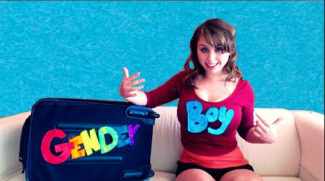 Laci Green breaks down the gender binary Laci Green breaks down the gender binary Tags: biology, gender, lgbtq, sex/sexuality, agender, cisgender, gender expression, gender identity, genderqueer, queer, subtitles/CC, 00 to 05 mins Year: 2012 Length: 4:37 Access: YouTube Summary: Peer sex educator and YouTube sensation Laci Green breaks down the gender binary in this four minute video. Green proposes that the binary is kind of like two different suitcases packed with distinct expectations and beliefs, and which are arbitrarily imposed on people based on their genitalia. What this means is that the gender identity people adopt for themselves is sometimes different than the gender identity parents and medical professionals assign people at birth. As Green explains, Cis or Cisgender refers people whose gender identity aligns with the gender they were assigned at birth, while trans* or transgender typically designates people who identify as a gender, which is different than the one they were assigned at birth. In contrast, people who identify as agender do not subscribe to being either a man or a woman, and genderqueer is more of an umbrella term that similarly denotes people who refuse to identify with being either a man or a woman, but also includes people who simultaneously identify with aspects of both genders. The video works nicely as a short introduction to the gender binary, and the flurry of terms that emerge as a result of the fact that no single gender identity or expression perfectly corresponds to biological features, such as genitalia, chromosomes, or even the capacity to birth children. Laci Green does a good job of revealing that the gender binary is a rather unstable proposition and far more fluid than what is often pretended. Perhaps this inherent instability is why people so often seek to moor gender to biology, which they imagine to be more stable (e.g., "Getting pregnant made me feel like a woman," "Men are naturally more aggressive than women."). Yet instructors can push students to consider the way biology itself also fails to conform to a binary system of categorization. Contrary to popular belief, men have estrogen, women produce testosterone, chromosomes do not reliably determine sex, and the intersex community reminds us that despite the longstanding efforts of surgeons there is often more to genitalia than penises and vaginas. Submitted By: Lester Andrist |
Tags
All
.
Got any videos?
Are you finding useful videos for your classes? Do you have good videos you use in your own classes? Please consider submitting your videos here and helping us build our database!
 |
 RSS Feed