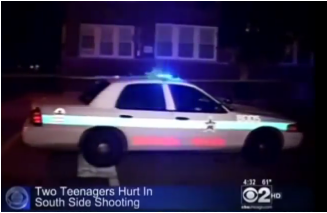
 News clip editing reproduces stereotypes of black boys. News clip editing reproduces stereotypes of black boys.
Tags: crime/law/deviance, inequality, media, prejudice/discrimination, psychology/social psychology, race/ethnicity, confirmation bias, framing, linguistic intergroup bias, journalism, news media, 00 to 05 mins
Year: 2011 Length: 1:42 Access: YouTube Summary: This video is put together by the Maynard Institute, which is "dedicated to helping the news media accurately portray all segments of society, particularly those often overlooked, such as communities of color." The beginning of the video shows a real Chicago CBS news segment that covers the shooting of two teenagers, which was witnessed by several children, including a 4-year old. The commentator describes the "disturbing reaction" by the 4-year old boy, who is shown saying that “I’m not scared of nothing.” When the reporter asks him if he will stay away from guns, the boy responds: “I’m going to have me a gun!” The segment ends with Anchor Steve Bartelstein saying, “that is scary indeed.” The issue with this clip is what was omitted from the story. In the actual interview with the 4-year old boy, the reporter next asks “Why do you want to have [the gun]?” The boy states “I'm going to be the police!” and the reported responds “Okay then you can have one." Subsequent content from the video, and this Maynard Institute analysis, outline some of the problems with the edit, including its portrayal of African American boys in a stereotypical manner. While it is unclear why this particular video was edited in this way (the news station removed the story once the problem was identified), the reality is that such editing decisions frequently occur and continue reproducing stereotypes. Indeed, "studies of media content consistently find that black criminal suspects are portrayed more frequently and more menacingly than white suspects in television news stories of violent crime" (Peffley et al 1996). It could be a result from a news editor's confirmation bias, where an individual looked for content in the video that confirmed his expectations, thereby using that footage and eliminating the (real) footage that would have led to an alternative framing. It might also derive from the economic drive for media to present controversial news that they believe viewers will be more interested in watching (thereby consuming more advertisements). For example, research shows that viewers find crime news stories more memorable when the perpetrator is dark-skinned male. What is the impact of this on race relations? Experimental studies show that such "even a brief visual image of an African American male suspect in a televised crime story was capable of activating racial stereotypes, which in turn heavily biased whites’ evaluations of the suspect along racial lines" (Peffley et al 1996). Such race-related TV news stories also lead to linguistic intergroup bias, where "people use more abstract language to describe stereotype-congruent behaviors, particularly when that person is a member of an out-group" (Gorham 2006). Thanks to Logan Webster for suggesting this video. Submitted By: Paul Dean
20 Comments
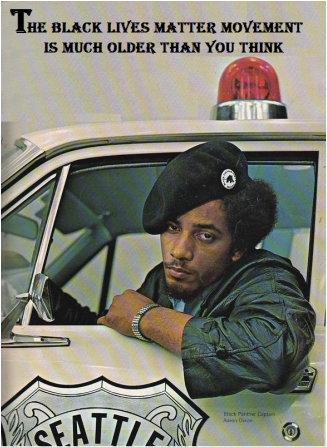 A Black Panther poses in a police car for Seattle Magazine A Black Panther poses in a police car for Seattle Magazine
Tags: crime/law/deviance, inequality, prejudice/discrimination, race/ethnicity, social mvmts/social change/resistance, violence, black lives matter, black panther party, criminal justice system, institutional racism, racism, 06 to 10 mins
Year: 2015 Length: 7:17 Access: New York Times Summary: While it would be a mistake to reduce the Black Lives Matter movement to a mere facsimile of the Black Power movement that grew out of the Civil Rights Era, there are similarities between the movements that are difficult to ignore. Moreover, BLM did not emerge from a historical void or somehow as a response to an unprecedented set of circumstances; rather it is a continuation of the work started by organizations such as the Student Nonviolent Coordinating Committee (SNCC) and the Black Panther Party (BPP). By explicitly calling for an end to patterns of racist police brutality, BLM is also continuing the unfinished work of generations of activists like Ida B. Wells-Barnett, Stokely Carmichael, and Huey P. Newton--Men and Women of Color who have bravely spoke truth to power by calling out the racist actions (and strategic inactions) of U.S. law enforcement officials. • The above news documentary, directed by Stanley Nelson, revisits the history of the Black Panther Party, which was founded by Huey P. Newton and Bobby G. Seale in October 1966. As Newton articulates in the clip, the BPP formed as a direct response to the problem of police brutality in Oakland, California, and the panther was chosen as a symbol of the organization because "The panther is a fierce animal, but he will not attack until he is backed into a corner; then he will strike out." Much like the BLM movement of the current era, soon after its formation the BPP found itself at the vanguard of a larger struggle, which sought to redress a wide array of racial injustices. In only a few short years, local BPP chapters opened all over the country. • Just as the killing of Trayvon Martin, Rekia Boyd, Michael Brown, and countless other young Black men and women has served as a catalyst for the BLM movement, the 1965 Watts Rebellion was cited by Newton and Seale as a catalyst for founding the BPP. For BLM, handheld cameras have proven to be a pivotal tool for igniting a public discussion about racism and racist violence, but people forget that the idea of surveilling the police in order to keep them honest actually grew out of the Watts Rebellion. Following the unrest, the Community Alert Patrol formed and began conducting patrols of police in Black communities. Inspired by this tactic, the BPP organized legally armed groups of Black Panthers to patrol police officers in the performance of their duty. As Party member Elbert "Big Man" Howard explains at the 2:40 mark, Panthers would stand at a distance and observe officers during traffic stops. • The story of the BPP cannot be written without reference to the efforts of the FBI under J. Edgar Hoover's leadership. Hoover successfully portrayed the BPP as a bona fide threat to U.S. national security, which was a gratuitous plank of the FBI's propaganda platform, particularly given the U.S. involvement in Vietnam. Given this history, it is perhaps unsurprising that the BLM movement also finds itself maligned by U.S. law enforcement officials, but as with Hoover's allegations against the BPP, the evidence that BLM members want anything more than justice is sorely lacking. • For more information and resources, check out our Pinterest boards related to the BPP and the BLM movements. Submitted By: Lester Andrist 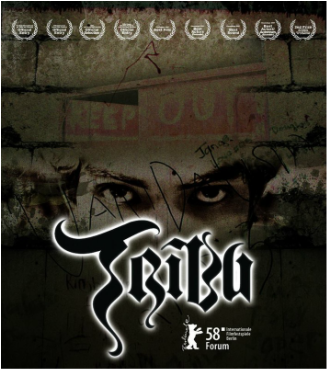 Tribue shows the cycle of urban poverty and violence. Tribue shows the cycle of urban poverty and violence.
Tags: children/youth, class, crime/law/deviance, inequality, rural/urban, violence, gangs, philippines, poverty, subtitles/CC, 61+ mins
Year: 2007 Length: 1:33:29 Access: YouTube Summary: This independent film, shot in the ghetto district of Tondo (Manila, Philippines), is "an ultra-realist depiction of youth corrupted by violence, death and decay, told documentary-style." The plot follows ten year-old Ebet as he witnesses the activities of rival street gangs, and is ultimately a story about the cycle of urban poverty. In the film, "the dangerous unlit streets and labyrinthine alleyways in the ghetto district of Tondo ... becomes a claustrrophobic backdrop to a random killing that triggers a wild and bloody gang war. Ebet, a 10 year old boy, encounters the members of Tondo’s gangsta tribes – juvenile thugs and petty criminals whose pastime of sex and drugs are veiled under their eloquent freestyle hip-hop rap – as each gang participates in a long, bloody and vicious cycle of revenge and reprisal, gangsta style. After a brutal midnight initiation ritual, young gang members discover the lifeless body of a young man on the street, knife still stuck in its back. Ebet watches as the police round up the gang, and charged for the murderous riots that erupt every night in the ghetto. The next day, members of the bereaved gang to whom the victim was a member of, discuss to find out which tribe perpetrated the crime. A vendetta is silently plotted, new alliances formed, to flush out the real murderers ... Hailed as a gritty portrayal of Manila’s notoriously violent streets of Tondo, Jim Libiran’s Tribu is Realist Cinema with a social project. To act as main actors, the filmmaker employed real-life gang members from rival clans, triggering a wave of unification and peace in a large part of Tondo's ghettos." Submitted By: Jim Libiran 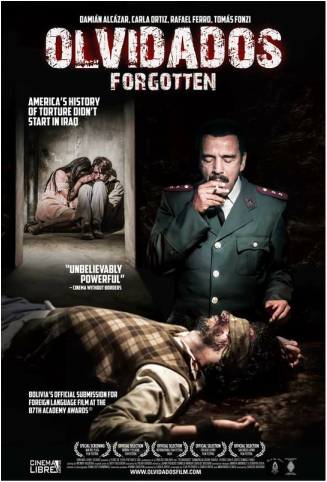 Film chronicles the horrors perpetrated under “Operation Condor.” Film chronicles the horrors perpetrated under “Operation Condor.”
Tags: crime/law/deviance, government/the state, historical sociology, violence, war/military, authority, human rights, imprisonment, state terror, torture, 61+ mins
Year: 2015 Length: 72:00 Access: no online access (trailer here) Summary: The film Olvidados explores the horrors perpetrated under “Operation Condor,” which was responsible for: 50,000 deaths; 30,000 “disappeared”; and 400,000 arrested and imprisoned in Argentina, Bolivia, Brazil, Chile, Paraguay, and Uruguay. In the 1970’s, Operation Condor was a US-backed program to install right wing dictators in Latin America to eliminate the threat of communism. To accomplish this, the CIA provided training and support to the militaries of Argentina, Chile, Bolivia, Paraguay, and Uruguay, which led to the disappearance of tens of thousands of citizens all of whom suffered from some of the worst violations of human rights in modern history. In the film, an aged Bolivian General, José (Damián Alcázar, El Narco), looks for redemption after suffering from a heart attack by confessing truth to his only son about his role in the persecution of countless men and women. Among the people who were “disappeared” are a journalist (Carlotto Cotta), a dancer (Ana Calentano), an activist (Tomás Fonzi), and a pregnant woman (Carla Ortiz) – all of whom were brutalized at the hands of José and other military leaders, which produced a cascade of lies and betrayal across generations. The historical events chronicled in the film would be useful to help teach numerous sociological topics, including concepts related to the state, authority, military, torture, imprisonment, human rights, and social justice. It could also be a useful resource for a travel learning course that focuses on any of these South American countries. Submitted By: Cinema Libre Studio 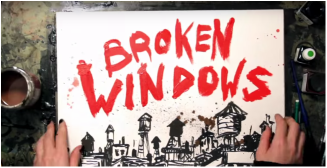 Molly Crabapple explains the dark side of broken windows policing Molly Crabapple explains the dark side of broken windows policing
Tags: class, crime/law/deviance, inequality, prejudice/discrimination, race/ethnicity, violence, broken windows theory, criminal justice system, institutional racism, racism, subtitles/CC, 00 to 05 mins
Year: 2015 Length: 4:14 Access: YouTube Summary: This exquisitely illustrated presentation from artist Molly Crabapple examines the origins of the broken windows theory, the kind of policing it led to, and the theory's connection to the deaths of people like Eric Garner and Akai Gurley. As Crabapple explains, social scientists James Q. Wilson and George L. Kelling introduced the theory in 1982 in an article they wrote for the Atlantic Monthly. "Social psychologists and police officers tend to agree," they explained, "if a window in a building is broken and is left unrepaired, all the rest of the windows will soon be broken...one unrepaired broken window is a signal that no one cares, and so breaking more windows costs nothing." • The theory has proven to be enormously influential in cities and municipalities all over the United States, and in New York City the theory appears to be the justification, if not the inspiration, behind the NYPD's controversial stop-and-frisk program. In line with the philosophy that police officers should devote time and attention to preventing broken windows in an effort to stave off a larger breakdown of social order, the NYPD regularly stops and searches people they encounter on the streets in order to confiscate guns before they can be used in more serious crimes. However, as Crabapple notes, it's important not to lose sight of the fact that broken windows policing doesn't mean police will fix up poor neighborhoods, and arguably, stop-and-frisk policing has not been implemented as a way to restore safety to crime-ridden communities. On the contrary, a far more convincing case can be made that the stop-and-frisk program has simply directed a disproportionate share of police scrutiny toward poor and marginalized people. • As a result, critics argue that the program has weakened citizens' cooperation with police, and it may have even increased the number of violent altercations between police and the citizens of those marginalized communities. On February 19th, 2014, NYPD officers beat 84-year-old Kang Wang for jaywalking. On July 17th of the same year, police choked and killed Eric Garner after initially confronting him based on the suspicion he was selling loose cigarettes. On the day he was killed, Garner voiced his objection to the police harassment, stating, "This stops today." Unfortunately, the NYPD's stop-and-frisk program and other forms of broken windows policing are by now entrenched features of the criminal justice system, and it is not yet clear when such programs might end. Submitted By: Lester Andrist 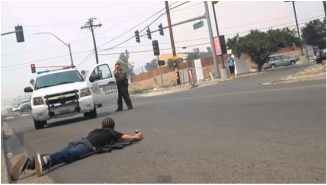 Video footage shows two different types of police encounters Video footage shows two different types of police encounters
Tags: crime/law/deviance, prejudice/discrimination, race/ethnicity, violence, open carry laws, firearms, institutional racism, racism, 00 to 05 mins
Year: 2015 Length: 5:47 Access: YouTube Summary: This clip shows a comparison of two videos, each depicting police responses to two different men openly carrying a rifle; in one video, the gun owner is a young white man, in the other video, the gun owner is a young man of color. In both cases, the men are legally carrying their firearms under open carry laws, which allow people to openly carry (i.e., not conceal) firearms in public places. Whilst the footage of the police officer talking to the white man is fairly short, the clip provides an example of the hostile treatment young men of color are habitually subjected to by law enforcement. As explained in this news coverage of the video, the young man of color is Gabriel Nobles, who identifies as Hispanic and Filipino. Juxtaposed against the relatively benign treatment of the white man, the clip reveals differential treatment in how the white man is initially approached by law enforcement officials compared to Nobles, who instantly receives an aggressive and confrontational response. Note the number of police vehicles and police dog that are brought in to detain Nobles. The clip is useful for considering institutional racism and the impact of the attitudes of law enforcement officials on crime statistics, as well as the response of young men of color and others to aggressive law enforcement tactics. For viewers who are not subjected to habitual racial profiling, police surveillance, and hostile treatment, the video can also begin to convey the fear and threat of violence that accompanies this type of existence. Submitted By: Mark 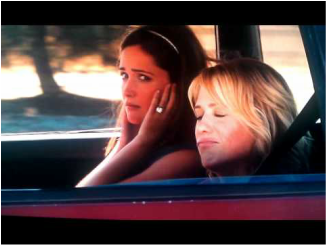 Blackness is associated with criminality in this Bridesmaids scene. Blackness is associated with criminality in this Bridesmaids scene.
Tags: crime/law/deviance, prejudice/discrimination, race/ethnicity, criminalizing blackness, racial profiling, racism, 00 to 05 mins
Year: 2011 Length: 2:18 Access: YouTube Summary: In this scene from the popular romantic comedy Bridesmaids (2011), Annie (Kristen Wiig) attempts to get the attention of State Patrol Officer Nathan Rhodes (Chris O'Dowd). A budding romance has started between the two, but in this scene Rhodes is upset with Annie and ignores her attempts to communicate. In an effort to appeal to his obligations as a patrol officer, Annie proceeds to engage in various reckless driving activities, hoping that her reckless behavior behind the wheel will require Officer Rhodes to pull her over, thus giving her an opportunity to talk to him. Some of the reckless driving behaviors that Annie engages in include texting, talking on the phone, pretending to consume alcohol, speeding, doing donuts, driving topless, driving without looking where she's going, and throwing litter out the window, aimed at the uniformed officer. These various actual driving offenses are seamlessly placed alongside another activity that Annie performs in the hopes of being pulled over: sitting in a reclined position listening to loud rap music. Of course, this last activity is not a legal offense. Culturally, this behavior is predominantly associated with black male urban youth. This scene illustrates the deeply embedded association between blackness and criminality in American culture, an argument that Khalil Gibran Muhammad (2011) explores more thoroughly in his book The Condemnation of Blackness and Michelle Alexander (2010) in her book The New Jim Crow. Despite doing nothing illegal when she drives with her seat back listening to Ice Cube, this racially coded behavior is deemed illegal, suggested to be a legitimate infraction for which one can be pulled over. Such cultural messages reinforce and perpetuate the racial profiling practices described by the vernacular pun of getting pulled over for a “DWB” (Driving While Black). Viewers can be encouraged to think about other examples of how practices associated with blackness are criminalized in American society. Submitted By: Valerie Chepp 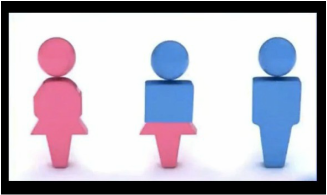 ISU adds gender-neutral labels to its restrooms ISU adds gender-neutral labels to its restrooms Tags: crime/law/deviance, gender, inequality, knowledge, lgbtq, media, prejudice/discrimination, sex/sexuality, social construction, agender, androgyne, bigender, gender fluid, genderqueer, neutrois, non-binary, trans*, transgender, 00 to 05 mins Year: 2014 Length: 0:50 Access: Mediaite Summary: In this clip from Fox & Friends Heather Nauert reports that Illinois State University recently relabeled its "family” restrooms as "gender-neutral." She kicks off the segment by saying,"Someone call the P.C. police!" and warns that viewers are "not going to believe this one.” The giddy laughter of her off-camera colleagues is audible while she delivers her exasperated explanation of the new restroom symbols. The video is useful in any class wrestling with the social construction of gender, the gender binary, and consequences of rigidly enforced gender categories. People who identify as transgender, two spirit, demiguy, demigirl, bigender, non-binary, trigender, third gender, genderqueer, gender fluid, androgyne, neutrois, and agender (and others) have often reported instances of ridicule and danger faced when using public restrooms. For this group, the labeling change means the difference between being able to safely use public restrooms at their university. What is interesting is not the change toward more inclusive signage at Illinois State University, but how Fox & Friends uses their platform as a major news network to actively police the gender binary. Nauert begins by framing the change as an instance of political correctness, a term that suggests the new signs are of trivial importance. The demeanor of both newscaster and her off-camera colleagues is another cue that viewers should not regard the change as an important or positive development at Illinois State University. Although times are changing, news programs still give lip service to the idea that their job is simply to give the public impartial (i.e., fair and balanced) information about important events. What is discussed less is the role the media plays in shaping the public's understanding of those events and reconstituting the state of affairs where excluding people who do not conform to the gender binary is acceptable. For more information about bathrooms as a site of gender politics, check out our Pinterest board on the topic. Submitted By: Lester Andrist 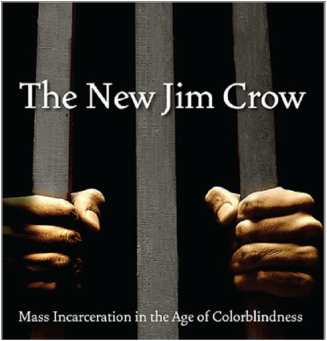 The book's main ideas are summarized in this short video clip. The book's main ideas are summarized in this short video clip. Tags: class, crime/law/deviance, inequality, prejudice/discrimination, race/ethnicity, colorblind racism, mass incarceration, prison industrial complex, war on drugs, 06 to 10 mins Year: 2013 Length: 8:23 Access: YouTube Summary: Legal scholar Michelle Alexander’s (2010) book The New Jim Crow: Mass Incarceration in the Age of Colorblindness has received critical acclaim and has quickly become a core text in many sociology classrooms. This short video highlights the main arguments advanced in the book, and features the insights and opinions of various key thinkers, scholars, and activists. As summarized on the book’s website, “The New Jim Crow is a stunning account of the rebirth of a caste-like system in the United States, one that has resulted in millions of African Americans locked behind bars and then relegated to a permanent second-class status—denied the very rights supposedly won in the Civil Rights Movement. Since its publication in 2010, the book has appeared on the New York Times bestseller list for more than a year; been dubbed the ‘secular bible of a new social movement’ by numerous commentators, including Cornel West; and has led to consciousness-raising efforts in universities, churches, community centers, re-entry centers, and prisons nationwide. The New Jim Crow tells a truth our nation has been reluctant to face. As the United States celebrates its ‘triumph over race’ with the election of Barack Obama, the majority of black men in major urban areas are under correctional control or saddled with criminal records for life. Jim Crow laws were wiped off the books decades ago, but today an extraordinary percentage of the African American community is warehoused in prisons or trapped in a parallel social universe, denied basic civil and human rights—including the right to vote; the right to serve on juries; and the right to be free of legal discrimination in employment, housing, access to education and public benefits. Today, it is no longer socially permissible to use race explicitly as a justification for discrimination, exclusion, and social contempt. Yet as civil-rights-lawyer-turned-legal-scholar Michelle Alexander demonstrates, it is perfectly legal to discriminate against convicted criminals in nearly all the ways in which it was once legal to discriminate against African Americans. Once labeled a felon, even for a minor drug crime, the old forms of discrimination are suddenly legal again. In her words, ‘we have not ended racial caste in America; we have merely redesigned it.’ Alexander shows that, by targeting black men through the War on Drugs and decimating communities of color, the U.S. criminal justice system functions as a contemporary system of racial control, even as it formally adheres to the principle of colorblindness. The New Jim Crow challenges the civil rights community—and all of us—to place mass incarceration at the forefront of a new movement for racial justice in America.” Alexander elaborates upon these ideas in more detail in her 2012 convocation speech at Carleton College, which can be found here. A trailer for the book can be found here. Submitted By: Valerie Chepp 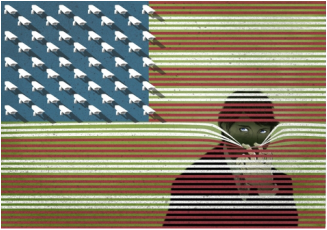 Image by Will Varner Image by Will Varner Tags: corporations, crime/law/deviance, foucault, goffman, government/the state, science/technology, theory, back stage, edward snowden, glenn greenwald, mass surveillance, n.s.a., panopticon, surveillance state, 00 to 05 mins, 11 to 20 mins, 21 to 60 mins
Year: clip 1: 2013 | clip 2: 2014 Length: clip 1: 20:41 | clip 2: 5:38 Access: YouTube: clip 1: TED Talks clip 2: New York Times Summary: Taken together, the above two clips make three distinct points about why we should all take the unfolding revelations about N.S.A. surveillance very seriously, and the clips can be used to kick off a sociologically-informed discussion about the surveillance state and it's practice of mass surveillance. 1) In the first clip, journalist Glenn Greenwald delivers a TED Talk where he argues against the claim that only criminals have something to hide. People should take the N.S.A. revelations seriously because everyone has something to hide, even those of us who believe ourselves to be innocent of all crimes. After all, people routinely lock their bathroom doors and use passwords to access their email. To borrow a page from sociologist Erving Goffman, people all have a back stage. 2) In the second clip, journalist David Sirota argues we should take state surveillance seriously because the fact is, we are all criminals. That is, there are so many statutes on the books that virtually anyone could be found guilty of a crime. Chances are that even those who loudly profess they have nothing to hide have unknowingly committed crimes, and as the amount of data being collected and saved increases, the state stores aways more and more opportunities to charge any given citizen of a crime should it prove politically expedient to do so. 3) Finally, Greenwald alludes to a long standing observation in sociology that surveillance changes people; it controls them, even if charges of a crime never materialize and no formal interaction with the criminal justice system occurs. People drastically, if unknowingly, alter their behavior when they suspect they are being watched. No where is this reality more vividly illustrated than in what philosopher Jeremy Bentham described as a panopticon, a prison tower that offers a vantage point from which a guard can see all prisoners in their cells, but does not offer any single prisoner the ability to know whether he or she is being observed. Bentham imagined it as a means of controlling prisoners, but subsequent thinkers—namely Michel Foucault—have used the idea of a panopticon as a metaphor to describe the distinct way in which modern states exercise power and control. The prison tower is now the speed camera inconspicuously perched atop a traffic light; it's also the tablet that tracks it's user's browsing history. This architecture, which claims to exist for the purpose of reducing criminal behavior, is already also changing non-criminal behavior as well. Consider the journalistic practice of offering sources anonymity. As the surveillance state becomes ever more bold, the ability to promise such anonymity slips away, and some would argue, so too does an important check on government power (Note: The Sociological Cinema has explored the topic of the surveillance state here, here, and here, and we maintain a Pinterest board on the topic). Submitted By: Lester Andrist |
Tags
All
.
Got any videos?
Are you finding useful videos for your classes? Do you have good videos you use in your own classes? Please consider submitting your videos here and helping us build our database!
 |
 RSS Feed