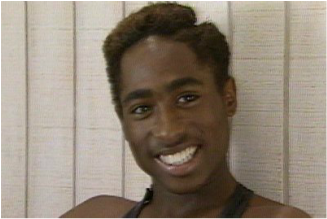
 17-year-old Tupac Shakur reflects on society in this 1988 interview. 17-year-old Tupac Shakur reflects on society in this 1988 interview.
Tags: children/youth, class, education, inequality, intersectionality, race/ethnicity, social mvmts/social change/resistance, adolescence, sociology of youth, standpoint theory, youth studies, 21 to 60 mins
Year: 1988 Length: 35:39 Access: YouTube Summary: Scholars working within the interdisciplinary field of Youth Studies often highlight the limited ways in which youth and their unique lived experiences are portrayed in popular discourse and academic literature. For example, discourses around adolescent sex and sexuality—and specifically adolescent female sexuality—frequently rely on ideologies of fear, shame, and restraint (Fields 2008; Fine and McClelland 2006; Fine 1988). Andreana Clay (2012) points to the ways sociologists tend to focus on "deviant" behavior within youth culture: "By focusing on gangs or the consumption of fashion, music, and the media, scholars have pointed to a crisis among youth, particularly youth of color and working class youth. Recent attacks on affirmative action, increases in police brutality and racial profiling, and new anti-youth legislation have exacerbated this sense of crisis, urgency, and hopelessness among critics, community activists, scholars, and the youth themselves" (Clay 2012:3). Often missing from popular portrayals of youth and youth culture is a perspective that comes directly from youth themselves. • Filmed prior to his experience with stardom, in this 1988 interview, rapper Tupac Shakur (1971-1996) articulates his perspective on society, told from the standpoint of being a teenager, Black, and poor. Only 17-years-old at the time, the interview is full of wisdom and insight, as Tupac talks about various aspects of society from this unique intersectional vantage point. Prominent themes include his reflections on what it feels like to be a teenager growing up in the late 1980s, youth stereotypes, and the deep desire youth have for being respected. He provides context and nuance for why his generation seems angry, rebellious, and scared, pointing in part to the ways in which prior generations of adults have left behind a world in crisis that the younger generation must fix. He also critiques America's antiquated education institution, and how school curriculums fail to prepare his generation for today's world. Advocating for a more socially and intellectually relevant adolescent education, Tupac suggests classes on drugs, “real” sex education, scams, religious cults, police brutality, apartheid, American racism, poverty, and food insecurity. Using the example of foreign language education, Tupac underscores the irrelevancy of learning something like German (“When am I going to Germany?! I can hardly pay my rent in America!”) and the need for young people to learn the basics of English, as well as “politicians’ double talk.” Citing rising homicide, suicide, and drug abuse rates, Tupac provides a glimpse of his gift for poetry and incisive social commentary when he argues, “More kids are being handed crack than being handed diplomas.” He further advocates for his own unique perspective of society and its significance when he proposes that adults and youth, and rich and poor, temporarily switch roles, so that each group can understand and experience the others' realities. • Tupac concludes the interview talking about social change, and the role of youth within movements for change. Throughout the interview, Tupac reflects frequently on his mother, Afeni Shakur, who was an active member of the Black Panther Party in the late 1960s and early 70s. The influence of this political legacy is evident in Tupac's own political consciousness. Asked what he can do when he grows up, Tupac talks about the challenges of social change, and how the structures of society make change difficult. Using the metaphor of a maze of blocks in which mice roam, Tupac says, “Society is like that. They’ll let you go as far as you want, but as soon as you start asking too many questions and you’re ready to change, boom, that block will come." Tupac expresses his disillusionment with our political leaders and democratic process, but he also alludes to his own sense of hope, as he is actively engaged in political organizing around issues of safe sex and teen violence. At the time of the interview, he and his high school friends are trying to reinvigorate the Black Panthers' political efforts, particularly their vision around education and Black pride. Submitted By: Valerie Chepp
11 Comments
 These construction workers yell anti-sexist slogans but the ad's message is more complicated. These construction workers yell anti-sexist slogans but the ad's message is more complicated.
Tags: gender, intersectionality, australia, commercial, misogyny, objectification, sexism, stereotypes, street harassment, 00 to 05 mins
Year: 2014 Length: 1:19 Access: YouTube Summary: This interesting Snickers ad starts by showing a group of male construction workers and asks, "What happens when builders aren't themselves?" The rest of the ad is men yelling various things at women who pass by on the street below. But instead of sexist catcalls, the hardhats yell, "I'd like to show you the respect you deserve!" and, "A woman's place is where she chooses!" and "Want to know a filthy word? Gender bias!" Best of all: "You know what I'd like to see? A society in which the objectification of women makes way for gender-neutral interaction, free from assumptions and expectations." They chant their final words in unison: "What do we want? Equality! What don't we want? Misogyny!" At the end, the Snickers tagline appears: "You're not you when you're hungry," thus implying that men are not naturally themselves when they're hungry and that they are naturally sexist. In other words, these men say anti-sexist things because they're not hungry, and that oddly, Snickers can both cure their hunger and return them to the natural order of things. So it simultaneously draws upon gender (and class) stereotypes and suggests they are natural, while it critiques them by exposing the everyday workings of misogynistic behavior. It can also illustrate an intersectional perspective. By using construction workers, it stereotypes working class men in particular for these sexist comments as being natural. In the American context, the fact that the (Australian) workers are all white is interesting because of the focus on street harassment by black and Latino men. For additional videos on street harassment, see this undercover video of a woman getting harassed in New York City (which is also critiqued in the previous link) and this problematic video on decentering and recentering the conversation on street harassment. Submitted By: Anonymous  Sandra Bullock stereotypes a working-class Hispanic man who changes the locks on her house. Sandra Bullock stereotypes a working-class Hispanic man who changes the locks on her house.
Tags: class, intersectionality, race/ethnicity, boundary work, stereotypes, 00 to 05 mins
Year: 2004 Length: 2:12 Access: YouTube Summary: This clip from Crash begins after a woman (played by Sandra Bullock) was robbed and is now getting the locks on her house changed. Sandra Bullocks' character (an upper-middle class white woman) pulls her husband aside and demands to change the locks in their house a second time because she believes the man is going to sell their key to a “gang banger friend.” The man changing the locks is Hispanic, and Bullock describes him as "a gang member ... with a shaved head, pants around his ass, and a prison tattoo." When her husband dismisses her assumptions about the man, she says that they should follow her instincts about this because when the two were previously attacked, she said she knew it was going to happen based off of the way the two black men (who robbed her) looked. The wealthy white woman expressed both racial and class stereotypes based on the man's clothes, tattoos, hair style, and race. A stereotype is a an exaggerated or distorted generalization about an entire category of people that does not acknowledge individual variation, and often forms the basis for prejudice and discrimination. Bullock stereotypes him and assumes he would sell the key to her house, which is illegal and immoral, just to get more money. As she continues her loud rant in the presence of the Hispanic working-class man and African-American police agents, she exhibits her class and white privilege in which she can be so disrespectful without any real consequences. She clearly places him in a different category than her and as someone who is beneath her. This also illustrates Lamont's concept of boundary work, in which people draw boundaries between people like themselves and perceived others. At the end of the video when the Latino man and her make eye contact, it is very telling that he did not say anything, but he simply puts down both of the keys and leaves. This action suggests his awareness of his lack of power in the situation, and his discomfort in challenging the woman on her racist and classist beliefs. Viewers are encouraged to consider how people develop, draw upon, and challenge such stereotypes. Submitted By: Bella Moore 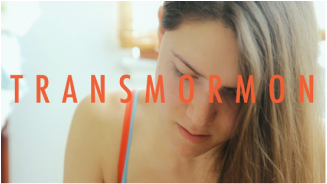 Eri Hayward discusses her life as a trans woman Eri Hayward discusses her life as a trans woman Tags: inequality, intersectionality, lgbtq, prejudice/discrimination, religion, cisgender, mormon, trans*, transgender, subtitles/CC, 11 to 20 mins Year: 2014 Length: 14:52 Access: YouTube; Vimeo Summary: This short documentary entitled Transmormon, tracks the life of Eri Hayward, who was born and raised in Utah as a Mormon. Eri discusses how she had to come to terms with the fact that the gender she was assigned at birth was not the gender she knows herself to be. As she prepares for sex reassignment surgery, she and her parents recount her journey and how she has worked to reconcile her transgender identity with her religious beliefs as a member of the Church of Jesus Christ of Latter-day Saints. People are often hesitant to talk about what has been clearly stigmatized, so Transmormon provides an an excellent means of beginning a discussion about transgender experiences and identities. The film centers on Eri's intensely personal experiences growing up, but students can be encouraged to think about the implications of widespread stigmatization against transgender people, including the role it plays in creating high levels of violence and discrimination, higher rates of suicide, and inferior access to health care. To learn more about the public issues many transgender people face, explore our Pinterest board on the topic. Submitted By: Samuel H. Allen 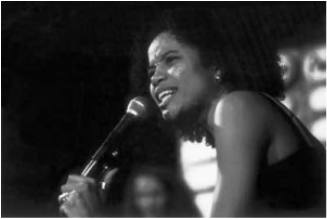 Poet Stayceyann Chin performs "Feminist or a Womanist" Poet Stayceyann Chin performs "Feminist or a Womanist" Tags: art/music, community, discourse/language, intersectionality, lgbtq, multiculturalism, race/ethnicity, categories, labels, spoken word poetry, 00 to 05 mins Year: 2007 Length: 3:32 Access: YouTube Summary: I had to watch Stayceyann Chin’s video several times before her message began resonating within me. She critiques the notion that we must side with one group over another, arguing that we need to have a sense of understanding about each other that transcends differences. She does a phenomenal job in challenging the common claim that "if you are not for us, you are against us.” She well articulates that we miss the beauty of our being by living in fear of ridicule, and when "people get scared enough, they pick a team" that may satisfy others, but not themselves. Our need to box-in and stereotype what we cannot understand or agree with only limits our ability to see each other as common creatures. Child star Raven Symone makes a similar point in her adamant denial about the personal relevance of labels. Oprah warns her during the interview that she will get push-back for doing this, and she indeed did receive significant adverse publicity in claiming the she is neither lesbian nor black/African-American. Such reactions to a pronouncement from a person who seems before her time, from a generation that believes they are ahead of their time, indicate how uncomfortable people are when group labels are deemed irrelevant for establishing personal identity. It also suggests associated questions, including: What is wrong about failing to identify as either black/African-American or lesbian? Does it betray those who are otherwise like her, but who do see themselves as belonging to such categories? Moreover, are we truly free to be individuals, even in a society held to promote the value of individual autonomy? (Note: A version of this post originally appeared on SoUnequal.) Submitted By: Ayanna Allen 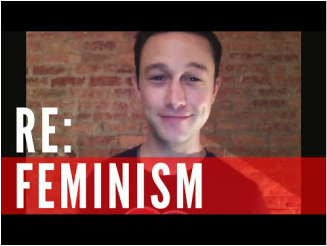 Joseph Gordon-Levitt contemplates the meaning of feminism. Joseph Gordon-Levitt contemplates the meaning of feminism. Tags: gender, intersectionality, race/ethnicity, social mvmts/social change/resistance, activism, feminism, first wave feminism, fourth wave feminism, Internet, motherhood, second wave feminism, third wave feminism, 00 to 05 mins Year: 2014 Length: 5:02 Access: YouTube Summary: In this video, actor Joseph Gordon-Levitt takes it upon himself to discuss the matters of feminism. Gordon-Levitt was first asked on The Ellen Show if he considers himself a feminist, to which he replied, “I absolutely would.” Soon after, journalist Marlow Stern asked Gordon-Levitt what being a feminist meant to him, to which he replied, “it means that your gender does not have to define who you are, that you can be whatever you want to be, whoever you want to be, regardless of your gender.” Gordon-Levitt’s response garnered a lot of public attention, which sparked his interest in the meaning of feminism to different groups of people. Gordon-Levitt explains how his mother, who he describes as a “second wave” feminist activist, initially exposed him to feminism. He contrasts second wave feminism from the 1960s and 70s to the feminist activity that took place during the Women’s Suffrage Movement in the early 20th century, commonly referred to as “first wave” feminism. In this video, Gordon-Levitt spends a good amount of time contemplating the issue of feminism being “for or against” motherhood. Ultimately he argues that women should be able to choose freely to be a stay-at-home mom or a working mother without being judged. Gordon-Levitt ends the video by asking his audience to share their opinions on what “feminism” means to them, and to submit their videos to his online HitRecord project. This video is useful for teaching about periods of feminist activity and for contemplating what feminism means in the current era. While Gordon-Levitt references the wave model that is commonly used to characterize American feminism, viewers can be encouraged to think about the limitations of this model. For example, in her article “Third Wave Black Feminism?,” Kimberly Springer (2002) critiques the feminist wave model, pointing out that it is largely organized around white women’s feminist activity, and lacks recognition of significant eras of feminist activity carried out by women of color. Viewers can also think about whether Gordon-Levitt’s online video project might constitute an example of what some have called “fourth-wave feminism.” In a recent article, Ealasaid Munro (2013) draws attention to the role of the Internet in contemporary feminist activity, showing how the Internet has become an important outlet for the public to easily channel their opinions and confront issues concerning feminism. Viewers can reflect on whether Gordon-Levitt’s video project is an example of this potential fourth-wave feminism idea, given that he voiced his opinions about feminism using online channels, and he invited his viewers to publicly share and debate their thoughts via the Internet. Submitted By: Kuchee Vue and Valerie Chepp 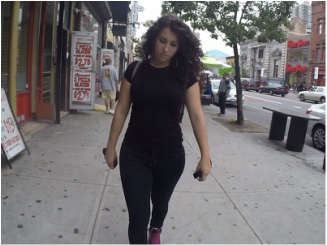 A scene from the Hollaback viral video of a woman walking in NYC A scene from the Hollaback viral video of a woman walking in NYC Tags: gender, inequality, intersectionality, media, prejudice/discrimination, race/ethnicity, violence, feminism, patriarchy, sexism, sexual harassment, street harassment, subtitles/CC, 00 to 05 mins Year: 2014 Access: YouTube (See also this supplemental video documenting the testimonies of women who have been street harassed) Summary: Street harassment has been a hot topic ever since the activist organization Hollaback! posted a slick new video, which records the catcalls aimed at a woman who walks for ten hours in New York City. While many men have described the video as opening their eyes to the harassment women face each day, many more men it seems have chided the video as little more than staged feminist wailing. They claim that in fact most women love compliments both on and off the street, and men have every right to simply say what's on their minds. For starters, the video can be used to recreate this core public debate in the classroom, thereby engaging students and communicating the relevancy of the material for their lives. Once the contours of this debate have been roughly defined, it is useful to bring both legal definitions and empirical evidence into the conversation with the aim of causing students to reevaluate their stance on street harassment and what they think they know about "most women" or "most men." In terms of legal definitions, it can be pointed out that street harassment falls under the CDC's definition of sexual violence, which it defines as any "sexual activity where consent is not obtained or freely given." Crucially, the CDC adds that not all forms of sexual violence "include physical contact between the victim and the perpetrator...for example, sexual harassment, threats, and peeping" (my emphasis; Stop Street Harassment offers a comparable definition). A second point to make is that whether women secretly love to be catcalled is an empirical question, and the evidence suggests they do not. In a recent nationally representative survey of 1,000 women and 1,000 men (age 18 and older), 65% of women reported experiencing at least one type of street harassment in their lifetimes. About 57% of all women had experienced verbal harassment, and 41% of all women had experienced physically aggressive forms, including sexual touching (23%), following (20%), flashing (14%), and being forced to do something sexual (9%). By comparison, only about 25% of men reported being street harassed. The majority of women who experienced harassment were at least somewhat concerned the incident might escalate. While the video is a vivid illustration of street harassment, it is not without fault. Writing for Colorlines, Akiba Solomon notes that although she likes the video as a teaching tool, one rather glaring problem with it is that the vast majority of men bothering the woman are black and Latino. The ad agency responsible for editing admitted that most white men who catcalled the twenty-something woman didn't make the final cut because the audio was less clear, Solomon rightly points out that by posting the video with the white perpetrators erased—whatever the justification—Hollaback! is engaging in "a dangerous lie of omission and implying that black and brown men are particularly predatory." In my view, Solomon's intersectional critique of the film needs to take centerstage in any discussion involving this video, for if we're not careful, the fight to end sexist harassment will come at the expense of establishing new justifications for racist harassment (Check out other posts on street harassment from The Sociological Cinema here, here, and here, and explore the topic on our Pinterest board here). Submitted By: Lester Andrist 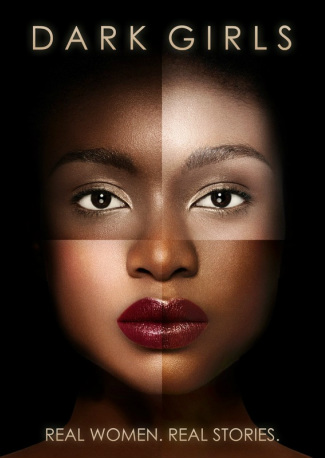 "Dark Girls" examines discrimination and skin color. "Dark Girls" examines discrimination and skin color. Tags: children/youth, culture, discourse/language, gender, intersectionality, prejudice/discrimination, race/ethnicity, colorism, racism, self-esteem, 61+ mins Year: 2011 Length: 68:00 Access: YouTube Summary: As stated on the film's website, "Dark Girls is a fascinating and controversial documentary film that goes underneath the surface to explore the prejudices that dark-skinned women face throughout the world. It explores the roots of classism, racism and the lack of self-esteem within a segment of cultures that span from America to the most remote corners of the globe. Women share their personal stories, touching on deeply ingrained beliefs and attitudes of society, while allowing generations to heal as they learn to love themselves for who they are." Filmmakers D. Channsin Berry and Bill Duke spoke about their own motivations for making the film, citing their own experiences with colorism or, discrimination based on skin color. Specifically, Duke cites a famous social psychological study design in which young black children are presented with two dolls--one black and one white--and are asked to point to the doll that is not pretty, not smart, bad, etc (this study is explored in more detail in the short film A Girl Like Me). Repeatedly, the children selected the black doll. Duke points to CNN's reproduction of this test decades later, which had similar results. This film would be useful to screen in any course that examines race, the intersection of race with gender and class, racism, and various dimensions of the self. Similar themes about discrimination and skin color are explored in the short film Shadeism. Submitted By: Denae Johnson and Valerie Chepp  Race and gender shaped the media's "thug" portrayal of Sherman. Race and gender shaped the media's "thug" portrayal of Sherman. Tags: discourse/language, emotion/desire, gender, intersectionality, media, prejudice/discrimination, race/ethnicity, sports, American football, racialized masculinity, racism, 06 to 10 mins Year: 2014 Length: 6:39 Access: msnbc Summary: On January 19, 2014, the Seattle Seahawks defeated the San Francisco 49ers in a game thrilling victory that secured their spot in Super Bowl XLVIII (which they went on to win). Immediately following the Seahawks' defeat over the 49ers, Seattle cornerback Richard Sherman gave an emotional, on-field post-game interview with FOX Sports reporter Erin Andrews. In the interview, Sherman portrayed a loud and brash display of aggression, in which he “trash talked” San Francisco receiver Michael Crabtree. In this clip, political commentator and TV host Chris Hayes highlights how the media framed Sherman--a black football player--as a “thug” after the interview. Hayes discusses the framing of black men and athletes as violent and hypermasculine with Dr. Jelani Cobb from the University Connecticut. This clip would be useful to guide discussions on the intersections of race and gender, racialized masculinity, and perceptions of threat and violence. Submitted By: Denae Johnson  On the Arsenio Hall Show, RuPaul describes power as a system. On the Arsenio Hall Show, RuPaul describes power as a system. Tags: inequality, intersectionality, lgbtq, prejudice/discrimination, race/ethnicity, sex/sexuality, homophobia, racism, systems of power, 00 to 05 mins Year: 2014 Length: 2:02 Access: YouTube Summary: In a recent interview with Arsenio Hall (start 3:33; end 5:35), RuPaul provides a pithy explanation of how power, privilege, and inequality operate by similar logic structures across different social and historical contexts. After referencing football player Michael Sam's recent decision to come out as gay just prior to the NFL draft, Arsenio asks RuPaul to reflect on homophobia in the black community. RuPaul responds by reframing the discussion to take on a more systemic perspective of how power works, drawing parallels to the oppressions faced by black and queer people. Arsenio plays "devil's advocate" by evoking (though not explicitly referencing) black people's history with slavery, a history never experienced exclusively by gay people. RuPaul replies by explaining how racism, homophobia, and other systems of oppression rely on the same logic structures, in that they all revolve around "the ego needing to strengthen itself through putting someone else down. That's the similarity. And that's the same for people who have been oppressed for religion or race or sexuality." While sociologists might use slightly different vocabulary (for example, focusing less on "the ego"), sociologists draw attention to the same insight, illustrating how, as Allan Johnson argues, different forms of oppression all rely on systemic "patterns of exclusion, rejection, privilege, harassment, discrimination, and violence" (697). For the full interview between RuPaul and Arsenio, click here. Submitted By: Valerie Chepp |
Tags
All
.
Got any videos?
Are you finding useful videos for your classes? Do you have good videos you use in your own classes? Please consider submitting your videos here and helping us build our database!
 |
 RSS Feed