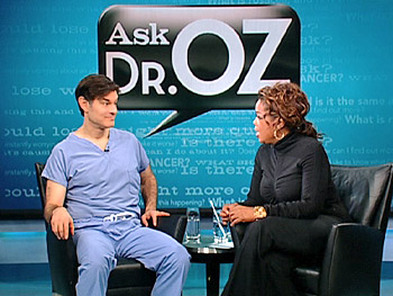
_Originally posted on Sociological Images _ Back in 2007, Dr. Oz stood on the set of The Oprah Winfrey Show and infamously promoted to an audience of 8 million viewers the idea that African Americans experience higher rates of hypertension because of the harsh conditions their ancestors endured on slave ships crossing the Atlantic. This so-called "slave hypothesis" has been roundly criticized for good reason, but I was struck that it was being promoted by such a highly educated medical professional.
_The episode got me thinking about the sociologists Omi and Winant's notion of a racial formation as resulting from historically situated racial projects wherein "racial categories are created, inhabited, transformed, and destroyed" (p. 55-56). These projects take multiple forms but in at least one version, there is an attempt to collapse race—a socially constructed concept—into biology. Such projects are similar insofar as they suggest that the socially constructed distinctiveness between people of different racial categories roughly approximates a meaningful biological distinctiveness. Scientists have been centrally involved in this effort to establish a biological basis for race. In the middle of the 19th century Dr. Samuel Morton attempted to show that average cranial capacities of people from different racial groups were significantly different. Today, many people scoff at the misguided racism of the past, but I think Dr. Oz's promotion of the slave hypothesis demonstrates that the search for a biological, and therefore "natural," basis for race continues. _So how do proponents of the slave hypothesis explain hypertension? In 1988 Dr. Clarence Grim first proposed the theory, which is the idea that the enslaved people who survived the Middle Passage were more likely to be carriers of a gene that allowed them to retain salt. Grim argued that this ability to retain salt, while necessary for a person to survive the harsh conditions of a slave ship, would ultimately lead to hypertension as the person aged. Thus Grim proposed that African Americans living in the United States today are the descendents of people who have this selected feature. As I mentioned above, this theory has been soundly refuted but reportedly still remains in many hypertension textbooks. Looking at the clip above, which is from January of this year, it seems that medical professionals like Dr. Oz may be still promoting it. _ _I think it is important to recognize that this particular racial project persists in many forms, and one final example is from 2005, when the FDA approved BiDil as a customized treatment of heart failure for African Americans. The approval was based on highly criticized research, but the approval also implicitly makes the case that a racial group might be so biologically distinct from others as to warrant its own customized medication. Much like the search for different cranial capacities, the propagation of the slave hypothesis, and the marketing of drugs designed for different racial groups, BiDil's emergence can be seen as an attempt to deploy racial categories as if they were immutable in nature (see Troy Duster's article in Science). _Criticizing this racial project is more than an academic exercise. As a social construct, race is already a central principal of social organization, which benefits whites at the expense of other racial groups. It is already a powerful basis upon which privileges are meted out and denied. In my view, the effort to loosen race from its moorings as a social construct and anchor it again as a biological fact of nature is an attempt to fundamentally alter the discussion on racial inequality. If this project prevails and race comes again to reflect a biological truth, then fewer people will acknowledge racial inequality as the result of a human-made history. It will instead be seen as the result of humans being made differently. Lester Andrist
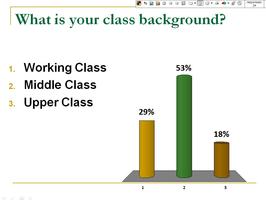
How do we get students to understand where their own social views come from? How are their views shaped by social structure? In my Social Problems class, I use debate-style readings and clickers to encourage students' understanding of their own views through a sociological lens. This can be done across many topics but one particularly successful topic I have utilized this in is a module on class inequality. First, students read about class and class inequality. They learn how to define class, what their own class location is, the trends regarding class inequality, and theories that seek to explain class inequality. Toward the end of the module on class inequality, I have students read opposing views on the question "Is increasing economic inequality a serious problem?" (found in Taking Sides: Clashing Views on Social Issues). We discuss the opposing arguments, then, through a series of clicker questions, we move beyond the arguments to examine how our own social location shapes how we evaluate the arguments, and ultimately our own views on social issues. I do this using clickers in the following manner: 1. At the beginning of class, I ask students "What is your social class?" Using clickers, students respond anonymously. The technology then automatically tabulates the responses and gives an instantaneous graph like the one to the right. 2. As a class, we outline the arguments for and against whether or not rising economic inequality is a serious social problem. Students use the readings to identify each side of the debate, and we have a discussion about the merits of each argument.
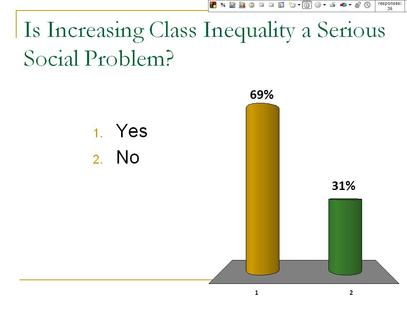
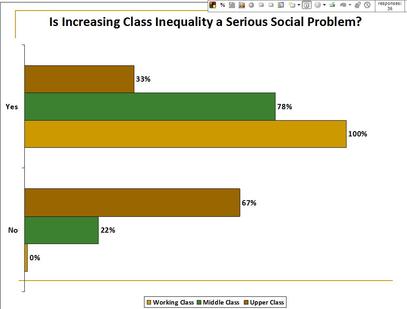
3. Using clickers, I then ask students "Do you think increasing economic inequality is a serious social problem?" Again, the clickers allow students to respond anonymously. (Note: students absolutely LOVE seeing their peers' opinions on issues we discuss in class!) Our instantaneous results show something like this: 4. Next, I link the first clicker question (on class background) to the second clicker question (on opinions about economic inequality). The clicker software (Turning Point) makes this very easy. It then automatically links each individual's class background to their view on class inequality and gives us a graph like this: 5. As the graph above demonstrates, all working class students believed increasingly economic inequality was a serious social problem. Most (but not all) middle class students thought it was a problem, and fewer upper-class students felt it was a problem. Unfortunately, the legend at the bottom makes this a little hard to see at first, but we'll forgive the software makers on this version. Finally, I then ask the class if there is a pattern about views on class inequality. Once they have identified the pattern, I ask them to try to explain why this pattern exists. Linking this pattern to course readings (e.g. Stuber 2006, "Talk of Class: The Discursive Repertoires of White Working- and Upper-Middle-Class College Students), I encourage students to think about how our social location shapes our everyday experiences, and therefore, our class awareness, class consciousness, and opinions about class inequality. This activity can be used to explore all kinds of views and spark interesting class discussions. How does our race shape our views on affirmative action? How does our gender shape our views on feminism and gender equality? I really like it because it forces students to take a position (albeit anonymously), while allowing the class to examine their own views without anyone feeling called out. The data is personalized (as opposed to ONLY seeing national data) but an individual student's views which may not be popular are simultaneously de-personalized. While their anonymity allows them to voice their opinion, it also allows us to critically engage them without people pointing fingers at each other. When I have tried this particular activity in class, it has usually produced results that we sociologists would predict. But the danger, of course, is that students' opinions will not match up to the expected relationship. Afterall, our sociology classes are hardly a random, representative sample. For this reason, I always have a related slide that shows national, representative data that does depict the relationship and still allows us to engage the pertinent questions. If there is a mismatch, we can even ask them why this might be and have a discussion about sampling and methodology. I am curious if any of you have tried similar activities and how you used them in class? Paul Dean
Mary Bowman, a 22-year-old spoken word poet and HIV/AIDS activist, responds to the pop cultural praise being directed toward Lil Wayne's new "How to Love" video.
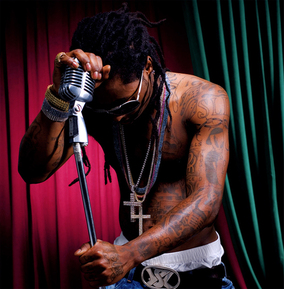
Rapper Lil Wayne’s new music video “How to Love” has received a lot of attention these past few weeks. On August 23rd the video debuted as the “Jam of the Week” on MTV Jams, and Lil Wayne performed the song at the 2011 MTV Music Awards on August 28th. Much of the video’s recent attention comes from the fact that “How to Love” is very different from Wayne’s other works. For those of you unfamiliar with Lil Wayne’s repertoire, he is usually known for his slanderous lyrics disrespecting women (e.g., see here and here). The messages portrayed in “How to Love,” however, are largely being perceived as an important and welcome departure from Lil Wayne’s previous songs and music videos (e.g., see here and here). Joining the voices of approval, on August 24th radio personality Big Tigger posted a comment on Twitter congratulating Lil Wayne (a.k.a. @lilTunechi) for tackling important issues, including HIV, in his music video “How to Love.” _________________________________________________________________________________________________
@BigTiggerShow Big Tigger #KUDOS out to @lilTunechi for tackling so many #RealLifeIssues including #HIV in his new video #HowToLove! Know ya status - Get TESTED!! RT 24 Aug
_________________________________________________________________________________________________
I agree that the video is a very emotionally charged description of situations some women find themselves in everyday. But I disagree with Big Tigger; I don’t believe that Lil Wayne “tackled” the issues at all. If anything, I believe he promoted the stigma that young women raised in a certain environment grow up to be nothing more than a stripper with children who eventually contract HIV by having unprotected sex for money. Due to the damage already done to cultural images of women, especially African American women, by rapper Lil Wayne, I don’t believe that the song “How To Love” is sincere. I actually like the song, and I will go as far to say that I enjoy Lil Wayne's music though I may not agree with everything he says. So this is not a blog piece bashing Lil Wayne, but I am expressing my disappointment that Big Tigger, a public figure who does a considerable amount of service in the community for HIV/AIDS, would go so far as to say that Lil Wayne "tackled" this issue. I am a HIV positive female who is working to remove the stigma that this video reinforces. I have four serious problems with Big Tigger’s statement:
1. Big Tigger is a man. So is Lil Wayne. Men will never be able to tell a woman’s story, whether the story is negative or positive. They will never understand what it means to be a woman in today’s society, so I feel they have no right to impose their opinion on such a young and influential generation of hip hop listeners.
2. Lil Wayne talks about women negatively all the time and now all of a sudden he cares about their issues with self-esteem, drug use, and sexual behavior? For example, the woman portrayed in the "How to Love" video is a stripper. I have heard Lil Wayne talk degradingly about his own experiences with strippers. This video does not provide adequate evidence showing his sympathy, support, and concern for women in this particular profession, especially given that this song is featured on an album, Tha Carter IV, where he continues his blatant disrespect toward women.
3. One of Big Tigger’s causes that he fights for publicly is HIV/AIDS. He couldn’t possibly have thought that the video “tackled” the issue. To me that is a slap in the face to all the work that has been done to remove the stigma surrounding this epidemic. The video basically says that because the young lady’s mother made certain choices, she was forced to grow up with low self-esteem and become a stripper who has sex for money and happens to contract HIV. The video implies that if you live a certain lifestyle deemed to be socially deviant or “negative,” then there are dire consequences to your actions, namely, becoming HIV positive.
4. The video does nothing more than verbalize the acronym “HIV.” It doesn’t promote safe sex. It doesn’t say what you can do if you test positive for HIV. It doesn’t say that it is not the end of the world if you test positive for HIV.
It does, however, add insult to injury by having the woman run away from the issue. People need to know that the last thing they should do is run away from HIV/AIDS, whether they are positive or negative. It’s not the end of the world. There are individuals who are living normal lives with HIV. I am proud to be one of them, born with HIV and 22-years-old, yes I struggled with acceptance but I had help. In turn, I use my story and my life to help others affected by and infected with HIV/AIDS. I challenge Big Tigger and Lil Wayne to do the same. They may not be HIV positive, but they are individuals who have a bigger following than me; they can use their fame to advocate safe sex, the importance of getting tested, and promote the idea that if you are HIV positive, there is help and support.
At the end of the day, we can’t control the unfavorable things artists and radio personalities say and do in our communities. However, as fans, followers, and listeners, it is our responsibility to stand up for what we believe in and say, “Hey, I don’t agree with what you said or did.” We can’t just sit back and accept what they give us. We have to fight. If not, we make it okay for artists and other public figures to continue promoting negative images of our communities. I will continue to fight until the stigma is completely diminished and I hope that even after I am long gone the fight will continue.
Mary Bowman ENDNOTE #1: Click on the links below to learn about some of the ways Mary Bowman fights the stigma associated with HIV/AIDS.
Dandelions (performance poem) I Know What HIV Looks (performance poem) Support AIDS Walk DC ENDNOTE #2: If you or people you love have been affected/infected by HIV/AIDS, visit these resources for more information: Metro Teen AIDSAIDS Alliance for Children, Youth & Families Food & Friends
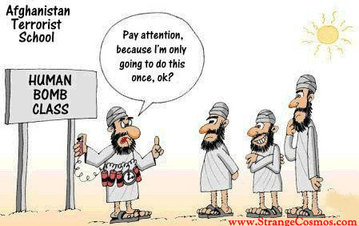
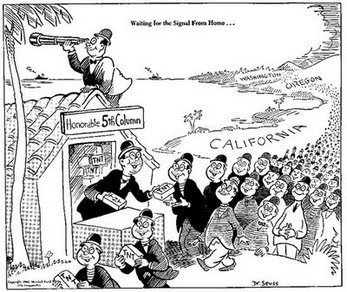
Stand-up comedians exercise a curious privilege, which allows them to peddle controversial conclusions and uncomfortable insights without suffering the usual scorn and admonishment that comes with challenging systems of power. The comedian's stage seems to be a space that has been engineered for bringing indelicate knowledge about the world to the surface. For instance, the suggestion that Americans are deeply divided by race and class usually causes people to fidget, yet Chris Rock was greeted with laughter and applause when he unabashedly criticized the racialized wealth gap in the United States during one of his performances in Washington DC. Similarly, Louis C.K. received a rousing applause when he discussed his privilege as a white male, and Hari Kondabolu made an entire room burst into laughter by exposing the nonsensical logic underlying stereotypes aimed at Mexican immigrants. Unfortunately, as with superheroes who use their powers for evil, not all comedians use the stage as a venue for delivering social criticisms aimed at exposing injustice. For instance, comedy is just as likely to reinforce stereotypes as it is to criticize them, or to put it differently, the comedian's stage is just as likely to be a place where knowledge is "indelicate" because it is racist as it to be a place where knowledge is indelicate because it is critical of racism. Consider Jeff Dunham's ventriloquial act featuring his popular dummy, "Achmed the Dead Terrorist." In the clip below, which is taken from a 2007 performance in Washington DC, Dunham draws upon a number of stereotypes of Arabs and Muslims, many of which have been around since well before the attacks on September 11th, 2001. Dunham is not deploying social criticism, but is instead uncritically drawing on racist representations for laughs. He is also reasserting and promoting what is by now a worn panoply of orientalist associations. Arabs and Muslims, like the Achmed character, are typically portrayed as religious fanatics. They are often depicted as irrationally angry, and many are self-proclaimed terrorists. But if they are dangerous, they are dangerous buffoons and are often too incompetent to pull off their own deadly plots. In this way, stand-up comedians can be understood as articulators of knowledge about the world. As I have argued, they contribute to the persistence of stereotypes at times, but they can also articulate convincing arguments against stereotypes. But what is true of stand-up comedy seems to hold for other types of comedic performance as well. Political cartoons, comedy sketches, and even situation comedies all peddle this indelicate knowledge about the racialized other. In " Ali-Baba Bound," a Looney Tunes cartoon from 1940, Porky Pig runs up against Ali-Baba and his "Dirty Sleeves." The humor is constructed around a basic scaffolding of the Arab as dirty and sneaky. Ali-Baba's Arab underlings in the cartoon are depicted as too primitive to competently use rockets and must must run as suicide bombers toward a colonial fort with explosives strapped to their heads. The articulation and reinforcement of Arabs as buffoons or Muslims as extremists, the elevation of these images above others as iconic representations ironically limits the field of vision. But shortly after 1940, events would transpire so that for a time Arabs and Muslims occupied a relatively small sliver of American concern. The sneak attack on Pearl Harbor the following year ignited a discursive explosion surrounding the Japanese, both those living in American neighborhoods and abroad. It is striking how eerily similar representations of Japanese persons were to those claimed for Arabs and Muslims. However, fed by photographed destruction of Pearl Harbor and the tangible realities associated with the American war machine shifted back into high gear, dominant representations of the treacherous Japanese other went further and faster. Each representation of the "Jap" became more and more fanciful; each illustration seemingly emboldened by the last to push the caricature even further.  "Waiting for the Signal from Home..." Dr. Seuss. February 13, 1942 Celebrated children's author, Dr. Seuss, published a cartoon only weeks before the United States would forcibly relocate 120,000 ethnic Japanese persons living in the United States to internment camps. The cartoon depicts a buck-toothed, fifth column of Japanese Americans lining up from Washington to California for their very own box of TNT. A man with a monocular scales the rooftop of the explosives depot "waiting for the signal from home." Or consider a Looney Tunes cartoon from the period, which is named "Tokio Jokio" and similarly claims buck teeth and buffoonish behavior for all Japanese persons on the planet.
The cartoon elaborates upon many of the typical stereotypes associated with Japanese persons but unlike the Dr. Seuss cartoon, the attempt at humor is harder to miss. Whereas the Seuss cartoon reverberates extant fears about a treacherous Japanese enemy living among us, the Looney Tunes cartoon lampoons them as bumbling idiots. In the Seuss cartoon, their tribal-like loyalties to the Emperor mean they are capable of doing just about anything, but in the Looney Tunes cartoon they are too incompetent to prevent their own Fire Prevention Headquarters from burning to the ground. Such seemingly contradictory representations permeated the American imagination of the time, alternately stoking anxieties while assuring Americans of their national and even racial superiority.
These racist representations aimed at the Japanese were not buried by the detonation of two atomic bombs over Japanese cities. Just as before the Second World War, they have proven to be free-floating to a degree and transferable to our emergent enemies. Today, Arabs and Muslims are routinely depicted in popular cinema as incompetent. In our comedy, they are again the bumbling idiots, simultaneously too stupid to successfully perpetrate an attack against us and just stupid enough to commit truly heinous crimes. What was an imagined fifth column, has become the terrorist sleeper cell. In 1942 we feared Japanese Americans were blindly loyal to "their" Emperor. Today we are bombarded with ideas about the tribal loyalties of American Muslims. So powerful are these loyalties, it is often suggested, Muslims would happily kill themselves to bring about the demise of Western civilization. The fanatical Middle Eastern suicide bomber is the new banzai charger and Japanese Kamikazi pilot.
There is a joke that is now getting tossed around the internet, and it goes something like this, "A friend of mine has started a new business. He is manufacturing land mines that look like prayer mats. It's doing well. He says prophets are going through the roof." What this joke, Dunham's comedy sketch, and the Looney Tunes cartoon all share is that they mark historical moments when the racialized other became so thoroughly demonized and devalued in the public consciousness, our undifferentiated Arab "enemies" became so feared for their treachery and immorality that it became possible to make light of hypothetical and real violence perpetrated against them. What does it say about a people when they find it possible to laugh at a joke about a human detonating a bomb which is strapped to his body? One might speculate that it is strangely intoxicating to spot the boogieman tripping on his shoelaces, embarrassing himself, or dying by his own venom. The Achmed character's tired threat, "I kill you!" is funny, perhaps because his voice cracks like a thirteen-year-old boy, and we are entertained by the irony that someone so evil could appear so weak. "Look at the Muslim boogieman acting so foolishly!" we seem to be saying through our laughter. Of course Arabs and Muslims are not born evil; the boogieman is a creature that gets created in the accounts of what might happen if the nation ceases being vigilant. But the larger point I am arguing is that comedy, which uncritically trades in the negative stereotypes aimed at Arabs and Muslims and is able to make an audience pop with laughter with references to suicide bombing, is only possible because Arabs and Muslims have been successfully demonized and devalued. Comedians write jokes to get laughs, but as I mentioned at the outset, they also operate from a space which grants them temporary license to openly discuss controversial ideas. Comedians contribute to the discourse, just as readily they respond to it, and their sets are just as capable of exposing hidden discrimination as reinforcing it. This is important to consider because what is at stake here is the differential valuing of human life, and the way representations are organized to aid in that horrific project. Perhaps five hundred years from now, when historians are able to look back on this moment, freed from the myopic principles of vision and division that currently ensnare us, I wonder if they will find it ironic that during this zenith of global information flows, a time when information about the intimate lives of people in distant lands so easily zipped across the planet, Americans persisted in holding fast to such gross generalizations. And if those historians archive the media which depicts the moral panic of these decades, they would do well to note what made us laugh. Lester Andrist
|