 Tags: children/youth, class, education, inequality, race/ethnicity, subtitles/CC, 21 to 60 mins
Year: 2010 Length: 26:54 Access: ERASE Racism Summary: ERASE Racism’s documentary, A Tale of Two Schools: Race and Education on Long Island, follows David and Owen, two African American teenagers during their senior year of high school. Even though the students have a lot in common, they go to very different schools. This documentary does a great job of concisely spotlighting the differences and the results of structural educational disparities. Through this film, students will see how race and class are large determining factors in how public schools are funded and what that means for the students who attend those schools. This video would pair well with a Jonathan Kozol reading or "Why Segregation Matters" by Gary Orfield and Chungmei Lee. Check out ERASE Racism's website for additional resources related to the film. Note: the available subtitles are in Spanish. Submitted By: Kendra Barber
2 Comments
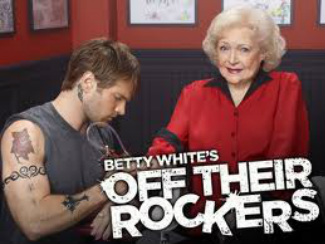 Tags: aging/life course, bodies, ageism, comedy, stereotypes, 21 to 60 mins
Year: 2012 Length: 21:46 Access: no online access (trailer here) Summary: According to the show's creators, "'Betty White's Off Their Rockers'" takes senior stereotypes and blows them out of the water with a cast of sassy septuagenarians who are hip, sexy and ready to party!" The show features seniors who routinely prank young adults in hilarious situations. Season 1, episode 1 of the show offers a great platform for a discussion about ageism and stereotypes about the elderly (although all episodes to date also seem to be great for this). When using the episode in class, I had my students take notes on underlying stereotypes that make the show shocking and funny. We discussed that societal norms can sometimes most clearly be seen in showing their opposite. My students quickly picked up that the show would not be shocking if other age groups were doing these things. They also noticed that the show assumes elderly people are not sexual, do not have fun, and are not energetic or lively. It was a fun way to start a conversation about our section on aging. Submitted By: @iamtjones  Tags: children/youth, crime/law/deviance, discourse/language, emotion/desire, lgbtq, sex/sexuality, bi-curiousity, conversion therapy, 21 to 60 mins
Year: 2007 Length: 21:26 Access: southparkstudios.com Summary: [Trigger warning: Not all instructors will feel comfortable screening an episode of South Park in the classroom, a show that is notorious for its "crude language and dark, surreal humor" on a wide range of often taboo topics. This episode is no exception. Specifically, instructors might be uncomfortable with this episode's treatment of youth suicide, violence, sex, sexual consent, and cultural/ethnic insensitivity.] In this South Park episode (season 11, episode two), South Park Elementary School student Cartman takes a photo of his own penis in his friend Butters's mouth while Butters is sleeping. Afterwards, Cartman tells his friends about what he did in order to ridicule Butters. However, Cartman didn't count one thing: this behavior is interpreted as a homosexual act and his friends start calling him "gay." Hoping to prove that he's not gay, Cartman believes he must convince Butters to reciprocate the act. Just as Cartman is about to carry out his plan in front of a blindfolded and unknowing Butters, Butters's father walks into the bedroom. Concerned that his little boy is bisexual, his father takes Butters to the priest, who diagnoses Butters as "confused" and suggests Butters attend a bi-curious boy's camp to heal Butters from this "disease." This video can be used as an example of how bisexual people are perceived as being confused about their sexual identity. As Ryle (2012) writes in Questioning Gender: A Sociological Exploration: "Bisexuals can receive negative reactions from both homosexuals and heterosexuals." She cites Ault's (1996) work that showed how some lesbian feminists "insist that there is no such thing as bisexuality. Bisexuals are either confused lesbians or heterosexuals who are experimenting" (201). The clip can also be used to initiate a discussion about cultural definitions of sexual orientation: Is it about behavior? Desire? Identity? Finally, the episode offers a framework for talking about sexuality as a choice or innate, and illustrates the ways in which heterosexuality gets defined as "normal" through a discourse of shame, guilt, and "fixing" or "curing" anything that deviates from a cultural heterosexual norm. Submitted By: Nihal Celik 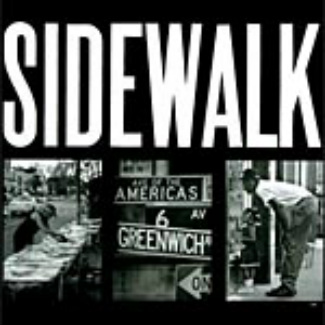 Duneier's research on NYC book vendors is presented in film. Tags: class, community, crime/law/deviance, inequality, intersectionality, methodology/statistics, organizations/occupations/work, prejudice/discrimination, race/ethnicity, rural/urban, ethnography, homelessness, urban poverty, visual sociology, 21 to 60 mins
Year: 2010 Length: 60:00 (film) Access: Film (part 1; part 2; part 3) Discussion (part 4; part 5; part 6; part 7; part 8) Summary: This documentary, directed by Barry Alexander Brown, is based on the ethnographic fieldwork that sociologist Mitchell Duneier conducted for his seminal book, Sidewalk (1999). Framed in the film's introduction as an "epilogue" to the book, Brown offers a plot summary: "SIDEWALK chronicles the lives of primarily black homeless book vendors and magazine scavengers who ply their trade along 6th Avenue between 8th Street and Washington Place in New York City. By briefly comparing those book vendors with the history of book vending along the Seine in Paris, the film speaks to the efforts of North American and European societies to rid public space of the outcasts they have had a hand in producing. The film takes us into the social world of the people subsisting on the streets of New York by focusing on their work as street side booksellers, magazine vendors, junk dealers, panhandlers, and table watchers. The sidewalk becomes a site for the unfolding of these people living on the edge of society in order to give us a deeper understanding of how these individual's are able to survive. It also becomes a site for conflicts and solidarities that encompass the vendors and local residents. We followed half dozen vendors for most of this past decade. By the end of shooting the film, their lives had taken a myriad of routes..." Like other urban ethnographic films (e.g., here), Sidewalk would be excellent to show in an urban sociology course, as well as an introductory sociology class, as it engages core sociological concerns around race, poverty, homelessness, underground economies, interactions with police, and community support networks, among others. Ethnography professors might also find the film useful—the film opens with several screens of written text, describing the film as a "set of fieldnotes." There is also discussion of the film available online. One of these discussions entails Duneier's introductory lecture on ethnographic methods, in which two sidewalk vendors visit his class. Here Duneier presents his approach to doing ethnography, particularly within the context and medium of film. The other is a panel discussion about the film with Cornel West and Kim Hopper at the American Sociological Association's annual meeting. Submitted By: Valerie Chepp  Tags: class, community, crime/law/deviance, inequality, intersectionality, methodology/statistics, prejudice/discrimination, race/ethnicity, rural/urban, ethnography, gentrification, housing, urban poverty, visual sociology, 21 to 60 mins
Year: 2005 Length: 52:00 Access: no online access Summary: Directed by sociologist Sudhir Venkatesh, this documentary film is based on ethnographic field research conducted by Venkatesh at the (now demolished) Robert Taylor Homes public housing development in Chicago, IL. A description of the film is provided on the film's website: "In February 2002, families living in the Robert Taylor Homes public housing development were given a 180 day notice of eviction. In six months, the community that had been their home for generations would be demolished. DISLOCATION chronicles the lives of tenants in one building as they move through the six-month relocation process. The filmmakers follow three families as they prepare for their own move and as they help others around them. DISLOCATION is a story of a community coping with its own impending demise. It is a tale of courage, hope, and survival." This film is an ideal compliment to most topics covered in an urban sociology course, which include discussions of gentrification, urban poverty, racism, underground economies, community and family support networks, police interactions, and much more. The ideas explored in the film are expanded in more detail in Venkatesh's books, American Project: The Rise and Fall of a Modern Ghetto (2000) and Gang Leader for a Day: A Rogue Sociologist Takes to the Streets (2008), which are based on the same ethnographic field research. The film (and books) would also be excellent to use in an ethnography course, and could help guide class discussions around written vs. visual ethnographies, and the (subjective) role of the ethnographer and her relationship to her research subjects. To gain access to the film, check out your university library or you can find purchasing information here. Submitted By: Valerie Chepp 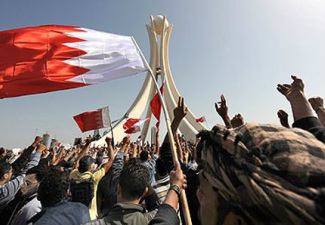 Shi'a and Sunni Muslims lead a protest for democracy in Bahrain Tags: globalization, media, nationalism, religion, social mvmts/social change/resistance, violence, war/military, arab spring, bahraini uprising, moral resources, organizational resources, pearls revolution, propaganda, social revolution, 21 to 60 mins
Year: 2011 Length: 50:56 Access: YouTube Summary: [Trigger warning: there are graphic scenes of violence throughout this clip. Two scenes are especially noteworthy. At the 7:38 mark, there is footage of protesters being shot by the Bahraini Army, and at the 8:30 mark a man is shown bleeding in a hospital bed after he was reportedly shot in the head.] This documentary from Al Jazeera English recounts the fight for democracy among Shi'a and Sunni Muslims in Bahrain. An island kingdom on the western shore of the Persian Gulf, Bahrain is formally ruled by the Al Khalifa family as a constitutional monarchy. The film chronicles the early moments of the spread of the Arab Spring to Bahrain where protestors converged on Pearl Roundabout, which lies in the financial district at the heart of Manama. Chief among their demands was for the emergence of a secular democratic government, and more pointedly, protesters called for the majority Shi'a Muslims to be included in the formal political system, which was dominated by a Sunni family. The documentary begins on February 16, 2011, the first day protesters occupied the roundabout. It documents the collaboration between the nations of the Arabian Peninsula under the auspices of the Gulf Cooperation Council (GCC) to stop the spread of these revolutionary protests, and Al Jazeera offers exclusive footage from inside both the opposition encampment at Pearl Roundabout and Salmaniyya Hospital, which was not only a place to treat the injured but also initially a place of refuge from state violence. The documentary works well as a means of introducing students to the study of social movements. Among other concepts, the film is useful for exploring the evolution and consequences of state tactics aimed at quelling the protests—both violent and non-violent. Analysts of social movements often point to the significance of a nascent movement's moral and organizational resources, and this film illustrates the importance of both. For example, one can easily use the film to engage students in a discussion about the significance of Pearl Roundabout and Salmaniyya Hospital as practical locations for organizing protests and disseminating information (i.e., organizational resources). At the same time, one could also lead a discussion about how these were effective sites for protesters to imbue their struggle with meaning and legitimacy (i.e., moral resources). Submitted By: Lester Andrist 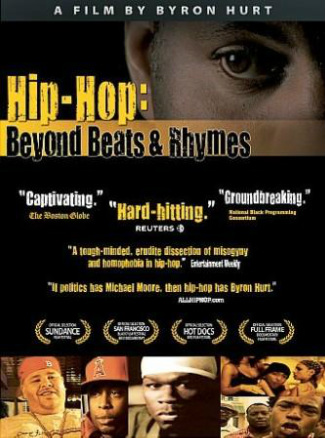 Tags: art/music, commodification, consumption/consumerism, discourse/language, gender, intersectionality, lgbtq, media, race/ethnicity, sex/sexuality, violence, femininity, homophobia, masculinity, media literacy, popular culture, sexism, sexual objectification, stereotypes, subtitles/CC, 21 to 60 mins
Year: 2007 Length: 55:31 Access: YouTube (trailer here) Summary: Using his own relationship with hip-hop as a guiding light, filmmaker Byron Hurt presents "HIP-HOP: Beyond Beats and Rhymes, a riveting documentary that tackles issues of masculinity, sexism, violence and homophobia in today’s hip-hop culture. Sparking dialogue on hip-hop and its declarations on gender, HIP-HOP: Beyond Beats and Rhymes provides thoughtful insight from intelligent, divergent voices including rap artists, industry executives, rap fans and social critics from inside and outside the hip-hop generation. The film includes interviews with famous rappers such as Mos Def, Fat Joe, Chuck D and Jadakiss and hip-hop mogul Russell Simmons; along with commentary from Michael Eric Dyson, Beverly Guy-Sheftall, Kevin Powell and Sarah Jones and interviews with young women at Spelman College, a historically black school and one of the nation’s leading liberal arts institutions. The film also explores such pressing issues as women and violence in rap music, representations of manhood in hip-hop culture, what today’s rap lyrics reveal to their listeners and homoeroticism in hip-hop. A “loving critique” from a self-proclaimed “hip-hop head,” HIP-HOP: Beyond Beats and Rhymes discloses the complex intersection of culture, commerce and gender through on-the-street interviews with aspiring rappers and fans at hip-hop events throughout the country." (Excerpt from the film's website on PBS IndependentLens.) Click here for excellent classroom materials and teaching resources, including a discussion guide, video modules, education guide, issue briefs, and more. Additional information also available at www.bhurt.com. Submitted By: Valerie Chepp  Tags: discourse/language, lgbtq, media, sex/sexuality, homophobia, heterosexism, media literacy, remix, 21 to 60 mins
Year: 2011 Length: 50:13 Access: YouTube Summary: This video is a montage of every homophobic joke included in the sitcom Friends. While it is not necessary to watch the entire clip in class, it provides an excellent example of how deeply embedded homophobia is within the show, an arguably popular media in general. The creator of the clip (in an interview available here) says,"the whole point of this project is to show the very extent to which homophobia pervades the show, and how it changes over the years." This video is useful in classroom discussions of homophobia, heterosexism, and the media as example of the level to which LGBT people are subject to discrimination and stereotypes within popular culture. It is also an excellent example of how those stereotypes evolve over time. Submitted By: Anya Galli 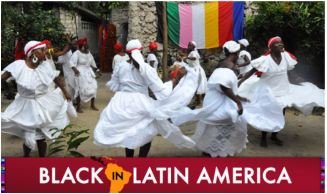 Henry Louis Gates, Jr. explores issues of race and identity in Haiti Tags: government/the state, historical sociology, inequality, knowledge, nationalism, political economy, race/ethnicity, religion, social construction, social mvmts/social change/resistance, theory, war/military, benedict anderson, edward said, 21 to 60 mins
Year: 2011 Length: 51:25 Access: PBS Video Summary: Part of the PBS series "Black in Latin America," this short film featuring Professor Henry Louis Gates, Jr. explores issues of race and identity in Haiti and the Dominican Republic, two countries that share the same island of Hispaniola, yet share little else in terms of language, economic opportunities, relations with colonial nations, and identification with African ancestry and heritage. This clip is excellent for illustrating how racial classifications are a social construction, as meanings of blackness shift across the two countries. The island's history of race relations also demonstrate how, as Edward Said shows, race is constructed in reference to a racial (and national) "other," as Dominicans have historically understood themselves as "not Haitian" and therefore "not black." Students can see how knowledge about national racial identity has been deliberately cultivated by national elites in the Dominican Republic through selectively told histories, national memorials, holidays, and monuments. This racially motivated nation-building effort articulates well with Benedict Anderson's work on imagined communities. Finally, the video chronicles how Haiti became the first-ever black republic, and the pivotal role that religion played in the slaves' fight for liberation. However, ever since winning independence, outside nations, including the United States, have imposed policies that have made it near impossible for Haitians to develop a robust economy and political infrastructure, evidenced today by the poverty and political corruption that plague the country, but which is always challenged by Haitians' rich and complex belief system and artistic culture. The video is divided into six chapters, allowing instructors to easily screen shorter segments of the film if they wish. I would like to thank Jean François Edouard for suggesting this clip. Submitted By: Valerie Chepp 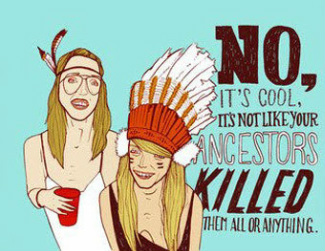 Tags: commodification, discourse/language, inequality, race/ethnicity, cultural imperialism, racism, representation, signification, 21 to 60 mins
Year: 2011 Length: 22:50 Access: YouTube Summary: In this clip, Al Jazeera's The Stream interviews Adrienne Keene, who is a member of the Cherokee Nation of Oklahoma, the author of the Native Appropriations Blog, and currently a graduate student in Boston. The clip is useful for examining cultural representation as a practice of domination. At the 2:28 mark, Keene orients the discussion by asking "Who has the right to represent whom?" This orienting question comes up again at the 22:40 mark when the host of the program acknowledges that cultural appropriation contributes to invisibility and marginalization but asks, as a practical matter, how one is to accurately and respectfully represent so many culturally distinct tribes. In her response, Keene denies the premise of the question, which attributes the role of First Nations' representation to non-members, and instead she insists that it must be "the right of the community to represent themselves." Furthermore, while students may counter that representations, such as those used as the mascots of professional sports teams, are forms of appreciation, Keene counters that the such representations are actually "a continuing form of colonialism and oppression." That is, they effectively "shrink an extremely diverse community of over 565 tribes in the United States alone down into one stereotypical image of the plains Indian." By selectively appropriating iconic artifacts from indigenous cultures, while also constructing caricatures said to stand for all indigenous people, one limits acknowledgement of diversity and engages in a practice of domination. For instance, war paint and the war bonnet become blunted as mere fashion statements among hipsters, and may no longer invoke memories of resistance to the genocidal policies of white settlers. Similarly, when the Navy Seals adopted "Geronimo" as a codename for Osama Bin Laden, they threatened to transform the historical meaning and significance of the real Geronimo and his resistance (see this response from a group named 1491s). As with another clip featured on The Sociological Cinema, which is critical of the deployment of photographs of African American lynchings, this clip offers an excellent opportunity for students to examine what is at stake in cultural representation and how it relates to power. Submitted By: Lester Andrist |
Tags
All
.
Got any videos?
Are you finding useful videos for your classes? Do you have good videos you use in your own classes? Please consider submitting your videos here and helping us build our database!
 |
 RSS Feed
