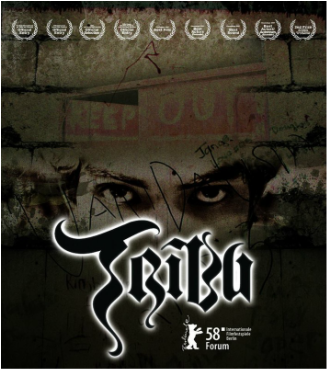
 Tribue shows the cycle of urban poverty and violence. Tribue shows the cycle of urban poverty and violence.
Tags: children/youth, class, crime/law/deviance, inequality, rural/urban, violence, gangs, philippines, poverty, subtitles/CC, 61+ mins
Year: 2007 Length: 1:33:29 Access: YouTube Summary: This independent film, shot in the ghetto district of Tondo (Manila, Philippines), is "an ultra-realist depiction of youth corrupted by violence, death and decay, told documentary-style." The plot follows ten year-old Ebet as he witnesses the activities of rival street gangs, and is ultimately a story about the cycle of urban poverty. In the film, "the dangerous unlit streets and labyrinthine alleyways in the ghetto district of Tondo ... becomes a claustrrophobic backdrop to a random killing that triggers a wild and bloody gang war. Ebet, a 10 year old boy, encounters the members of Tondo’s gangsta tribes – juvenile thugs and petty criminals whose pastime of sex and drugs are veiled under their eloquent freestyle hip-hop rap – as each gang participates in a long, bloody and vicious cycle of revenge and reprisal, gangsta style. After a brutal midnight initiation ritual, young gang members discover the lifeless body of a young man on the street, knife still stuck in its back. Ebet watches as the police round up the gang, and charged for the murderous riots that erupt every night in the ghetto. The next day, members of the bereaved gang to whom the victim was a member of, discuss to find out which tribe perpetrated the crime. A vendetta is silently plotted, new alliances formed, to flush out the real murderers ... Hailed as a gritty portrayal of Manila’s notoriously violent streets of Tondo, Jim Libiran’s Tribu is Realist Cinema with a social project. To act as main actors, the filmmaker employed real-life gang members from rival clans, triggering a wave of unification and peace in a large part of Tondo's ghettos." Submitted By: Jim Libiran
1 Comment
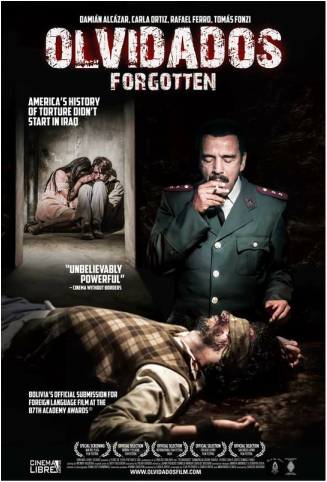 Film chronicles the horrors perpetrated under “Operation Condor.” Film chronicles the horrors perpetrated under “Operation Condor.”
Tags: crime/law/deviance, government/the state, historical sociology, violence, war/military, authority, human rights, imprisonment, state terror, torture, 61+ mins
Year: 2015 Length: 72:00 Access: no online access (trailer here) Summary: The film Olvidados explores the horrors perpetrated under “Operation Condor,” which was responsible for: 50,000 deaths; 30,000 “disappeared”; and 400,000 arrested and imprisoned in Argentina, Bolivia, Brazil, Chile, Paraguay, and Uruguay. In the 1970’s, Operation Condor was a US-backed program to install right wing dictators in Latin America to eliminate the threat of communism. To accomplish this, the CIA provided training and support to the militaries of Argentina, Chile, Bolivia, Paraguay, and Uruguay, which led to the disappearance of tens of thousands of citizens all of whom suffered from some of the worst violations of human rights in modern history. In the film, an aged Bolivian General, José (Damián Alcázar, El Narco), looks for redemption after suffering from a heart attack by confessing truth to his only son about his role in the persecution of countless men and women. Among the people who were “disappeared” are a journalist (Carlotto Cotta), a dancer (Ana Calentano), an activist (Tomás Fonzi), and a pregnant woman (Carla Ortiz) – all of whom were brutalized at the hands of José and other military leaders, which produced a cascade of lies and betrayal across generations. The historical events chronicled in the film would be useful to help teach numerous sociological topics, including concepts related to the state, authority, military, torture, imprisonment, human rights, and social justice. It could also be a useful resource for a travel learning course that focuses on any of these South American countries. Submitted By: Cinema Libre Studio  Who is to blame for students failing in school? Who is to blame for students failing in school? Tags: children/youth, class, education, inequality, ideology, individualism, meritocracy, sociological imagination, 00 to 05 mins, 61+ mins Year: 2010 Length: 1:37 (full film is 81:00) Access: YouTube Summary: This extra is from The Lottery, a documentary that examines the controversy around public schools, charters schools, and the educational reform movement. It follows the lives of four families in New York City who applied to the lottery to enter one of the best charter schools in the city. This short clip features person-on-the-street style interviews, where everyday people describe their views on why students don't succeed in schools (or watch the full film). Some of the responses include: "the only thing from stopping you from making it is your own self ... you can't blame the system. You blame yourself"; "the problems with our educational system are cultural"; "in one city you can have garbage schools up in our neighborhood, and then down there, amazing schools. and you can't tell me that's not race-based"; "if my school had been better, then I believe I wouldn't be on the streets." Viewers can be encouraged to consider which of the response reflect the sociological imagination, as compared with purely individualistic explanations. The clip could also be used to examine the role of ideology in American society. Individualistic explanations of schooling failures reflect the ideology of the American Dream, in which anyone can succeed if they work hard enough (and that the US functions as a meritocracy). This strong form of individualism serves to reinforce schooling inequalities by shifting the blame from structural forces (e.g. the distribution of school funding, class inequality) to individuals (children or their parents). This ideology obscures the reality, as shown in this Oprah clip and this mini-documentary, that dramatic inequalities in our public school system lead to different outcomes for students based on class, and often race. As the full film shows, thousands of students try to opt out of the failing public school system by entering the lottery, but only a small number will win the arbitrary process. On the other hand, wealthier families can purchase homes in better school districts or send their children to private schools; while winning the lottery is entirely by luck, the class system and educational funding are not. Submitted By: Paul Dean 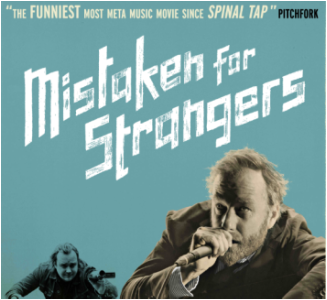 Why do siblings have such different economic & social outcomes? Why do siblings have such different economic & social outcomes? Tags: children/youth, class, economic sociology, inequality, marriage/family, family inequality, parenting, pecking order, siblings, 61+ mins Year: 2013 Length: 75:00 Access: no free online access (trailer here) Summary: In The Pecking Order, sociologist Dalton Conley explains how inequality occurs among adult siblings within families. Drawing on studies that look at hundreds of families, Conley shows that, rather than genetics or simple birth order, a variety of factors constitute a "pecking order" within families. The findings are well illustrated in Mistaken for Strangers, a 2010 documentary on the rock band The National. As noted by the filmmakers, "Matt, the lead singer of the critically acclaimed rock band The National, finally finds himself flush with success. His younger brother, Tom, is a loveable slacker--a filmmaker and metal-head still living with his parents in Cincinnati. On the eve of The National's biggest tour to date, Matt invites Tom to work for the band as a roadie, unaware of Tom's plan to film the entire adventure. What starts as a rock documentary soon becomes a surprisingly honest portrait of a charged relationship between two brothers, and the frustration of unfulfilled creative ambitions." In the film, Tom does not have an organized agenda for the movie’s plot, which leads him to struggle with both himself and his brother Matt. Because of his drinking, Tom hardly fulfills his crew duties, which creates conflict and tension between the brothers. The crew finally fires him in the middle of the tour. Tom returns to his parents’ home heartbroken and frustrated. He wonders why he and Matt are so different, so he interviews his parents about their opinions. His father focuses on the fact that Tom “failed” as he does not have a “prestigious” career and live with his parents, in comparison to Matt who has been very “successful.” His mother on the other hand describes Tom as someone who was a difficult child, who cried and never completed tasks. However, she mentions that she was always hopeful of him to be successful because he is “the most talented, skilled one.” This highly rated documentary proves her intuition. Although they grew up in the same context with the same resources and parents, what made Matt and Tom ranked differently in the social ladder? The family interviews of Tom reveals that there is a clear “pecking order” between the siblings in Berninger family. This documentary turns out be an excellent case for understanding inequalities between siblings and within families. I asked my students to first read three chapters of The Pecking Order and reflect on their own experiences with their parents and siblings. Then, I show the documentary and asked them to explain the sources of the inequalities between the siblings. Submitted By: Nihal Çelik 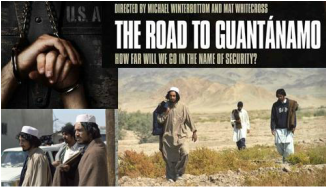 This docu-drama illustrates human rights abuses in the war on terror This docu-drama illustrates human rights abuses in the war on terror Tags: crime/law/deviance, government/the state, prejudice/discrimination, race/ethnicity, religion, war/military, human rights, muslim, racism, rendition, war on terror, 61+ mins Year: 2006 Length: 1:29:43 Access: YouTube Summary: The Road to Guantánamo is an "award-winning, intense, political, docu-drama about the Tipton Three, a trio of British Muslims who were held in Guantanamo Bay for two years until they were released without charge." Just days after 9/11, the three men traveled to Pakistan to attend a wedding. They crossed the border into Afghanistan at the same time that the US began military operations there, and after a series of missteps, they were left stranded. They were captured and transferred to the US military, who had mistaken them for Taliban fighters, and sent them to Guantanamo Bay Naval Base. The Tipton Three were exposed to harsh interrogation techniques but never charged, and eventually were released in 2004. A compelling feature in the film is the combination of first person narratives by the three you men, Ruhal Ahmed, Asif Iqbal and Shafiq Rasul, who appear as themselves in a talking head format alongside dramatic reconstructions of their actual experiences. For example, the film conveys a sense of what it feels like to experience noise bombardment and the 'futility torture' techniques where music is played (e.g. Metallica, James Taylor) to prisoners at deafening volumes in dark rooms. The video can be usefully paired with an article by Suzanne Cusick (2008), “'You are in a Place that is out of this World ...": Music in the Detention Camps of the 'Global War on Terror.'" For a similar account of torture techniques used in the US war on terror at Guantanamo Bay, see this news clip featuring an interview with Muhammad Saad Iqbal Madni. Submitted By: Les Back 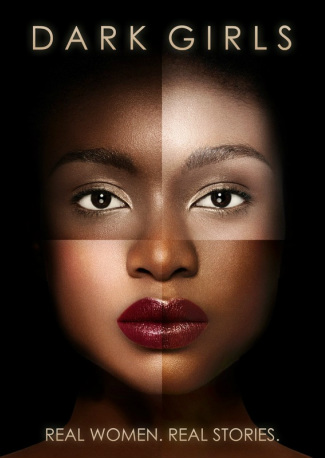 "Dark Girls" examines discrimination and skin color. "Dark Girls" examines discrimination and skin color. Tags: children/youth, culture, discourse/language, gender, intersectionality, prejudice/discrimination, race/ethnicity, colorism, racism, self-esteem, 61+ mins Year: 2011 Length: 68:00 Access: YouTube Summary: As stated on the film's website, "Dark Girls is a fascinating and controversial documentary film that goes underneath the surface to explore the prejudices that dark-skinned women face throughout the world. It explores the roots of classism, racism and the lack of self-esteem within a segment of cultures that span from America to the most remote corners of the globe. Women share their personal stories, touching on deeply ingrained beliefs and attitudes of society, while allowing generations to heal as they learn to love themselves for who they are." Filmmakers D. Channsin Berry and Bill Duke spoke about their own motivations for making the film, citing their own experiences with colorism or, discrimination based on skin color. Specifically, Duke cites a famous social psychological study design in which young black children are presented with two dolls--one black and one white--and are asked to point to the doll that is not pretty, not smart, bad, etc (this study is explored in more detail in the short film A Girl Like Me). Repeatedly, the children selected the black doll. Duke points to CNN's reproduction of this test decades later, which had similar results. This film would be useful to screen in any course that examines race, the intersection of race with gender and class, racism, and various dimensions of the self. Similar themes about discrimination and skin color are explored in the short film Shadeism. Submitted By: Denae Johnson and Valerie Chepp 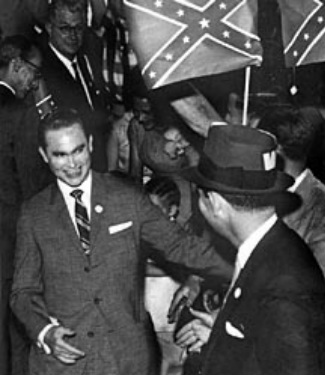 George Wallace, pro-segregationist Alabama Governor. George Wallace, pro-segregationist Alabama Governor. Tags: class, politics/election/voting, prejudice/discrimination, race/ethnicity, American South, desegregation, george wallace, political parties, race relations, segregation, 61+ mins Year: 2000 Length: 172:35 Access: YouTube (part 1; part 2) Summary: This three-hour PBS special documentary, titled George Wallace: Settin' the Woods on Fire, chronicles the life and career of Alabama Governor, George Wallace, well known for being the leader of pro-segregation policies during the 1960s. However, before his election as governor, he first ran for office in the 1950s and was considered a moderate who spoke against the Klu Klux Klan. In this election, Wallace's focus was on economic inequality instead of race relations, and he was endorsed by the National Association for the Advancement of Colored People (NAACP). This focus resulted in Wallace's loss to opponent John Patterson. The film goes on to document Wallace's transition into a leader of segregation throughout Alabama and the United States. The film's website offers additional educational resources, including a timeline of his life and political career, election maps, relevant people and events, and a teacher's guide. Additional resources, including transcripts, primary source documents, and a list of suggested reading, are also available on the film's website. George Wallace: Settin' the Woods on Fire won the Sundance 2000 Film Festival Special Jury Prize. Submitted By: Anonymous  Film explores various dimensions of white privilege. Film explores various dimensions of white privilege. Tags: discourse/language, inequality, race/ethnicity, chicago, colorblind racism, gentrification, myth of meritocracy, post-racial, racism, shakti butler, white privilege, 61+ mins Year: 2013 Length: 90:48 Access: Vimeo Summary: [NOTE: Audio may be low during segments of this film so you may want to turn your audio up or use headphones.] Dismantling White Privilege is a documentary featuring interviews with students, faculty, and staff of DePaul University, as well as filmmaker and educator Shakti Butler. The film explores and analyzes white privilege and its various nuances in American society. The film is perfect for classroom instruction because it is broken down into topics, including "dealing with race" (7:17), a race analysis of the movie The Help (35:36), "gentrification" (43:56), "dealing with white privilege" (46:20), "colorblindness" (59:43), the presumption that the U.S. is "post-racial" (65:35), "the myth of meritocracy" (68:53), the intersection of race, privilege, and language (70:35), "talking about race" (78:58), and "where do we go from here?" (84:39). Each topic features a wide array of voices, opinions, and strategies about how to move forward in a country still plagued by the legacy of racism. Submitted By: Timothy Lydon 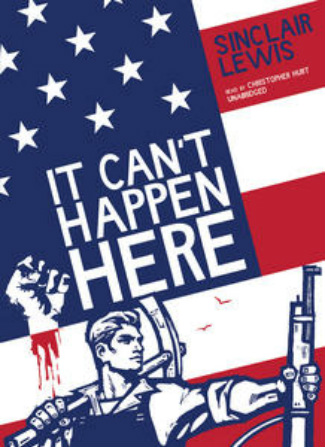 Film explores whether the US is immune to tyrannical rule. Film explores whether the US is immune to tyrannical rule. Tags: crime/law/deviance, government/the state, historical sociology, inequality, nationalism, politics/election/voting, dictatorship, domination, oligarchy, social construction of reality, tyranny, 61+ mins Year: 2013 Length: 94:23 Access: Top Documentary Films Summary: As stated on the film's website: "There are many perfect examples in our recent history which undoubtedly show that dictatorial regimes impose subjection, blackmail, servitude, intimidation, abuse, persecution and execution upon innocent people. However, many Americans are strongly convinced and assuredly assert that such a thing could never happen in the United States. But is this just desirous reasoning? Or, is there something essentially disparate about the United States that makes it resistant to the despotic abuse that has afflicted every other considerable empire in history? The primary step in scrutinizing the assertion that it can't happen here is to recognize and describe what "IT" is. Many people have distorted, almost comic-book-type, impression of dictatorship. In the real world autocracy has always crept in under the pretense of safeguarding the nation, defending the people, and establishing law and order. A dictator, in order to acquire and hold power, must demand the support of the people. An effective oppressor cannot publicly display malevolence and desire for power but must design his approach so as to persuade the people that his goals are righteous, that he wants honesty and fairness to abound, and that the most desirable way to make that true is to give him or her dominance and authority. Tyrannical governments develop by abusing people's fears - economic uncertainty, crime, foreign aggressors and so on and persuading the people that the quick-fix is for a political leader to be legally given absolute jurisdiction so he can shield the people from the wickedness of the world. This is always the pattern out of which autocracy is born. No matter how cruel or bloodthirsty regime becomes those in charge will persist to claim noble intentions and will dictate that an extreme government powers are required to protect the people and to create justice and order. Every time mankind has taken a step away from democracy and towards autocracy it was done in the name of defending the country and the people." Submitted By: Tom Sparhawk  In Both, Rebeca learns the truth about a childhood surgery. In Both, Rebeca learns the truth about a childhood surgery. Tags: biology, bodies, gender, lgbtq, science/technology, sex/sexuality, bisexuality, intersex, sexual expression, sexual identity, sexual orientation, 61+ mins Year: 2005 Length: 86:20 Access: Vimeo Summary: [Trigger warning for those who might be traumatized by depictions of the sex reassignment surgery many intersex people experience as children] People often want to know how many people are born intersex? Unless one is specific about the many physical features that often get named "intersex," the question is difficult to answer. For instance, based on research from Blackless et. al. (and reported here), in the medicalizing language of late onset adrenal hyperplasia, 1 in 66 people are intersex; however, only 1 in about 150,000 are intersex if you restrict the label to include only those who have what medical doctors refer to as complete gonadal dysgenesis. The frequency of people receiving surgery to "normalize" the appearance of their genitals is about 1 or 2 people in 1,000. Frequencies are perhaps an interesting place to start a discussion on intersex, but in themselves, numbers do little to give voice to those who are born intersex within a culture and society that upholds a strictly dimorphic understanding of sex. The above film, Both, is a compelling drama, based on the experiences of many intersex adults, and the film tells a story of an issue that has been widely silenced through shame and secrecy. In the film, Rebeca Duarte, played by Jackie Parker, works as a stunt double for indie action films in San Francisco. From rolling out of cars to setting herself on fire, she puts her life at risk on a daily basis. Work, lovers and friends take up most of her time, but deep inside, she feels something is missing. Rebeca feels strangely disconnected from her own body and can’t figure out why. One day she mysteriously receives a photo album from someone in Peru, where she had spent her childhood. The album contains pictures of her parents and her brother who had supposedly died, but no images of herself. Feeling unsettled, Rebeca sets out to discover the mystery and unravel the web of lies that both the doctors and her parents have spun her whole life. Through her fight to uncover the truth, Rebeca discovers her own identity and a renewed passion for life. Both works by posing compelling questions about gender and sexuality through the experiences of its intersex protagonist. For those considering showing the film in class, note that nudity, masturbation, and sexual intercourse are depicted at 17:50 mins, 21:30 mins, and 53:20 mins. Submitted By: Leslie Jaye |
Tags
All
.
Got any videos?
Are you finding useful videos for your classes? Do you have good videos you use in your own classes? Please consider submitting your videos here and helping us build our database!
 |
 RSS Feed