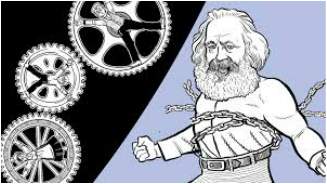
 Marx argued that the only thing workers stands to lose by collectively revolting are their chains Marx argued that the only thing workers stands to lose by collectively revolting are their chains
Tags: capitalism, class, marx/marxism, organizations/occupations/work, theory, alienation, division of labor, species essence, 00 to 05 mins
Year: 2015 Length: 1:57 Access: YouTube Summary: This video summarizes Karl Marx's concept of alienation. Marx wrote about alienation as a condition that uniquely arises from capitalism, and it comes in two basic flavors: first, workers are alienated from the product of their labor, and second, they are alienated from each other. It's useful to consider each of these claims separately. In the first instance, workers are alienated from the stuff they create because it disappears to shops in far off places; however, under capitalism, it is often the case that even when a product is sold in a shop just down the road from the factory or farm where it was created, workers often cannot afford it. For instance, many Ivory Coast cocoa farmers cannot afford to buy the chocolate they produce and just as many have never even tasted it. • In terms of the second type of alienation, workers are alienated from each other, meaning that the capitalist mode of production generally prevents workers from forming meaningful relationships with one another. Consider that one characteristic feature of capitalist production is the division of labor, which means that each worker becomes efficient at completing a single, tedious task, leaving him or her with neither the time nor opportunity for the kind of interpersonal interactions that were once a part of the production process (recall how Charlie Chaplin's character in Modern Times couldn't tighten bolts on an assembly line fast enough and how Lucille Ball's character in an episode of I Love Lucy couldn't wrap candy on an assembly line fast enough). In any case, as the video's narrator states, Marx argued that the only way out of this alienating mode of production is to organize and revolt. As Marx and his coauthor penned in The Communist Manifesto: "Workers of the world unite; you have nothing to lose but your chains." Submitted By: Lester Andrist
1 Comment
 John Oliver examines what's behind stylish cheap clothes. John Oliver examines what's behind stylish cheap clothes.
Tags: capitalism, consumption/consumerism, corporations, economic sociology, globalization, apparel, fashion, supply chains, sweatshops, 11 to 20 mins
Year: 2015 Length: 17:09 Access: YouTube Summary: In this clip from Last Week Tonight, John Oliver analyzes the rise of fast fashion and its tremendous profits. Fast fashion includes short times from design to rack, with fashion styles changing constantly at companies such as H&M, Zara, and Forever 21. But news commentators are shown marveling at the very low costs of the trendy, fashionable clothes. Given these low costs, Oliver asks “How does any clothing company make money?” After all, the industry has many billionaire founders and executives, whose companies excel with high-volume sales. The reality is that 2% of clothing worn by Americans is made in the US, while the rest is produced overseas and often in sweatshop conditions. Oliver frames this in terms of the outrage over sweatshop clothing producers in the 1990s, by companies such as Nike, Gap, and most famously, Kathie Lee Gifford. In response to protests, many of these large companies agreed to monitoring programs in their supply chains. So how have their production conditions changed? In more recent years, undercover journalists investigating Gap and Wal-Mart found child slaves; non-compliance with workplace safety standards; and repeated denial of responsibility for any wrong-doing. One particular issue is that contractors producing clothes for Wal-Mart must follow certain standards, but contractors frequently send this work to sub-contractors; when the sub-contractors violate labor standards, Wal-Mart denies any knowledge that their clothes were being produced in these factories. However, this issue is far from an isolated event, and Wal-Mart repeatedly denies awareness of these issues. This dynamic is not unique to any manufacturer, but it reflects supply chain issues that are fundamental to the global economy, and are an important part of understanding global inequality and our own participation (as consumers) within it. Submitted By: Paul Dean  This video examines the phenomenon of "gendered pricing." This video examines the phenomenon of "gendered pricing."
Tags: capitalism, gender, inequality, marketing/brands, prejudice/discrimination, gendered pricing, pink tax, subtitles/CC, 00 to 05 mins
Year: 2015 Length: 3:59 Access: YouTube Summary: In this video, YouTuber Liz Plank looks into how products marketed towards men and women vary in price. Liz starts out with the startling statement that women are losing $100,000 over the course of their lifetime. Not to the wage gap, but to the products they buy--the so called “pink tax.” Liz and her co-blogger Alex (a male identifying individual) take an experimental approach to this issue and head to a pharmacy to see if there really is a price difference or, pink tax, applied to women’s products. Liz and Alex each bought five personal care products that were marketed towards their genders. They made sure that their samples were consistent by checking that the products they bought were the same brand, had the same active ingredients, and were the same size. They each bought one pack of razors, a deodorant bar, shaving cream, wrinkle cream, and body wash. Liz and Alex then compared the prices of the items they bought. In total, Liz spent $42.69 and Alex spent $37.42. For the exact same products, the only difference was that Alex’s products were marketed towards men, and Liz’s towards women. Just to make sure that they actually were the same products, they swapped products for a week. After a week of using the products targeted at the other gender they found no difference in the quality or utility of their products. This led them to conclude that women are in fact getting charged a pink tax for the same products that men can buy for less. This could be because of social norms that dictate that women care more about appearance and are therefore willing to pay more for personal care items. Beauty product companies want to make as much as possible on their products, and they drive up the price of items targeted at women. Because consumers are socialized to shop in the beauty aisle marketed toward their gender and not look at the “other” gender’s products, many people do not even notice this discrepancy. Submitted By: Abigail Adelsheim-Marshall 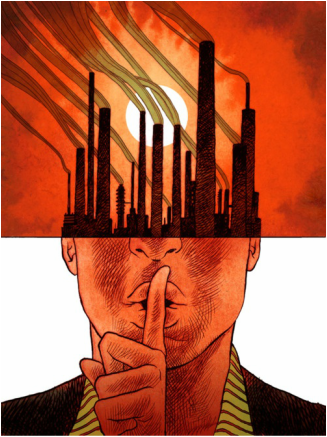 Atmospheric CO2 is at 400 ppm & climbing (Image credit: Koren Shadmi) Atmospheric CO2 is at 400 ppm & climbing (Image credit: Koren Shadmi)
Tags: capitalism, corporations, environment, buen vivir, climate change, climate crisis, climate justice, corporate social responsibility, environmentalism, extractivism, false solutions, fracking, global warming, political ecology, tar sands, 00 to 05 mins
Year: 2015 Length: 3:06 Access: YouTube Summary: In January 2015, scientists recorded atmospheric levels of carbon dioxide above 400 parts per million on a regular basis—the first time such a level had been detected so early in the calendar year. It is well established that levels of CO2 above 350 (already well above the pre-industrial norm of 275 ppm) spur global warming. As observed in Texas, Oklahoma, California, and countless other places around the world, we are now experiencing the effects: extreme weather, droughts, rising sea levels, thawing permafrost, etc. Levels above 450 will most likely put the planet on an inescapable course toward catastrophic climate change. • 400 ppm is an eco-political music video, which encapsulates the climate crisis and climate justice in just three minutes. It is an intervention in popular political ecology/economy, aimed at those who are uneasy with the increasingly obvious deterioration of the living systems of which we are an inextricable part. It might also be a useful way of beginning a critical discussion about the human causes of climate change. • The song begins from basic observations—symptoms of the crisis—and then shifts to the ideological problem of denial, softened in recent years by massive corporate social responsibility advertising and complemented by the emergence of ‘silver-bullet’ geo-engineering schemes. At the song’s midpoint, its bridge identifies the structural drivers of the crisis: carboniferous capitalism, and the contradiction between compounding capital accumulation and the principle of homeostasis which governs the biosphere. The next verse underlines that point and invokes, with the wheel of fortune, a financialized casino-capitalism inured to its material ‘externalities.’ Wes Carroll’s spirited guitar solo is accompanied by images from Canada’s notorious Tar Sands, of bitumen extraction and what it leaves behind. But at this point the video begins to arc toward hope, with footage from the Tar Sands Healing Walk (featuring Cree activist and writer Clayton Thomas-Muller)—an annual event since 2010 bringing together Indigenous activists, environmentalists and others. • The last verse gestures toward a just transition—a power shift—to a post-capitalist future that combines global justice and solidarity with ecological stewardship, and that abandons the consumer-capitalist logic of always having more, in favor of buen vivir: ‘living well.’ To get there, we had better start healing what Karl Marx called the metabolic rift between capitalist extractivism / accumulation and the conditions for a vital ecosystem. Mass popular struggle, building on but going beyond the September 2014 People’s Climate March (the final image), is a necessary condition for such a radical remaking of our world. Submitted By: Bill Carroll  A boy sings to the rich about the plight of the poor. A boy sings to the rich about the plight of the poor.
Tags: capitalism, class, economic sociology, inequality, marx/marxism, political economy, theory, class consciousness, class conflict, 00 to 05 mins
Year: 2012 Length: 2:48 Access: YouTube Summary: This clip from the 2012 film of the musical Les Misérables begins by showing beggars and urchins pressing against the carriages of the rich, begging for food or money. Gavroche, the lead urchin, explains to the audience the political situation in France (in 1832) and then joins a crowd of people expressing their anger at the situation so many of them are in. For the most part, the classes are polarized binto the rich and the poor (lower and upper classes). Particularly in the case of the working class, there seems to be minimal gap between their actual needs and experiences and their attitudes toward their situation. The scene and its accompanying song reflect key concepts in much of Marx and Engels' Manifesto of the Communist Party. For example, it illustrates the lower class's class consciousness, as both their objective class position and subjective consciousnesses are aligned; they realize their own position in the class system and how it affects them. As noted by Marx and Engels, the poor can “live only so long as they find work, and who [can] find work only so long as their labour increases capital” and are therefore wholly dependent on the upper class for their livelihood. However, the upper class is not acting in the interests of these poor, and the leaders that could make decisions to the benefit of the poor are absent and unhelpful. Therefore, the only people that can act in the interests of the lower class are the poor themselves. In order to live the life they want to live, the poor need to rise up collectively and make the necessary changes in the system. As this collective action is “continually being upset again by…the workers themselves” (Marx), the young men function to facilitate the inevitable conflict with the upper class. When Gavroche explains the continuous political loop the people have been in, finding themselves struggling again after seeming to have fixed the problem, he demonstrates the idea that class struggle is continuous and, according to Marx, present in “the history of all hitherto existing society.” With this understanding of the sociological factors in play in this clip, the viewers can make connections between the clip, albeit fictional, and other instances of class conflict throughout history. It is a strong representation of the differences between different classes and the consciousness that leads to conflict and change. Submitted By: Kiersten Payne 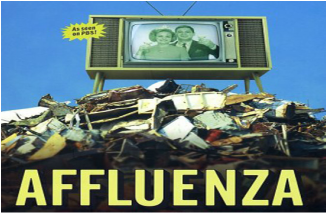 Affluenza is a combination of "affluence" and "influenza" to critique the disease of consumerism. Affluenza is a combination of "affluence" and "influenza" to critique the disease of consumerism. Tags: capitalism, class, consumption/consumerism, culture, economic sociology, health/medicine, inequality, marketing/brands, affluenza, american dream, keeping up with the joneses, status treadmill, 06 to 10 mins, 21 to 60 mins Year: 1997 Length: 10:13 (entire documentary is 56:00) Access: YouTube Summary: This clip (start 2:12; end 12:35) from the documentary Affluenza (based on the book), defines the concept and consequences of affluenza. Using the metaphor of disease, affluenza can be defined as a bloated, sluggish and unfulfilled feeling that results from efforts to keep up with the Joneses; an epidemic of stress, overwork, waste and indebtedness caused by dogged pursuit of the American Dream; and an unsustainable addiction to economic growth. This clip notes that "never before has so much meant so little to so many." It can cause headaches and depression amongst other symptoms, and the narrator notes that if it goes untreated, the disease can cause "permanent discontent." In addition to discussions of consumer culture, the clip works particularly well with the book, The Spirit Level. Using a variety of quantitative data, authors Wilkinson and Pickett argue that more unequal societies suffer a variety of social problems. The reason, they propose, is that more unequal societies place more emphasis on material success to prove one's worth in society. This constant drive to display one's material success can never be satisfied and leaves individuals throughout the social hierarchy being unfulfilled. In other words, unequal societies are more likely to suffer from affluenza, and the negative social and health outcomes (e.g. lower life expectancy, higher infant mortality, higher mental illness, higher drug use, etc). The narrators in the video clip further note that while the disease is very contagious (due to extensive marketing and the rise of consumer culture), it is treatable. Viewers might peruse the videos in our social movements category and other web resources for ideas of how to cure affluenza. The documentary website from PBS also offers a teaching guide. Submitted By: Paul Dean  A vintage video game is used to discuss Marxism. A vintage video game is used to discuss Marxism. Tags: capitalism, class, economic sociology, marx/marxism, political economy, theory, alienation, dialectical materialism, philosophy, subtitles/CC, 00 to 05 mins Year: 2014 Length: 3:51 Access: YouTube Summary: This video is part of a series of 8-bit Philosophy, which seeks to “communicate even the most complex of philosophical concepts in a fun, easy-to-understand way.” It uses vintage video games (from the original Nintendo) to explain complex philosophical ideas. Using quotes from The German Ideology and other works, with altered scenes from Super Mario Brothers, the narrator explains several concepts within Marxist theory. For example, the narrator explains that Marx argued it was not ideas that drive historical change, but "it is our conflict arising out of our relation to material goods" that shapes history. This process of historical materialism is explained in terms of the economic systems and social relations of a society; it is simultaneously illustrated using a character from the video game (Toad) and its weapons (a turnip) that reflect commodities that the character produces. Other concepts include exploitation, the four forms of alienation, and communism—all placed in the context of familiar Super Mario Bros references, such as Bowser, collecting coins, and the classic background music. Submitted By: Paul Dean 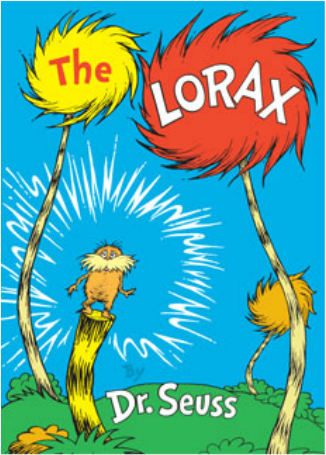 The Lorax warns that industrial activity will destroy our natural environment. The Lorax warns that industrial activity will destroy our natural environment. Tags: capitalism, consumption/consumerism, economic sociology, environment, theory, ethical consumption, externalities, industrial production, ipat formula, markets, 21 to 60 mins Year: 1972 Length: 25:13 Access: YouTube Summary: Written by Dr. Seuss, The Lorax is a children's book that tells the story of a stereotypical industrialist who clear-cuts a forest of trees to produce "Thneeds" for growing consumer markets. The Lorax, who "speaks for the trees," continuously but unsuccessfully explains that the industrial activity is destroying the forest and the homes of its many animals. The industrialist, Mr. Onceler, explains he is only "meeting consumer demand" and that "if I didn't, someone else would." But eventually, the trees are gone and the landscape is destroyed, thus making Mr. Onceler's business go bankrupt. Seeing the errors he made, Mr. Onceler encourages a boy passing by to plant new Truffula trees and regrow the forest. The original cartoon based on the book offers a familiar and entertaining way to discuss the relationship between industrial production, consumption, and environmental problems (note the cartoon was more recently made into a computer-animated film with 70+ controversial product-placements, offering additional points of discussion). The cartoon illustrates many key concepts, including the externalization of environmental costs, the consumer demand that partially drives the treadmill of production, and the popular IPAT forumla (Impact = Population X Affluence X Technology) for conceptualizing factors that explain environmental degradation. However, as Maniates (2001) argues in "Individualization: Plant a Tree, Buy a Bike, Save the World?," the story narrowly suggests individualistic solutions. He argues the proposed "response half-consciously understands environmental degradation as the product of individual shortcomings (the Once-ler's greed, for example), best countered by action that is staunchly individual and typically consumer-based (buy a tree and plant it)" (pp. 32-33). As such, the video can be used to distinguish the individualist explanations of production and consumption, from the more sociological explanations that link Mr. Onceler and the Lorax's activities to broader structural and institutional forces (and the limits of consumer-driven prospects for change). Maniates further notes that the popular IPAT formula excludes several important factors related to power and governance that impact environmental degradation. Another interesting theme, noted by Maniates (p. 32), is the "seeming inability of science (represented by the fact-spouting Lorax himself) and objective fact to slow the damage." Submitted By: Paul Dean  Laurence Fishburne explains gentrification in Boyz N the Hood. Laurence Fishburne explains gentrification in Boyz N the Hood. Tags: capitalism, class, community, inequality, race/ethnicity, rural/urban, gentrification, housing, neighborhood succession, racism, 00 to 05 mins Year: 1991 Length: 4:18 Access: YouTube Summary: Gentrification radically transformed my neighborhood. Growing up in and around east Austin, I have experienced first-hand the changes that can occur within an area over a mere decade. As a child, I visited family members throughout east Austin. All of us are Latino, and everybody not only knew everyone else, but also where they lived. Now as the city rapidly grows, many in my family are being forced by rising property taxes to sell their homes. These homes are primarily being bought up by young, affluent, white real-estate developers, who are scrapping such dwellings and doing complete renovations in order to attract young, affluent, white occupants. This scene from the film Boyz N the Hood (1991) can be used to teach students about gentrification: "the process of renewal and rebuilding accompanying the influx of middle-class or affluent people into deteriorating areas that often displaces poorer residents." In this clip, Furious Styles (Laurence Fishburne) takes his son, Trey, and a friend to a nearby neighborhood where a billboard has just been put up offering to buy-up homes. Furious explains the specifics of how the property values in a neighborhood are brought down, while the land is bought out and sold for big profit. He also notes that this could be prevented if residents maintained solidarity by retaining black ownership. Placing gentrification into a larger historical context, this clip from the Broadway play Clybourne Park features a mix of humorous scenes that collectively illustrate salient attitudes and behaviors accompanying neighborhood succession over time: residential areas that were once white and middle-class in composition transformed through white flight into those with predominately black working-class and poor populations, and then ultimately with gentrification, back into white upscale neighborhoods. See also this recent piece featuring Spike Lee, arguing that gentrification reveals government racism in the provision of far better public facilities and services to an area once it is gentrified. (Note: A version of this post originally appeared on SoUnequal.) Submitted By: Rene Gonzalez 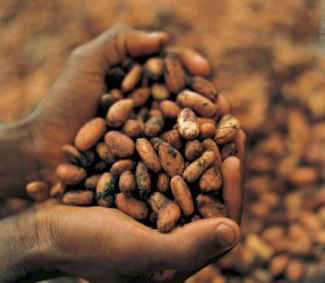 Cocoa farmers may go their entire lives without tasting chocolate Cocoa farmers may go their entire lives without tasting chocolate Tags: capitalism, class, food/agriculture, globalization, marx/marxism, organizations/occupations/work, theory, alienation, chocolate, cocoa farming, commodity chains, ivory coast, species-being, subtitles/CC, 06 to 10 mins Year: 2014 Length: 5:55 Access: YouTube Summary: It is quite common to hear people discuss Karl Marx's notion of alienation as a term that simply describes widespread feelings of unhappiness and psychological distress among workers. It's true that one result of alienation may be unhappiness, but the term was intended to describe much more than workers' feelings. It's important to remember that Marx wrote about alienation as a condition that arises from the social relations that form within a system of capitalist production. For instance, Marx worried that one consequence of the division of labor in capitalist societies is that workers had become estranged from each other. Marx was also interested in drawing attention to workers' relationships to their work (i.e., species-being). For example, prior to modern capitalism, a woodworker could express herself through her work by making unique decisions about how pieces of furniture were to be constructed. However, under capitalism workers are often not afforded the ability to express themselves through their work. Work has instead become a series of routinized movements, making every new piece of furniture identical to the last. In addition to the relationship between workers and their work, Marx also wrote about alienation in reference to the relationship between workers and the products they produce. If one thinks about it, capitalism is a peculiar system in that it compels people to produce objects that do not belong to them. Again, the woodworkers of long ago could conceivably keep the furniture they built, or if the mood struck them, they could give it away as a gift. Under modern capitalism, the furniture workers produce generally belong to their employers. Moreover, modern capitalism is a system that has people creating things they may never even use. Although an Ikea employee might spend her day helping construct the components of low cost furniture, her home may not actually contain a single product from Ikea. Another rather vivid example of this last form of alienation can be observed in the above video, which features Ivory Coast cocoa farmers who have never even tasted chocolate. Note that The Sociological Cinema has also explored Marx's notion of alienation as it can be observed on assembly line work and on modern chicken farms. Submitted By: Lester Andrist |
Tags
All
.
Got any videos?
Are you finding useful videos for your classes? Do you have good videos you use in your own classes? Please consider submitting your videos here and helping us build our database!
 |
 RSS Feed