 The latent vs. manifest functions of education. The latent vs. manifest functions of education.
Tags: art/music, children/youth, education, inequality, knowledge, adolescence, hidden curriculum, latent functions, manifest functions, pedagogy, performance poetry, spoken word, structural functionalism, youth studies, 00 to 05 mins
Year: 2014 Length: 3:46 Access: YouTube Summary: In this spoken word performance entitled “Somewhere in America,” three high school students share their experiences as youth in America’s educational system. The video can be used to illustrate features of the structural-functionalist perspective, and specifically how sociologists working within this framework—e.g., Emile Durkheim, Robert Merton, and Talcott Parsons—distinguished between the manifest and latent functions (and dysfunctions) of various social phenomena. Here, the teenagers discuss the functions and implications of the manifest versus latent curriculum, and how these two curriculums play out in the lives of children. The poets argue that the manifest curriculum, which is the content teachers are required to teach, is not what students remember most; rather, the girls suggest that the latent or hidden curriculum is the knowledge that becomes more deeply embedded in students’ memories and daily interactions. The hidden curriculum refers to the values, beliefs, and attitudes that are transmitted to students through the education system; a latent function of these hidden lessons is that these help to socialize young individuals to form a more “cohesive” society. In doing so, the views and values of the dominant culture are coached into the minds of young school-goers. Arguing that the biggest lessons in school “won’t come from a syllabus,” the words of these poets reinforce decades of social scientific research stating that schools go farther than simply advancing the academic success of children; schools also instill social and cultural ideas within students (for one prominent example, see Ann Arnett Ferguson’s research on the role of public schools in constructing Black masculinity). The group closes by saying, “The greatest lessons [in school] are the ones you don’t remember learning.” While we’ve chosen to highlight the structural-functionalist contours of the poem, viewers are encouraged to think about how the teens’ poem can be read through other foundational sociological lenses, namely, social conflict theory and symbolic interactionism. For example, the students’ attention to power inequalities that emerge from the education system resemble a social conflict approach. This supplementary video explaining the three foundational sociological perspectives and how they relate to education can help viewers with this analysis. Submitted By: Jordan Grier and Valerie Chepp
6 Comments
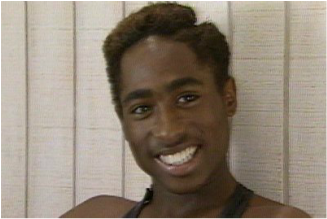 17-year-old Tupac Shakur reflects on society in this 1988 interview. 17-year-old Tupac Shakur reflects on society in this 1988 interview.
Tags: children/youth, class, education, inequality, intersectionality, race/ethnicity, social mvmts/social change/resistance, adolescence, sociology of youth, standpoint theory, youth studies, 21 to 60 mins
Year: 1988 Length: 35:39 Access: YouTube Summary: Scholars working within the interdisciplinary field of Youth Studies often highlight the limited ways in which youth and their unique lived experiences are portrayed in popular discourse and academic literature. For example, discourses around adolescent sex and sexuality—and specifically adolescent female sexuality—frequently rely on ideologies of fear, shame, and restraint (Fields 2008; Fine and McClelland 2006; Fine 1988). Andreana Clay (2012) points to the ways sociologists tend to focus on "deviant" behavior within youth culture: "By focusing on gangs or the consumption of fashion, music, and the media, scholars have pointed to a crisis among youth, particularly youth of color and working class youth. Recent attacks on affirmative action, increases in police brutality and racial profiling, and new anti-youth legislation have exacerbated this sense of crisis, urgency, and hopelessness among critics, community activists, scholars, and the youth themselves" (Clay 2012:3). Often missing from popular portrayals of youth and youth culture is a perspective that comes directly from youth themselves. • Filmed prior to his experience with stardom, in this 1988 interview, rapper Tupac Shakur (1971-1996) articulates his perspective on society, told from the standpoint of being a teenager, Black, and poor. Only 17-years-old at the time, the interview is full of wisdom and insight, as Tupac talks about various aspects of society from this unique intersectional vantage point. Prominent themes include his reflections on what it feels like to be a teenager growing up in the late 1980s, youth stereotypes, and the deep desire youth have for being respected. He provides context and nuance for why his generation seems angry, rebellious, and scared, pointing in part to the ways in which prior generations of adults have left behind a world in crisis that the younger generation must fix. He also critiques America's antiquated education institution, and how school curriculums fail to prepare his generation for today's world. Advocating for a more socially and intellectually relevant adolescent education, Tupac suggests classes on drugs, “real” sex education, scams, religious cults, police brutality, apartheid, American racism, poverty, and food insecurity. Using the example of foreign language education, Tupac underscores the irrelevancy of learning something like German (“When am I going to Germany?! I can hardly pay my rent in America!”) and the need for young people to learn the basics of English, as well as “politicians’ double talk.” Citing rising homicide, suicide, and drug abuse rates, Tupac provides a glimpse of his gift for poetry and incisive social commentary when he argues, “More kids are being handed crack than being handed diplomas.” He further advocates for his own unique perspective of society and its significance when he proposes that adults and youth, and rich and poor, temporarily switch roles, so that each group can understand and experience the others' realities. • Tupac concludes the interview talking about social change, and the role of youth within movements for change. Throughout the interview, Tupac reflects frequently on his mother, Afeni Shakur, who was an active member of the Black Panther Party in the late 1960s and early 70s. The influence of this political legacy is evident in Tupac's own political consciousness. Asked what he can do when he grows up, Tupac talks about the challenges of social change, and how the structures of society make change difficult. Using the metaphor of a maze of blocks in which mice roam, Tupac says, “Society is like that. They’ll let you go as far as you want, but as soon as you start asking too many questions and you’re ready to change, boom, that block will come." Tupac expresses his disillusionment with our political leaders and democratic process, but he also alludes to his own sense of hope, as he is actively engaged in political organizing around issues of safe sex and teen violence. At the time of the interview, he and his high school friends are trying to reinvigorate the Black Panthers' political efforts, particularly their vision around education and Black pride. Submitted By: Valerie Chepp  In the movie Clueless, self-mastery is a skill taught to rich kids. In the movie Clueless, self-mastery is a skill taught to rich kids.
Tags: children/youth, class, education, inequality, marriage/family, bourdieu, cultural capital, parenting, self-efficacy, self-mastery, socialization, status, 00 to 05 mins
Year: 1995 Length: 4:50 Access: YouTube Summary: Several generations of sociological researchers discovered parenting styles vary by social class. Post World War II, Melvin Kohn ([1969] 1977) found middle-class parents stress self-mastery and creativity in their children; working-class parents focus on instilling conformity and making their children obedient to authority. At the turn of the century, Annette Lareau’s ([2001] 2011) research found working-class parents focus on providing basic necessities for their children while largely leaving their kids alone to socialize themselves; middle- and upper-class parents focus on instilling self-mastery in their children, often through activities, constructive interactions with others, and the learning of making choices and actions to bring about desirable outcomes. More recently, Jessica McCrory Calarco (2014) found classed parenting styles influence education, as there is a positive relationship between class status and a student’s likelihood of taking a proactive role in their learning. These cross-class parenting styles and their influence on education is depicted in this edited clip from the movie Clueless (1995), where a wealthy and powerful father encourages his daughter to achieve high academic marks not through hard work and study, but through creative negotiation and maybe even the outright manipulation of teachers. According to generations of research on cross-class parenting styles, it would be unlikely working-class parents would emphasize negotiation as a life skill, perhaps because these fathers and mothers often feel powerless themselves. Thus, alongside the economic resources that are especially important to intergenerational mobility, middle- and upper-class parents also pass along a form of social capital to their child that offers advantages in modern workplaces that do not reward subordination to authority, but rather incentivize the ability to bend and manipulate authorities towards one’s own interests and desires. Submitted By: Jason T. Eastman 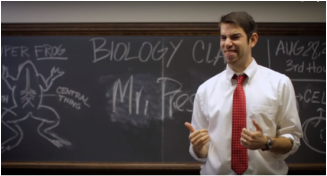 White savior films: who needs to be saved and why? White savior films: who needs to be saved and why?
Tags: children/youth, education, media, race/ethnicity, stereotypes, white savior complex, 06 to 10 mins
Year: 2015 Length: 9:54 Access: YouTube Summary: This short film flips the typical white savior teacher narrative and offers a counterpoint to the cliché of a white teacher who endures the perilous journey each day into the inner city in order to teach "at-risk," students of color. The Sociological Cinema has previously taken up the topic of the white savior complex in a pair of satirical videos poking fun at the Kony 2012 campaign (here and here) and in an essay about the film McFarland, USA. Along with a few guiding questions, this video would be useful as a writing prompt. Instructors could ask students to consider how one might successfully combat the stereotypes typically found in white savior films. What would a counter to those movies look like? White savior films like Dangerous Minds, which the above film references, are fueled by the idea that a group of people need to be saved. Who needs to be saved in Dangerous Minds, and why do they need to be saved? The above film can prompt broader discussions about the role played by media in perpetuating or challenging stereotypes. Finally, are white savior films racist? Why or why not? Check out this Pinterest board for even more examples of white savior films and white-centered media. Submitted By: Esteban Gast 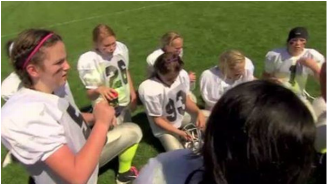 Girls gather for practice in their all-girls tackle football league. Girls gather for practice in their all-girls tackle football league.
Tags: biology, children/youth, gender, social construction, sports, american football, girls, 06 to 10 mins
Year: 2015 Length: 6:45 Access: ESPN Summary: This ESPN video explores the first all-girls tackle football league. They are changing what it means to "play like a girl" and the video shows girls excited to play a physically aggressive sport, which is more traditionally associated with boys and masculinity. But the video does more than challenge gender norms by providing an opportunity to think about the distinctions between sex and gender on shaping the body and body perceptions. Dr. Robert Cantu, Clinical Professor of Neurosurgery and Co-Director of the Center for the Study of Traumatic Encephalopathy, is an outspoken critic of boys (and girls) playing football before high school. He argues that children under the age of 12 that play tackle football have a "significantly greater late life chance to have cognitive problems, depression, and lack of impulse control, compared to the same group of people that started playing football at a later age." He goes on to argue that "young ladies [i.e. girls under 12] have much weaker necks than guys ... so that it takes less of a hit to produce a greater amount of shaking of the brain inside the skull" (the girls wear lighter helmets than those worn by the boys, and the football they use is smaller). But are these differences based in sex or gender? We might consider the degree to which weaker necks are a result of sex-based differences in average neck size and strength, or to what degree girls are socialized to do different types of activities in which they do not build comparable neck muscles? A further implication is that football is more dangerous for girls than boys, which begs the question of how we, as a society react to this claim about different neck sizes. Should we treat girls unequally and disallow them to play a sport that may carry greater risk for them, or should we promote gender equality in giving them equal opportunity to play a sport for which they have great passion? Towards the end of the clip, one of the girls interviewed receives a big hit during a game and "black[s] out." The mother discusses her concern for her daughter, but the young girl says "this is girls tackle football, and I need to toughen up." Submitted By: Paul Dean  A combination of visual images, sound, and text provokes discussion. A combination of visual images, sound, and text provokes discussion.
Tags: children/youth, education, emotion/desire, psychology/social psychology, theory, philosophy, postmodernism, 11 to 20 mins
Year: 2010 Length: 16:20 Access: ESRC Summary: This unconventional and provocative film challenges viewers to reflect upon what constitutes problematic behavior in children. As described on the film's website, "it presents a thought-provoking collection of visual, sound, and text images drawn from a range of sources, including art, education, psychology, special education, policy documents, popular media, and philosophy. These materials are organized around 5 key themes: What counts as problem behavior?; What is a normal child?; Difficult Bodies; Parents; and Observing and Monitoring." The film "depart[s] from the usual didactic conventions of the educational film or the in-service training video and invit[es] a more open and critical engagement from audiences." Its organization and style reflect some of its postmodern influences (e.g. Gilles Deleuze), and have provoked interesting responses from viewers (which have been shared by the film's creators). For example, viewers have noted its highly "emotional" and "somber" tone that suggests how education "controls children"; but its open-ended nature encourages a very diverse range of responses. The film also has accompanying educational support materials, "which can be used for training and professional development purposes, [and] provides some questions to guide discussion and further activity." Submitted By: Rachel Holmes 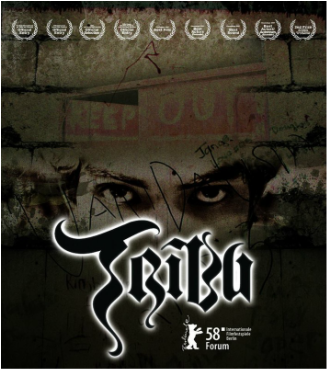 Tribue shows the cycle of urban poverty and violence. Tribue shows the cycle of urban poverty and violence.
Tags: children/youth, class, crime/law/deviance, inequality, rural/urban, violence, gangs, philippines, poverty, subtitles/CC, 61+ mins
Year: 2007 Length: 1:33:29 Access: YouTube Summary: This independent film, shot in the ghetto district of Tondo (Manila, Philippines), is "an ultra-realist depiction of youth corrupted by violence, death and decay, told documentary-style." The plot follows ten year-old Ebet as he witnesses the activities of rival street gangs, and is ultimately a story about the cycle of urban poverty. In the film, "the dangerous unlit streets and labyrinthine alleyways in the ghetto district of Tondo ... becomes a claustrrophobic backdrop to a random killing that triggers a wild and bloody gang war. Ebet, a 10 year old boy, encounters the members of Tondo’s gangsta tribes – juvenile thugs and petty criminals whose pastime of sex and drugs are veiled under their eloquent freestyle hip-hop rap – as each gang participates in a long, bloody and vicious cycle of revenge and reprisal, gangsta style. After a brutal midnight initiation ritual, young gang members discover the lifeless body of a young man on the street, knife still stuck in its back. Ebet watches as the police round up the gang, and charged for the murderous riots that erupt every night in the ghetto. The next day, members of the bereaved gang to whom the victim was a member of, discuss to find out which tribe perpetrated the crime. A vendetta is silently plotted, new alliances formed, to flush out the real murderers ... Hailed as a gritty portrayal of Manila’s notoriously violent streets of Tondo, Jim Libiran’s Tribu is Realist Cinema with a social project. To act as main actors, the filmmaker employed real-life gang members from rival clans, triggering a wave of unification and peace in a large part of Tondo's ghettos." Submitted By: Jim Libiran 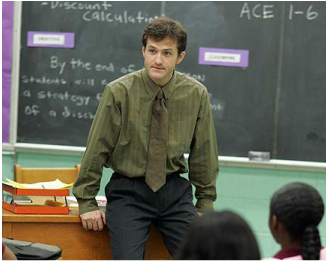 Unqualified teachers are much more likely in poorer schools. Unqualified teachers are much more likely in poorer schools.
Tags: children/youth, class, education, inequality, race/ethnicity, the wire, 00 to 05 mins
Year: 2006 Length: 1:31; 1:48 Access: YouTube clip 1; clip 2 Summary: Public education is meant to be the "great equalizer" and the cornerstone of the American Dream. But the reality is that the US has the greatest educational inequalities in the developed world, and in many ways, our educational system reproduces inequality rather than lessening it. These inequalities are largely rooted in how public schools are funded in the US. Most countries fund schools centrally and equally, but in the US, schools are largely funded through local property taxes and the wealthier your neighborhood, the wealthier the school (on average, wealthy schools spend 2-3 times more per pupil than poor schools). The impacts of these inequalities have been well documented in Kozol's (1991) classic study, Savage Inequalities, in more recent work (e.g. see "Structured for Failure: Race, Resources, and Student Achievement" by Linda Darling-Hammond, 2010); and they are illustrated throughout season 4 of The Wire. For example, schools in poorer districts cannot pay as high for teacher salaries and have a harder time attracting good teachers. In the first Wire clip above, the Principal and Assistant Principal discuss the teacher shortages that they have in science and math, and how the teachers took jobs in suburban schools. Roland Pryzbylewski (Prez) enters their office (after dealing with the schools' deteriorating infrastructure) in search of a job, and while he still lacks his teaching credentials, he is hired to teach math. Poor, low-achieving schools are five times as likely to have unqualified teachers, and this impacts teacher quality in the classroom (Darling-Hammond 2010). Schools in wealthier neighborhoods offer much higher salaries, more educational resources, and have fewer disruptive students, thus attracting better teachers to teach children from wealthier families. But the principals are happy to hear his past job was a police officer, given the severe behavioral issues Prez will face in the classroom. In the second clip, Bubbles helps his friend Sherrod return to school. Sherrod stopped attending school in the 5th grade, and is now 13 years old, which is a typical age for an 8th grader. But due to a lack of resources for students to repeat grade levels and a view that if they place the older children in the younger classes, "it us unfair to teachers, who are responsible for maintaining order." Accordingly, Sherrod will start off attending the 8th grade. This policy of "social promotion" effectively guarantees that Sherrod will not be prepared for the academic material taught in class. These types of inequality are also much more likely to impact students of color. Viewers would also be interested in this experiment on Oprah, where students from poor inner-city school traded places with a wealthy suburban school, which reinforces the examples above. You can also view other clips from The Wire that are useful for teaching sociological concepts. Submitted By: Paul Dean 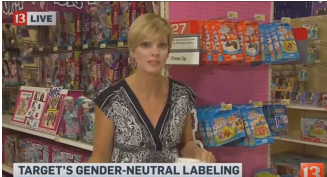 Target removes gendered signs and colors. Target removes gendered signs and colors.
Tags: children/youth, consumption/consumerism, gender, social construction, gender binary, 00 to 05 mins
Year: 2015 Length: 2:39 Access: YouTube Summary: This local newscast covers a recent Target store's removal of the "boys" and "girls" sections to go gender-neutral. They note the store is changing the symbolic pink and blue background colors to neutral colors. While in the past, girls played with Barbies and boys played with action figures, Target is transcending these distinctions to enable different toys, electronics, and bedding goods to appeal across gender boundaries. They note their decision to go gender-neutral is based on "customer feedback" and that separate girls and boys sections are "not necessary." Some customers reacted negatively to the switch, stating "Can you say publicity stunt?", "RIDICULOUS!!!", and "No longer a fan or shopper of Target." In effect, these customers are policing the gender binary. One of the news shows' interns praises Target for the move toward "gender equality" and enabling children to "create their own person and not have to choose one thing because that's what they're supposed to choose." For related videos, viewers may want to check out similar debates about a J. Crew advertisement, a 5-year old boy who loves to wear dresses, efforts to make gender-neutral Legos, Fox news analysts that mock gender-neutral bathrooms, and a peer sex educator that breaks down the gender binary. Submitted By: Sanah Jivani  The intersection of teen identity, consumption, and social media. The intersection of teen identity, consumption, and social media.
Tags: children/youth, consumption/consumerism, corporations, marketing/brands, media, science/technology, identity, internet, social media, teenagers, youth culture, subtitles/CC, 21 to 60 mins
Year: 2014 Length: 53:41 Access: PBS Summary: This 2014 PBS Frontline documentary, Generation Like, serves as a nice updated follow-up to the popular 2001 documentary, The Merchants of Cool. As in the 2001 episode, Generation Like explores how large corporations and marketing firms seek to tap into young consumer markets. However, unlike the teens that came of age during the making of The Merchants of Cool, today’s young adults are navigating a radically different media and advertising environment, namely, one dominated by social media. As explained in this plot summary, “Thanks to social media, today's teens are able to directly interact with their culture - artists, celebrities, movies, brands, and even one another - in ways never before possible. But is that real empowerment? Or do marketers still hold the upper hand? In Generation Like, author and FRONTLINE correspondent Douglas Rushkoff (The Merchants of Cool, The Persuaders) explores how the perennial teen quest for identity and connection has migrated to social media - and exposes the game of cat-and-mouse that corporations are playing with these young consumers. Do kids think they're being used? Do they care? Or does the perceived chance to be the next big star make it all worth it? The film is a powerful examination of the evolving and complicated relationship between teens and the companies that are increasingly working to target them.” While this documentary would be useful for teaching ideas related to teen consumption and corporate advertising, it could also serve as a useful way to examine characteristics of the generational cohort following the Millennials, who have been dubbed "Generation Z." Submitted By: Valerie Chepp |
Tags
All
.
Got any videos?
Are you finding useful videos for your classes? Do you have good videos you use in your own classes? Please consider submitting your videos here and helping us build our database!
 |
 RSS Feed