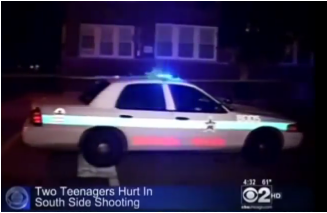
 News clip editing reproduces stereotypes of black boys. News clip editing reproduces stereotypes of black boys.
Tags: crime/law/deviance, inequality, media, prejudice/discrimination, psychology/social psychology, race/ethnicity, confirmation bias, framing, linguistic intergroup bias, journalism, news media, 00 to 05 mins
Year: 2011 Length: 1:42 Access: YouTube Summary: This video is put together by the Maynard Institute, which is "dedicated to helping the news media accurately portray all segments of society, particularly those often overlooked, such as communities of color." The beginning of the video shows a real Chicago CBS news segment that covers the shooting of two teenagers, which was witnessed by several children, including a 4-year old. The commentator describes the "disturbing reaction" by the 4-year old boy, who is shown saying that “I’m not scared of nothing.” When the reporter asks him if he will stay away from guns, the boy responds: “I’m going to have me a gun!” The segment ends with Anchor Steve Bartelstein saying, “that is scary indeed.” The issue with this clip is what was omitted from the story. In the actual interview with the 4-year old boy, the reporter next asks “Why do you want to have [the gun]?” The boy states “I'm going to be the police!” and the reported responds “Okay then you can have one." Subsequent content from the video, and this Maynard Institute analysis, outline some of the problems with the edit, including its portrayal of African American boys in a stereotypical manner. While it is unclear why this particular video was edited in this way (the news station removed the story once the problem was identified), the reality is that such editing decisions frequently occur and continue reproducing stereotypes. Indeed, "studies of media content consistently find that black criminal suspects are portrayed more frequently and more menacingly than white suspects in television news stories of violent crime" (Peffley et al 1996). It could be a result from a news editor's confirmation bias, where an individual looked for content in the video that confirmed his expectations, thereby using that footage and eliminating the (real) footage that would have led to an alternative framing. It might also derive from the economic drive for media to present controversial news that they believe viewers will be more interested in watching (thereby consuming more advertisements). For example, research shows that viewers find crime news stories more memorable when the perpetrator is dark-skinned male. What is the impact of this on race relations? Experimental studies show that such "even a brief visual image of an African American male suspect in a televised crime story was capable of activating racial stereotypes, which in turn heavily biased whites’ evaluations of the suspect along racial lines" (Peffley et al 1996). Such race-related TV news stories also lead to linguistic intergroup bias, where "people use more abstract language to describe stereotype-congruent behaviors, particularly when that person is a member of an out-group" (Gorham 2006). Thanks to Logan Webster for suggesting this video. Submitted By: Paul Dean
20 Comments
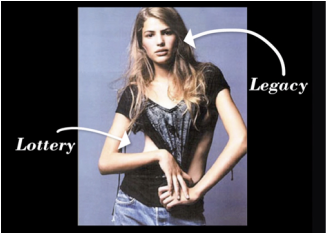 Model Cameron Russell reveals the elusive nature of “the look.” Model Cameron Russell reveals the elusive nature of “the look.”
Tags: bodies, culture, gender, inequality, prejudice/discrimination, race/ethnicity, social construction, beauty culture, floating norms, laissez-faire racism, model industry, white privilege, subtitles/CC, 06 to 10 mins
Year: 2012 Length: 9:30 Access: TEDTalks Summary: Is being a model really all it’s cracked up to be? In this TED Talk, Cameron Russell answers this and other questions by vocalizing some of her experiences in the modeling industry. This video is useful for illustrating the work that takes place behind-the-scenes of the modeling industry in order to produce what sociologist Ashley Mears calls “the look.” In her book Pricing Beauty: The Making of a Fashion Model, Mears articulates that “the look” is something sought after by clients and bookers alike in the fashion industry. It is defined as the varying traits—both physical and personality—that make a model desirable. Yet, after spending more than two years conducting ethnographic fieldwork, Mears finds that industry professionals have a hard time describing what exactly constitutes a good look; rather, they claim they just “know it” when they see it. In this way, Mears illustrates how the look is characterized by a set of “floating norms” against which models are measured. These socially constructed ideals “are elusive benchmarks of fleeting, aesthetic visions of femininity and masculinity” (Mears 2011:92). The challenge with adhering to these norms is that they are consistently out of reach; models must constantly work to achieve them but, since they are ambiguous and always changing, they are ultimately unattainable. The result is that even models are insecure with, and always questioning, the value of their look. • In addition to illustrating the cultural production of the look, this clip also illustrates the various ways white privilege and laissez-faire racism operate in the modeling industry. Once again echoing Mears’s findings, Russell points to the scouting process as a site where ideas about race result in inequalities within the industry. In addition to youth and vitality, Russell asserts that she was also selected for her whiteness. It is both norms around conventional prettiness and the legacy of white privilege that has helped to secure Russell’s success. Mears’s research similarly documents the ways in which white models are significantly hired over African Americans, Latino/as, and people of Asian descent. When models of color are present in the industry, they are often used in exotic campaigns or they exhibit an “ethnicity lite” aesthetic, that is, a look that “blends mainstream white beauty ideals with just a touch of otherness” (Mears 2011:196). • Russell also points to the extensive work that goes into creating a look. Behind each advertisement or photograph is significant makeup and styling, as well as preproduction, postproduction, and Photoshop. How might this create challenges for individuals in society? Many young people seek to emulate “the look” that fashion models project. However, as Mears and Russell demonstrate, the look is unattainable; it is a socially constructed concept that is difficult to describe, and even more difficult to achieve. Nonetheless, people hold themselves up to this impossible standard, resulting in low self-esteem, incredible commercial gains for beauty companies, and a perpetual feeling of insufficiency. Submitted By: Ruth Sheldon and Valerie Chepp  Harriet Washington discusses the history of the Tuskegee Syphilis Study in her book, Medical Apartheid. Harriet Washington discusses the history of the Tuskegee Syphilis Study in her book, Medical Apartheid.
Tags: biology, bodies, health/medicine, inequality, prejudice/discrimination, race/ethnicity, science/technology, violence, informed consent, institutionalized discrimination, eugenics, medical ethics, scientific racism, slavery, tuskegee syphilis experiment, 21 to 60 mins
Year: 2013 Length: 28:27 Access: YouTube Summary: This short interview on Democracy Now with author and scholar Harriet A. Washington provides useful entrée into a discussion about racial discrimination within the medical establishment. Drawing on work from her book Medical Apartheid: the Dark History of Medical Experimentation on Black Americans from Colonial times to the Present, Washington shines a light on many of the systematic abuses African Americans and other People of Color have endured at the hands of scientists and medical professionals. • As Washington explains, the story of medical apartheid begins with scientific racism, the origins of which are often traced to 1779, when German scientist Johan Friedrich Blumenbach is credited with attempting to establish a race-based system of classification among humans (find more on Blumenbach's efforts here, and click on this link for information about how the scientific effort to find a biological basis for race continues into the present). Much has been written about how the legitimacy and authority of science allowed white slaveholders to justify the torture and confinement of their Black slaves; however, as Washington notes, there is a lesser known history of white medical professionals using Blacks as subjects in medical experiments. • In the above clip, Washington discusses The Tuskegee Study of Untreated Syphilis in the Negro Male, as one of the most notorious examples of Blacks being used as subjects in medical experiments. The study was conducted between 1932 and 1972 in Macon County, Alabama, and it tracked 399 poor and mostly illiterate Black sharecroppers who were diagnosed with syphilis. The study subjects were deceived by medical professionals into believing that they were being treated for “bad blood," when in fact the documented intentions of those leading the study was to allow the disease to run its course, which often meant a very painful death. By 1947 penicilin was recognized as a cure for syphilis, but study clinicians denied the antibiotic to subjects and instead gave them a placebo. • As Washington notes, the racism that made something like the Tuskegee Syphilis Study possible was systemic and could be located at all levels of the medical establishment. Seated at the top of the medical hierarchy was the U.S. Surgeon General, Thomas Parran, Jr. Even when presented with the penicillian cure, Parran opted to continue experimentation with the Black men of Macon County. By his assessment, their lives were less valuable than knowledge about syphilis. • For images related to the Tuskegee Syphilis Study, check out our Pinterest board titled "Race: Health/Health Care." Submitted By: Lester Andrist 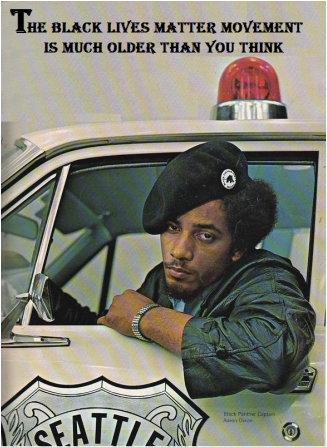 A Black Panther poses in a police car for Seattle Magazine A Black Panther poses in a police car for Seattle Magazine
Tags: crime/law/deviance, inequality, prejudice/discrimination, race/ethnicity, social mvmts/social change/resistance, violence, black lives matter, black panther party, criminal justice system, institutional racism, racism, 06 to 10 mins
Year: 2015 Length: 7:17 Access: New York Times Summary: While it would be a mistake to reduce the Black Lives Matter movement to a mere facsimile of the Black Power movement that grew out of the Civil Rights Era, there are similarities between the movements that are difficult to ignore. Moreover, BLM did not emerge from a historical void or somehow as a response to an unprecedented set of circumstances; rather it is a continuation of the work started by organizations such as the Student Nonviolent Coordinating Committee (SNCC) and the Black Panther Party (BPP). By explicitly calling for an end to patterns of racist police brutality, BLM is also continuing the unfinished work of generations of activists like Ida B. Wells-Barnett, Stokely Carmichael, and Huey P. Newton--Men and Women of Color who have bravely spoke truth to power by calling out the racist actions (and strategic inactions) of U.S. law enforcement officials. • The above news documentary, directed by Stanley Nelson, revisits the history of the Black Panther Party, which was founded by Huey P. Newton and Bobby G. Seale in October 1966. As Newton articulates in the clip, the BPP formed as a direct response to the problem of police brutality in Oakland, California, and the panther was chosen as a symbol of the organization because "The panther is a fierce animal, but he will not attack until he is backed into a corner; then he will strike out." Much like the BLM movement of the current era, soon after its formation the BPP found itself at the vanguard of a larger struggle, which sought to redress a wide array of racial injustices. In only a few short years, local BPP chapters opened all over the country. • Just as the killing of Trayvon Martin, Rekia Boyd, Michael Brown, and countless other young Black men and women has served as a catalyst for the BLM movement, the 1965 Watts Rebellion was cited by Newton and Seale as a catalyst for founding the BPP. For BLM, handheld cameras have proven to be a pivotal tool for igniting a public discussion about racism and racist violence, but people forget that the idea of surveilling the police in order to keep them honest actually grew out of the Watts Rebellion. Following the unrest, the Community Alert Patrol formed and began conducting patrols of police in Black communities. Inspired by this tactic, the BPP organized legally armed groups of Black Panthers to patrol police officers in the performance of their duty. As Party member Elbert "Big Man" Howard explains at the 2:40 mark, Panthers would stand at a distance and observe officers during traffic stops. • The story of the BPP cannot be written without reference to the efforts of the FBI under J. Edgar Hoover's leadership. Hoover successfully portrayed the BPP as a bona fide threat to U.S. national security, which was a gratuitous plank of the FBI's propaganda platform, particularly given the U.S. involvement in Vietnam. Given this history, it is perhaps unsurprising that the BLM movement also finds itself maligned by U.S. law enforcement officials, but as with Hoover's allegations against the BPP, the evidence that BLM members want anything more than justice is sorely lacking. • For more information and resources, check out our Pinterest boards related to the BPP and the BLM movements. Submitted By: Lester Andrist  Molly Crabapple explains the dark side of broken windows policing Molly Crabapple explains the dark side of broken windows policing
Tags: class, crime/law/deviance, inequality, prejudice/discrimination, race/ethnicity, violence, broken windows theory, criminal justice system, institutional racism, racism, subtitles/CC, 00 to 05 mins
Year: 2015 Length: 4:14 Access: YouTube Summary: This exquisitely illustrated presentation from artist Molly Crabapple examines the origins of the broken windows theory, the kind of policing it led to, and the theory's connection to the deaths of people like Eric Garner and Akai Gurley. As Crabapple explains, social scientists James Q. Wilson and George L. Kelling introduced the theory in 1982 in an article they wrote for the Atlantic Monthly. "Social psychologists and police officers tend to agree," they explained, "if a window in a building is broken and is left unrepaired, all the rest of the windows will soon be broken...one unrepaired broken window is a signal that no one cares, and so breaking more windows costs nothing." • The theory has proven to be enormously influential in cities and municipalities all over the United States, and in New York City the theory appears to be the justification, if not the inspiration, behind the NYPD's controversial stop-and-frisk program. In line with the philosophy that police officers should devote time and attention to preventing broken windows in an effort to stave off a larger breakdown of social order, the NYPD regularly stops and searches people they encounter on the streets in order to confiscate guns before they can be used in more serious crimes. However, as Crabapple notes, it's important not to lose sight of the fact that broken windows policing doesn't mean police will fix up poor neighborhoods, and arguably, stop-and-frisk policing has not been implemented as a way to restore safety to crime-ridden communities. On the contrary, a far more convincing case can be made that the stop-and-frisk program has simply directed a disproportionate share of police scrutiny toward poor and marginalized people. • As a result, critics argue that the program has weakened citizens' cooperation with police, and it may have even increased the number of violent altercations between police and the citizens of those marginalized communities. On February 19th, 2014, NYPD officers beat 84-year-old Kang Wang for jaywalking. On July 17th of the same year, police choked and killed Eric Garner after initially confronting him based on the suspicion he was selling loose cigarettes. On the day he was killed, Garner voiced his objection to the police harassment, stating, "This stops today." Unfortunately, the NYPD's stop-and-frisk program and other forms of broken windows policing are by now entrenched features of the criminal justice system, and it is not yet clear when such programs might end. Submitted By: Lester Andrist 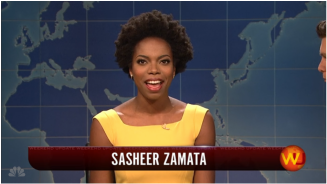 Sasheer Zamata wonders why there aren't any Black emojis. Sasheer Zamata wonders why there aren't any Black emojis.
Tags: discourse/language, inequality, media, prejudice/discrimination, race/ethnicity, science/technology, representation, subtitles/CC, 00 to 05 mins
Year: 2014 Length: 2:27 Access: Hulu Summary: Given the current media spotlight on racist patterns of violence, it's easy to lose sight of more subtle forms of racism. For instance, a daily barrage of media featuring white protagonists simply becomes an unremarked upon backdrop of everyday life, like the piped elevator music that cajoles one into humming along despite being ambivalent about the tune. One racist backdrop might be the book covers one encounters at a typical bookstore. For instance, one analyst found that in 2011 a white person was featured on roughly 90% of all young adult book covers, whereas a Person of Color could only be found on somewhere between 10% and 15% of covers. The quiet tendency to whitewash media is but one reason why representations of whiteness have come to dominate the media landscape. Black and brown characters in popular books are routinely rewritten as white characters in Hollywood film adaptations. And speaking of film and television, one 2013 study found that while whites comprised 63% of the population, they were featured on the evening cable news shows 79% of the time. • The point is not to simply draw attention to the disproportionate number of roles being written for white men and women, or the fact that whites are being given more of a voice in popular media. Instead, my aim is to simply point out that visual media, such as advertising, television, and film, play a key role in promoting the idea of whiteness as the default or universal human. More pointedly, such visual media reinforce the idea that People of Color are deviations, somehow not fully compatible with the human ideal. • Consider the phrasing, "normal to dark skin," recently spotted on a bottle of Dove body lotion. It escapes most people's attention that "normal" is being used as a synonym for "white." Whiteness is the default. In the above comedy sketch from Saturday Night Live, Sasheer Zamata points out a second example of how whiteness becomes normalized in the selection of emojis used in texting. Not one of the more than 800 emojis depicts a Black person, and as Zamata notes, "Unicode, the company that creates emojis, thought that instead of one black person we needed two different kinds of dragons, nine different cat faces, three generations of a white family. And all the hands are white, too. Even the Black power fist is white!" Submitted by: Lester Andrist 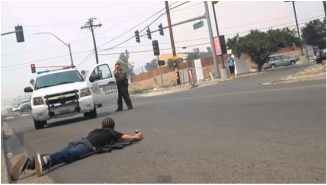 Video footage shows two different types of police encounters Video footage shows two different types of police encounters
Tags: crime/law/deviance, prejudice/discrimination, race/ethnicity, violence, open carry laws, firearms, institutional racism, racism, 00 to 05 mins
Year: 2015 Length: 5:47 Access: YouTube Summary: This clip shows a comparison of two videos, each depicting police responses to two different men openly carrying a rifle; in one video, the gun owner is a young white man, in the other video, the gun owner is a young man of color. In both cases, the men are legally carrying their firearms under open carry laws, which allow people to openly carry (i.e., not conceal) firearms in public places. Whilst the footage of the police officer talking to the white man is fairly short, the clip provides an example of the hostile treatment young men of color are habitually subjected to by law enforcement. As explained in this news coverage of the video, the young man of color is Gabriel Nobles, who identifies as Hispanic and Filipino. Juxtaposed against the relatively benign treatment of the white man, the clip reveals differential treatment in how the white man is initially approached by law enforcement officials compared to Nobles, who instantly receives an aggressive and confrontational response. Note the number of police vehicles and police dog that are brought in to detain Nobles. The clip is useful for considering institutional racism and the impact of the attitudes of law enforcement officials on crime statistics, as well as the response of young men of color and others to aggressive law enforcement tactics. For viewers who are not subjected to habitual racial profiling, police surveillance, and hostile treatment, the video can also begin to convey the fear and threat of violence that accompanies this type of existence. Submitted By: Mark  This video examines the phenomenon of "gendered pricing." This video examines the phenomenon of "gendered pricing."
Tags: capitalism, gender, inequality, marketing/brands, prejudice/discrimination, gendered pricing, pink tax, subtitles/CC, 00 to 05 mins
Year: 2015 Length: 3:59 Access: YouTube Summary: In this video, YouTuber Liz Plank looks into how products marketed towards men and women vary in price. Liz starts out with the startling statement that women are losing $100,000 over the course of their lifetime. Not to the wage gap, but to the products they buy--the so called “pink tax.” Liz and her co-blogger Alex (a male identifying individual) take an experimental approach to this issue and head to a pharmacy to see if there really is a price difference or, pink tax, applied to women’s products. Liz and Alex each bought five personal care products that were marketed towards their genders. They made sure that their samples were consistent by checking that the products they bought were the same brand, had the same active ingredients, and were the same size. They each bought one pack of razors, a deodorant bar, shaving cream, wrinkle cream, and body wash. Liz and Alex then compared the prices of the items they bought. In total, Liz spent $42.69 and Alex spent $37.42. For the exact same products, the only difference was that Alex’s products were marketed towards men, and Liz’s towards women. Just to make sure that they actually were the same products, they swapped products for a week. After a week of using the products targeted at the other gender they found no difference in the quality or utility of their products. This led them to conclude that women are in fact getting charged a pink tax for the same products that men can buy for less. This could be because of social norms that dictate that women care more about appearance and are therefore willing to pay more for personal care items. Beauty product companies want to make as much as possible on their products, and they drive up the price of items targeted at women. Because consumers are socialized to shop in the beauty aisle marketed toward their gender and not look at the “other” gender’s products, many people do not even notice this discrepancy. Submitted By: Abigail Adelsheim-Marshall 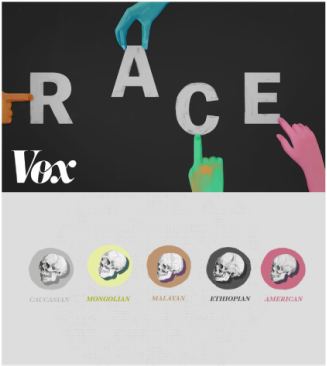 Vox debunks the race myth in a new video Vox debunks the race myth in a new video
Tags: biology, immigration/citizenship, inequality, knowledge, prejudice/discrimination, race/ethnicity, science/technology, social construction, caucasian, mexican, racial formations, scientific racism, subtitles/CC, 00 to 05 mins
Year: 2015 Length: 3:08 Access: YouTube; Vox Summary: It often surprises students to learn that sociologists and other social scientists regard race as little more than a creation of the collective imagination, or as the above video from Vox argues, race isn't real. Contrary to popular belief, racial categories do not consistently correspond to biological observations; nor are the racial categories used today a particularly ancient means of categorizing human societies. They are, in fact, both flimsy and recent. • The social theorist David Theo Goldberg argues that starting in the sixteenth century racial thinking and racist articulation became increasingly common in European societites. As Vox explains in the above video, one crucial moment of racist articulation appears to have occurred nearly two centuries later when in 1779 German scientist Johan Friedrich Blumenbach is credited with attempting to establish a scientific, race-based system of classification. Although his work has long been discredited, it is worth noting that he arrived at five hierarchically organized racial categories: "Caucasian, the white race; Mongolian, the yellow race; Malayan, the brown race, Ethiopian, the black race, and American, the red race." Not surprisingly, he ranked Caucasians highest on his racial hierarchy. • For those who remain unimpressed by the fact that racial thinking is a relatively recent phenomenon in human history, consider the fact that racial categories and their hierarchical arrangement have been shown to change with political priorities. In academic parlance, racial formations have continued to be created, transformed, and destroyed. For instance, the video explains that the U.S. Census categorized people with Mexican ancestry as white until 1930, at which point the Census began categorizing these whites as an emergent racial category known simply as "Mexican." The change in Census categories reflected a developing racial discourse in the American Southwest but it also played a role in temporarily limiting immigration from Mexico, and fewer immigrants from Mexico meant higher wages for whites. • Properly contextualized, the reason for the emergence of racial thinking in Western Europe seems fairly clear. Although it is assumed race is based on natural, biological differences, the truth is that racial thinking has had very little to do with accurately describing natural variation in human populations and far more to do with whites maintaining power, privilege, and resources at the expense of nonwhites. Although race isn't real in a biological sense, as the video explains, it has become hugely important in a social sense. The racial categories to which we're assigned can determine real life experiences. Submitted By: Lester Andrist 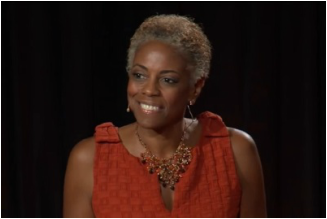 Vernā Myers offers strategies for confronting implicit bias. Vernā Myers offers strategies for confronting implicit bias. Tags: inequality, prejudice/discrimination, race/ethnicity, colorblindness, implicit association, implicit bias, racism, stereotypes, 11 to 20 mins Year: 2014 Length: 17:49 Access: TEDTalks Summary: In this video diversity professional Vernā Myers links the recurrent atrocities faced by Black males in the U.S. (e.g., Michael Brown, Amadou Diallo, Sean Bell, Oscar Grant III, Trayvon Martin) to the persistence and denial of implicit biases. She highlights that while we no longer see the same blatant racially biased actions of the past, the manifestation of implicit biases contribute to the same detrimental outcomes for racial and ethnic minorities broadly and Black men specifically. She calls for the following actions to address and redress the persistence of implicit biases: 1) Get out of denial, stop trying to be “good” people, instead strive to be real people who acknowledge their personal biases; 2) Move toward young Black men (or your biases more generally) instead of away from them; 3) When we see/hear something that is wrong, we have to have the courage to say something, even to the people we love. Thus when we hear racist or bigoted statements, we need to develop the courage to speak out against such statements or actions, even if the perpetrator of the act is someone we love and care about. This video clip is a good addition to lecture topics dealing with inequality, biases, or racism. Submitted By: Shanna Brewton-Tiayon |
Tags
All
.
Got any videos?
Are you finding useful videos for your classes? Do you have good videos you use in your own classes? Please consider submitting your videos here and helping us build our database!
 |
 RSS Feed