 Tea making: a helpful analogy for understanding consent. Tea making: a helpful analogy for understanding consent.
Tags: emotion/desire, sex/sexuality, consent, safe sex, sex-positive, 00 to 05 mins
Year: 2015 Length: 3:14 Access: YouTube Summary: This video was made by Sexplanations, a video show focused on “shame-free, comprehensive efforts to educate on everything sex.” This particular episode is based on a post from the blog Rockstar Dinosaur Pirate Princess, titled “Consent: Not Actually That Complicated.” The piece serves as a nice counter-narrative to the pervasive discourse that frequently surrounds discussions about sexual consent, which too often suggest an element of confusion or “blurred lines” when it comes to consent. In order to make the case that consent is not actually that complicated, the author likens initiating sex to making a cup of tea, and walks the listener/reader through the various scenarios in which people might find themselves initiating sex. When placed in the context of tea making and drinking, suddenly ideas about consent come across as obvious and non-controversial. The author ends the post asking, “Do you think this is a stupid analogy? Yes, you all know this already – of course you wouldn’t force feed someone tea because they said yes to a cup last week. Of COURSE you wouldn’t pour tea down the throat of an unconscious person because they said yes to tea 5 minutes ago when they were conscious. But if you can understand how completely ludicrous it is to force people to have tea when they don’t want tea, and you are able to understand when people don’t want tea, then how hard is it to understand when it comes to sex?” In addition to being useful in a classroom setting, this video would also be effective to show during educational workshops and trainings on consent, safe sex, and/or sexual assault. Submitted By: Valerie Chepp
9 Comments
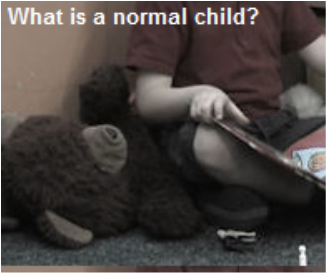 A combination of visual images, sound, and text provokes discussion. A combination of visual images, sound, and text provokes discussion.
Tags: children/youth, education, emotion/desire, psychology/social psychology, theory, philosophy, postmodernism, 11 to 20 mins
Year: 2010 Length: 16:20 Access: ESRC Summary: This unconventional and provocative film challenges viewers to reflect upon what constitutes problematic behavior in children. As described on the film's website, "it presents a thought-provoking collection of visual, sound, and text images drawn from a range of sources, including art, education, psychology, special education, policy documents, popular media, and philosophy. These materials are organized around 5 key themes: What counts as problem behavior?; What is a normal child?; Difficult Bodies; Parents; and Observing and Monitoring." The film "depart[s] from the usual didactic conventions of the educational film or the in-service training video and invit[es] a more open and critical engagement from audiences." Its organization and style reflect some of its postmodern influences (e.g. Gilles Deleuze), and have provoked interesting responses from viewers (which have been shared by the film's creators). For example, viewers have noted its highly "emotional" and "somber" tone that suggests how education "controls children"; but its open-ended nature encourages a very diverse range of responses. The film also has accompanying educational support materials, "which can be used for training and professional development purposes, [and] provides some questions to guide discussion and further activity." Submitted By: Rachel Holmes  This video chronicles one person's experience being asexual. This video chronicles one person's experience being asexual.
Tags: emotion/desire, lgbtq, sex/sexuality, asexuality, heteronormativity, identity, media, representation, 00 to 05 mins
Year: 2015 Length: 2:25 Access: YouTube Summary: This video is an animated story of a young asexual’s life and her experiences. Asexuality is defined as the lack of sexual attraction to any gender. This is different from celibacy. While a person who is celibate (i.e., someone who choses not to have sex) can still experience sexual attraction, most asexuals are simply not interested in sex. There are asexuals who have sex, but they do not feel sexually attracted to their partners. They may chose to have sex for intimacy, or to feel closer to their partners, but it is not out of sexual attraction. This person's story started out when they were in middle school. The author says that she started to feel different from her friends around that time. This is when most of her friends started to talk about their crushes, which the author never had. Around the same time the author noticed that all of the books they read centered on romance and sexual attraction. This made her feel even more out of place, due to lack of representation in the media, and she felt very alienated. To fit in with cultural norms, the author made up crushes so as not to seem different from her peers. This, however, did not work and she started avoiding the subject of crushes altogether. The author felt as though by not participating in this part of school culture she came off as aloof and "different." Not a pleasant feeling. So, when the author went to high school she started dating to see if she might "get it." However, she was disappointed, as she still didn’t understand everyone’s obsession with the opposite sex. After not doing too well dating men, the author thought she might be gay. So she started dating girls. The results, however, were the same. The author still did not get the appeal of dating or sex. This lead the author to think that she was broken and alone. She felt as though she could not fit in with social norms and was alienated by hyper-sexualized media. Finally, the author found an online community of fellow asexuals. Being able to label how she felt and knowing that there were others like her helped the author finally stop feeling broken. This video is useful for talking about sexualities, and how media representations (or a lack thereof) affects people. If you never see anyone like yourself represented in the media, you start to feel like you’re the problem and that you don’t belong. By finding others like herself, the author was able to accept herself and finally come to terms with her identity. For additional resources, check out The Sociological Cinema's other videos on asexuality. Submitted By: Abigail Adelsheim-Marshall 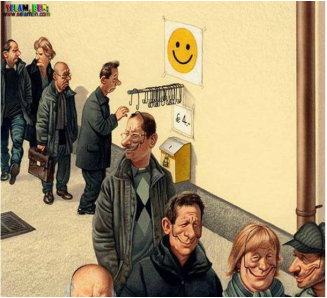 The Facebook mood study raises questions about ethics in research The Facebook mood study raises questions about ethics in research
Tags: emotion/desire, media, methodology/statistics, ethics, facebook, institutional review board, irb, social media, stanley milgram, 00 to 05 mins
Year: 2014 length: 3:41 Access: YouTube Summary: This is a useful video from DNews for getting students to begin thinking about the importance of ethical questions in social scientific research. Hosts Laci Green and Trace Dominguez discuss a study published last year in the Proceedings of the National Academy of Sciences. Researchers reported to have found evidence that emotions can be transferred to others via an emotional contagion. Basically, the design of the study involved manipulating the timelines of 689,003 Facebook users. The researchers found that when they filtered people's timelines to only include negative content for a week, people were more likely to post morose status updates. Positive content, on the other hand, seemed to produce positive status updates. The findings of the study aside, the research certainly puts a new spin on longstanding questions regarding ethics in social science. • Back in 1961 social psychologist Stanley Milgram began a series of controversial experiments intended to investigate obedience to authority, and today one can flip through any introductory sociology textbook to learn of Milgram's results. It turns out that under the right circumstances a substantial number of people can be persuaded to kill, or at least electrocute, others with very little coercion. Milgram's research on obedience was timely and interesting, but it was also controversial. Unbeknown to the research subject, no one was actually on the receiving end of the electric shocks, but the experiment forced the subjects who delivered the shocks to confront an unsettling truth about their own morality. For ethicists, herein lies the ethical dilemma. Many have argued the study was unethical, since the subjects may have been psychologically harmed by the realization that they would kill another person simply because a man in lab coat instructed them to do so. • Is the Facebook study, then, similarly unethical? One person framed the concern nicely when he sardonically tweeted "probably nobody was driven to suicide. #jokingnotjoking." The fact is Facebook effectively flexed a substantial muscle when it allowed researchers to tweak its timeline algorithm. The company proved it could change the mood of hundreds of thousands of people. One wonders how many of the users were struggling with depression at the time of this experiment, and if they happened to be included in the group that received a steady diet of negative content, what role did Facebook play in quickening their downward spiral? Submitted By: Lester Andrist 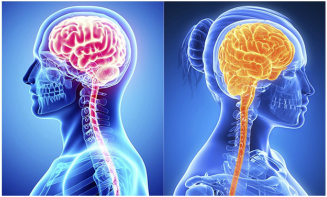 When it comes to infidelity, does gender and biology matter? When it comes to infidelity, does gender and biology matter?
Tags: abortion/reproduction, biology, bodies, culture, emotion/desire, gender, sex/sexuality, biological determinism, infidelity, sociobiology, 06 to 10 mins
Year: 2008 Length: 6:21 Access: today.com Summary: This segment from the Today Show explores whether humans are “wired”—or, biologically predisposed—to cheat on their mates. The clip can be used to teach biological determinist perspectives of gender, and specifically those rooted in sociobiology. In short, biological determinism argues that the social world is predetermined by biological factors. Sociobiology stems from this tradition of thought, but focuses more specifically on genetic reproduction and evolutionary processes. Often relying on observations of animal behaviors to make claims about human behaviors, sociobiology argues that a fundamental human drive is to ensure genetic reproduction, and many human activities can be reduced to this drive. Using the case of infidelity, this video clip is helpful for shedding light on sociobiological explanations of gender difference. The segment opens with a sociobiological perspective, using Barash and Lipton's (2001) book The Myth of Monogamy as a point of reference. Here, the authors argue that monogamy is not natural; from an evolutionary standpoint, humans have a stake in having multiple sexual partners. Sexual promiscuity is prevalent throughout the animal kingdom, they argue, and humans are not exempt from the same biological urges that drive other animals to be promiscuous. After the opening segment (minute mark 2:17), host Meredith Vieira speaks with Jeffrey Kluger, TIME magazine’s science editor, and psychologist David Buss; the conversation quickly turns to a discussion of gender difference. Kluger represents a fairly classical sociobiological argument when he states: “Nature wants one thing, and what it wants are babies. It also wants lots of them. And it wants variety, because the greater the genetic variety, the greater the likelihood that the babies are going to survive into adulthood and do well.” Kruger goes on to assert that men will look for women who are young and fertile, and women look for men who are good providers, such as those who are rich and powerful. Buss introduces more socio-cultural elements into the discussion, such as strong social norms against cheating, and argues that both men and women feel attraction to others outside of their relationships. He also points to psychological pathologies, namely narcissism, as an explanation for infidelity, and draws attention to infidelity in a cross-cultural context where polygamy is common (that is, cultures where men are legally entitled to have multiple wives). Although Buss mostly draws upon socio-cultural explanations, he also suggests that biological impulses to be non-monogamous are a part of our “human nature.” Asked why men cheat more, Kruger draws upon biological and sociological arguments, arguing that: (1) biologically, men have the ability to breed more, and could conceivably breed offspring everyday; from this he argues that men are “tripwired" for infidelity; and (2) in a patriarchal society such as ours, men are more likely to be in positions of power and feeling entitled to be unfaithful. After screening the video, viewers can be encouraged to identify messages in the clip that cohere with, and deviate from, the sociobiological perspective. Viewers can also be encouraged to explore feminist and/or sociological critiques of biological determinism, such as those outlined in Carmen Schifellite’s (1987) essay, "Beyond Tarzan and Jane Genes: Towards a Critique of Biological Determinism.” Submitted By: Valerie Chepp 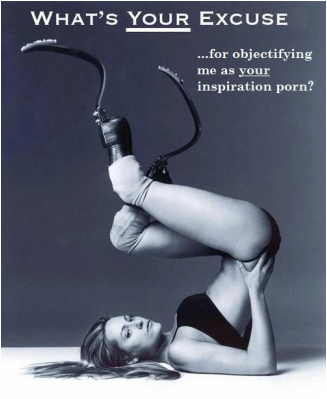 "What's your excuse...for objectifying me as your inspiration porn?" Amy Purdy poses while wearing her running blades "What's your excuse...for objectifying me as your inspiration porn?" Amy Purdy poses while wearing her running blades Tags: bodies, culture, disability, emotion/desire, inequality, knowledge, marketing/brands, media, sports, inspiration porn, super bowl, 00 to 05 mins Year: 2015 Length: 1:15 Access: YouTube Summary: Every year the Super Bowl proves to be a rich site for sociological investigation, and we have analyzed many different aspects of this American spectacle, including the commercials. All media, but the commercials of the Super Bowl in particular, can be seen as cultural artifacts. Ads are saturated with resonant images and meanings, and with a little work, one can deduce information about the society that created the ads, how they see themselves and what they believe about the world. The commercials of Super Bowl XLIX featured a surprising number of people with disabilities. Among them, Reebok and Toyota showcased athletes with prosthetic legs engaged in rather punishing exercise regiments. Our video of the week is the Toyota ad, which tracks world-class snowboarder and double amputee, Amy Purdy, on the slopes, in a dance hall, and as the subject of a photo shoot. Microsoft's ad, by contrast, centered on Braylon O'Neil, a toddler learning how to walk and play T-Ball with his prosthetic legs. All of the ads were accompanied by narration that attempted to inspire and somehow leave audiences with the impression that Microsoft, Toyota, or Reebok are central players in helping humanity realize its full potential. • The problem is that the ads reek of what is sometimes referred to as inspiration porn. That is, to the extent that people with disabilities feature in media at all, they are typically portrayed in a very one-dimensional way; as a narrative device that has been fashioned with the sole intent of inspiring the able-bodied majority. For those who think inspiration porn isn't a big deal, consider the awkward similarities it shares with the old practice of featuring people with disabilities as freaks in circus sideshows. Toyota is using Amy Purdy to inspire the able-bodied majority, whereas P. T. Barnum used double amputees to amuse. In both cases, people with disabilities are being objectified to give the majority a big emotional experience. Find more information and resources about disability and media representation on our Pinterest board. Submitted By: Lester Andrist  Sociologist Nicholas Christakis discusses structure, agency, and the concept of emergence Sociologist Nicholas Christakis discusses structure, agency, and the concept of emergence Tags: durkheim, emotion/desire, methodology/statistics, organizations/occupations/work, science/technology, theory, adam smith, agency, artificial social network, centrality, collective identity theory, emergence, georg simmel, human capital, methodological holism, methodological individualism, natural social network, nicholas christakis, obesity, social capital, social network analysis, structure, suicide, transitivity, subtitles/CC, 21 to 60 mins Year: 2011 Length: 56:35 Access: YouTube Summary: In this nice introductory lecture to the discipline of sociology, physician and sociologist Nicholas Christakis explodes the popular myth that people are masters of their own destiny. As the YouTube blurb states, "If you think you're in complete control of your destiny or even your own actions, you're wrong. Every choice you make, every behavior you exhibit, and even every desire you have finds its roots in the social universe." 1. This insight is an expression of a fundamental tension explored in the discipline—that between the power of individual agents (i.e., agency) and the power of supra-individual forces (i.e., structure), such as the neighborhood in which one lives or one's location within a social network. 2. The second big idea Christakis explores in his lecture is emergence, or that society is something more than simply the sum of its individuals and that collective phenomena are not mere aggregations of individual phenomenon. To illustrate the concept of emergence, Christakis embarks on a discussion of social networks and other central concepts to the discipline, such as social capital. He then concludes his lecture by pointing out that while many scientific disciplines have broken up phenomenon into smaller and smaller bits, and are now engaged in an effort to put the pieces back together in order to discern how their assembly gives rise to new, emergent properties, this pattern of disassembly and reassembly has always been a central feature of sociological work. Submitted By: Lester Andrist  This short film examines the changing lives of gay men in rural UK. This short film examines the changing lives of gay men in rural UK. Tags: aging/life course, emotion/desire, lgbtq, prejudice/discrimination, rural/urban, sex/sexuality, adolescence, gay, performative social science, uk, 21 to 60 mins Year: 2012 Length: 30:00 Access: Vimeo Summary: Rufus Stone is a short film about "love, sexual awakening, and treachery." According to Director Josh Appignanesi, "the story dramatizes the old and continued prejudices of village life from three main perspectives. Chiefly it is the story of Rufus, an ‘out’ older gay man who was exiled from the village as a youth and reluctantly returns from London to sell his dead parents’ cottage, where he is forced to confront the faces of his estranged past. Of these, Abigail is the tattle-tale who ‘outed’ Rufus 50 years ago when he spurned her interest. She has become a lonely deluded lush. Flip, the boy Rufus adored, has also stayed in the village: a life wasted in celibacy (occasionally interrupted by anonymous sexual encounters) and denial (who is) looking after his elderly mother. But Rufus too isn’t whole, saddled with an inability to return or forgive." The film is based on three years of a Research Council UK funded study of the lives of older lesbians and gay men in south west England and Wales, a part of the national New Dynamics of Ageing Programme of research. The project was led by Kip Jones, who also wrote the story and acted as Executive Producer for the film. Winner of two awards, the film has gone on to be screened at film festivals, other universities in the UK, USA and Canada and by organizations such as Alzheimer’s Society UK, LGBT groups, and health, social and aging support networks. Screenings of the film would be appropriate for a wide variety of audiences, including in undergraduate and graduate teaching, community groups, and LGBT and aging support organisations. Viewers can access more information about the project and film at the Rufus Stone Blog. Submitted By: Kip Jones  Ben Acheson explains why gender equality is a men's issue Ben Acheson explains why gender equality is a men's issue Tags: emotion/desire, gender, feminism, masculinity, patriarchy, 00 to 05 mins Year: 2014 Length: 2:19 Access: YouTube Summary: This short video from the webseries "A Different Angle" can be used to draw attention to the somewhat narrow view that gender equality is only a topic that concerns women. Filmmaker and host Ben Acheson argues that men need to not only recognize the vital role they play in promoting gender equality, but men must also come to explore how gender has crucially structured their own lives and experiences. His argument resembles a similar one made by sociologist Jackson Katz, who explores how the ideas surrounding masculinity lead men to become both perpetrators and victims of violence (here and here). In another video posted on The Sociological Cinema, educator and activist Tony Porter argues that through the course of their socialization men come to occupy a "man box," which puts strict limits on the kinds of behaviors men are able to express. For instance, Porter describes a moment in his own childhood when his father was not able to openly cry following the death of one of his sons. In the featured video of this post, Acheson concludes by arguing that movements for gender equality must also be movements that work to redefine what it means to be a man. Submitted By: Ben Acheson  Race and gender shaped the media's "thug" portrayal of Sherman. Race and gender shaped the media's "thug" portrayal of Sherman. Tags: discourse/language, emotion/desire, gender, intersectionality, media, prejudice/discrimination, race/ethnicity, sports, American football, racialized masculinity, racism, 06 to 10 mins Year: 2014 Length: 6:39 Access: msnbc Summary: On January 19, 2014, the Seattle Seahawks defeated the San Francisco 49ers in a game thrilling victory that secured their spot in Super Bowl XLVIII (which they went on to win). Immediately following the Seahawks' defeat over the 49ers, Seattle cornerback Richard Sherman gave an emotional, on-field post-game interview with FOX Sports reporter Erin Andrews. In the interview, Sherman portrayed a loud and brash display of aggression, in which he “trash talked” San Francisco receiver Michael Crabtree. In this clip, political commentator and TV host Chris Hayes highlights how the media framed Sherman--a black football player--as a “thug” after the interview. Hayes discusses the framing of black men and athletes as violent and hypermasculine with Dr. Jelani Cobb from the University Connecticut. This clip would be useful to guide discussions on the intersections of race and gender, racialized masculinity, and perceptions of threat and violence. Submitted By: Denae Johnson |
Tags
All
.
Got any videos?
Are you finding useful videos for your classes? Do you have good videos you use in your own classes? Please consider submitting your videos here and helping us build our database!
 |
 RSS Feed