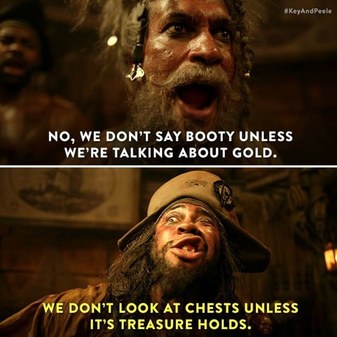
 Pirates sing about respecting women in this skit from Key & Peele's comedy show. Pirates sing about respecting women in this skit from Key & Peele's comedy show.
Tags: bourdieu, culture, gender, inequality, theory, habitus, patriarchy, sexism, sexual assault, sexual harassment, subtitles/CC, 00 to 05 mins
Year: 2015 Length: 3:50 Access: YouTube Summary: Women have been stepping forward with allegations of sexual harassment and assault against powerful men, but it would be a mistake to fall victim to the belief that women's outrage is entirely new. However, what is new is the deluge of allegations, the sustained public attention to the matter, and that the women making the accusations are largely presumed to be telling the truth. With each epiphany, Americans are forced to confront the uncomfortable proposition that sexual harassment and assault are a constitutive part of office politics. Moreover, sexism is alive and well in the halls of American government, and it circulates within the private orbits of our most worshiped celebrities. So while it is certainly true that not all men harass women, women know that everywhere they go, there is the possibility of being harassed by men. It's as certain as the shark-infested waters beneath the plank of a pirate ship. • Back in 2015, when such allegations were more readily ignored and dismissed, the comedic duo Key & Peele seemed to grasp the scale of the problem and developed a comedy sketch featuring a pub full of gravely-voiced pirates. These drunken men of the sea are shown gathered in a dimly-lit tavern as the archetypal masculine men occupying a quintessentially masculine space. However, the brilliance of this skit is that Key & Peele play against type for laughs, and instead of bellowing songs that objectify and degrade women, they offer matter-of-fact statements of men's shared humanity with women: "I once met a lass so fine, 'twas drunk on barley wine, I'd been to sea for months a'three, I knew I could make her mine. And the lass was past consent, and we threw her in bed, and rested her head, and left cuz that's what gentlemen do." • Enter the social theorist Pierre Bourdieu and his concept habitus, which refers to a system of dispositions that vary by time, place, and social position. Drawing on this concept, one might say that the clip is funny because the pirates defy expectations in that they fail to embody and employ a sexist habitus. As viewers, we implicitly understand that casually disrespecting women is, in a sense, the lingua franca among these types of men in these types of spaces. This video can be used to illustrate Bourdieu's famous concept, but students can also be challenged to think beyond Key & Peele's fictional characters. What of the sexist habitus in the halls of government and in corporate boardrooms? What are the dispositions that define these spaces? Lester Andrist, Ph.D. 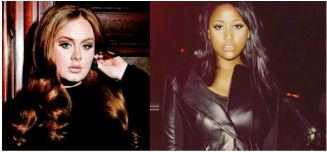 Adele, Jazmine Sullivan, and privilege in soul music stardom. Adele, Jazmine Sullivan, and privilege in soul music stardom.
Tags: art/music, culture, inequality, race/ethnicity, black culture, meritocracy, pop culture, privilege, soul, 00 to 05 mins
Year: 2015 Length: 5:44 Access: YouTube Summary: This video examines the history and legacy of soul music, and the advantage "blue-eyed soul" singers may have over Black soul singers in today’s music scene. The video begins noting the traditional dimensions of soul, including ad-libbing, belting, and unpredictability, which "historically symbolized resistance against racist oppression" and the idea of soul music as a form of racial protest and activism. But the history of black music shows that it has been underrated, uncredited, stolen, and absorbed into other genres. At the same time, white artists like Adele and Sam Smith dominate the genre. An argument of meritocracy falsely suggests this is a result of fewer Black artists, that they are not trying hard enough, or they are not writing and making enough soul music (a similar argument was made about the lack of black performances on the 2016 Academy Award nominees). Several examples (e.g. Leon Bridges) are offered to show that this argument of a meritocracy in soul music is a myth, and that black artists tend to get rejected from music competitions and awards at early stages, despite their ability. It explores the role of privilege in the process. It notes that Adele and Sam Smith do indeed deserve success, but emphasizes that all people, regardless of their race, should have an equal shot at it. This video is the third episode from a series by Amraj Lally, called "POPTOPICS". This series is a critical and theoretical analysis on trending pop culture topics, aiming to stimulate intellectual discussion. For a multimedia analysis of the institutionalization of white privilege and how to fight against it, check out our blog post. Submitted By: Amraj Lally  News clip editing reproduces stereotypes of black boys. News clip editing reproduces stereotypes of black boys.
Tags: crime/law/deviance, inequality, media, prejudice/discrimination, psychology/social psychology, race/ethnicity, confirmation bias, framing, linguistic intergroup bias, journalism, news media, 00 to 05 mins
Year: 2011 Length: 1:42 Access: YouTube Summary: This video is put together by the Maynard Institute, which is "dedicated to helping the news media accurately portray all segments of society, particularly those often overlooked, such as communities of color." The beginning of the video shows a real Chicago CBS news segment that covers the shooting of two teenagers, which was witnessed by several children, including a 4-year old. The commentator describes the "disturbing reaction" by the 4-year old boy, who is shown saying that “I’m not scared of nothing.” When the reporter asks him if he will stay away from guns, the boy responds: “I’m going to have me a gun!” The segment ends with Anchor Steve Bartelstein saying, “that is scary indeed.” The issue with this clip is what was omitted from the story. In the actual interview with the 4-year old boy, the reporter next asks “Why do you want to have [the gun]?” The boy states “I'm going to be the police!” and the reported responds “Okay then you can have one." Subsequent content from the video, and this Maynard Institute analysis, outline some of the problems with the edit, including its portrayal of African American boys in a stereotypical manner. While it is unclear why this particular video was edited in this way (the news station removed the story once the problem was identified), the reality is that such editing decisions frequently occur and continue reproducing stereotypes. Indeed, "studies of media content consistently find that black criminal suspects are portrayed more frequently and more menacingly than white suspects in television news stories of violent crime" (Peffley et al 1996). It could be a result from a news editor's confirmation bias, where an individual looked for content in the video that confirmed his expectations, thereby using that footage and eliminating the (real) footage that would have led to an alternative framing. It might also derive from the economic drive for media to present controversial news that they believe viewers will be more interested in watching (thereby consuming more advertisements). For example, research shows that viewers find crime news stories more memorable when the perpetrator is dark-skinned male. What is the impact of this on race relations? Experimental studies show that such "even a brief visual image of an African American male suspect in a televised crime story was capable of activating racial stereotypes, which in turn heavily biased whites’ evaluations of the suspect along racial lines" (Peffley et al 1996). Such race-related TV news stories also lead to linguistic intergroup bias, where "people use more abstract language to describe stereotype-congruent behaviors, particularly when that person is a member of an out-group" (Gorham 2006). Thanks to Logan Webster for suggesting this video. Submitted By: Paul Dean  The latent vs. manifest functions of education. The latent vs. manifest functions of education.
Tags: art/music, children/youth, education, inequality, knowledge, adolescence, hidden curriculum, latent functions, manifest functions, pedagogy, performance poetry, spoken word, structural functionalism, youth studies, 00 to 05 mins
Year: 2014 Length: 3:46 Access: YouTube Summary: In this spoken word performance entitled “Somewhere in America,” three high school students share their experiences as youth in America’s educational system. The video can be used to illustrate features of the structural-functionalist perspective, and specifically how sociologists working within this framework—e.g., Emile Durkheim, Robert Merton, and Talcott Parsons—distinguished between the manifest and latent functions (and dysfunctions) of various social phenomena. Here, the teenagers discuss the functions and implications of the manifest versus latent curriculum, and how these two curriculums play out in the lives of children. The poets argue that the manifest curriculum, which is the content teachers are required to teach, is not what students remember most; rather, the girls suggest that the latent or hidden curriculum is the knowledge that becomes more deeply embedded in students’ memories and daily interactions. The hidden curriculum refers to the values, beliefs, and attitudes that are transmitted to students through the education system; a latent function of these hidden lessons is that these help to socialize young individuals to form a more “cohesive” society. In doing so, the views and values of the dominant culture are coached into the minds of young school-goers. Arguing that the biggest lessons in school “won’t come from a syllabus,” the words of these poets reinforce decades of social scientific research stating that schools go farther than simply advancing the academic success of children; schools also instill social and cultural ideas within students (for one prominent example, see Ann Arnett Ferguson’s research on the role of public schools in constructing Black masculinity). The group closes by saying, “The greatest lessons [in school] are the ones you don’t remember learning.” While we’ve chosen to highlight the structural-functionalist contours of the poem, viewers are encouraged to think about how the teens’ poem can be read through other foundational sociological lenses, namely, social conflict theory and symbolic interactionism. For example, the students’ attention to power inequalities that emerge from the education system resemble a social conflict approach. This supplementary video explaining the three foundational sociological perspectives and how they relate to education can help viewers with this analysis. Submitted By: Jordan Grier and Valerie Chepp 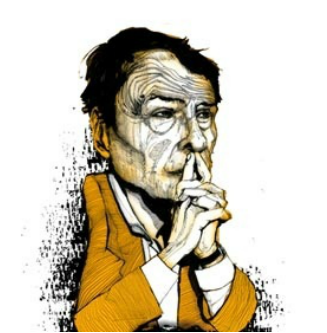 Sociologist Pierre Bourdieu (1930-2002) Sociologist Pierre Bourdieu (1930-2002)
Tags: class, inequality, knowledge, cultural capital, embodied state, institutionalized state, objectified state, pierre bourdieu, 00 to 05 mins
Year: 2015 Length: 5:29 Access: YouTube Summary: This short tutorial video summaries Pierre Bourdieu's (1930-2002) theory of cultural capital, a concept that is defined in this video as “the cultural knowledge that serves as currency that helps us navigate culture and alters our experiences and the opportunities available to us.” The video goes on to elaborate by discussing three different forms of cultural capital—embodied state, objectified state and institutionalized state—and provides examples of each type that students can apply to their own lives. At the end of the video, discussion questions are included that can assist students in applying the concept of cultural capital to what is happening in the world today. This is one of several videos on The Sociological Cinema that illustrate Bourdieu’s ideas, including his theory of taste (here, here, and here), different forms of capital, habitus, and social distance. In addition to this tutorial video, The Sociological Cinema's has several videos that use examples from popular culture to teach Bourdieu’s concept of cultural capital, which includes clips from the popular reality TV show Wife Swap, scenes from The Wire (here and here), the movie Clueless, and this excerpt from the PBS documentary film People Like Us: Social Class in America. Submitted By: Sociology Live!, Cindy Hager 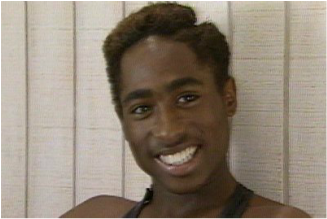 17-year-old Tupac Shakur reflects on society in this 1988 interview. 17-year-old Tupac Shakur reflects on society in this 1988 interview.
Tags: children/youth, class, education, inequality, intersectionality, race/ethnicity, social mvmts/social change/resistance, adolescence, sociology of youth, standpoint theory, youth studies, 21 to 60 mins
Year: 1988 Length: 35:39 Access: YouTube Summary: Scholars working within the interdisciplinary field of Youth Studies often highlight the limited ways in which youth and their unique lived experiences are portrayed in popular discourse and academic literature. For example, discourses around adolescent sex and sexuality—and specifically adolescent female sexuality—frequently rely on ideologies of fear, shame, and restraint (Fields 2008; Fine and McClelland 2006; Fine 1988). Andreana Clay (2012) points to the ways sociologists tend to focus on "deviant" behavior within youth culture: "By focusing on gangs or the consumption of fashion, music, and the media, scholars have pointed to a crisis among youth, particularly youth of color and working class youth. Recent attacks on affirmative action, increases in police brutality and racial profiling, and new anti-youth legislation have exacerbated this sense of crisis, urgency, and hopelessness among critics, community activists, scholars, and the youth themselves" (Clay 2012:3). Often missing from popular portrayals of youth and youth culture is a perspective that comes directly from youth themselves. • Filmed prior to his experience with stardom, in this 1988 interview, rapper Tupac Shakur (1971-1996) articulates his perspective on society, told from the standpoint of being a teenager, Black, and poor. Only 17-years-old at the time, the interview is full of wisdom and insight, as Tupac talks about various aspects of society from this unique intersectional vantage point. Prominent themes include his reflections on what it feels like to be a teenager growing up in the late 1980s, youth stereotypes, and the deep desire youth have for being respected. He provides context and nuance for why his generation seems angry, rebellious, and scared, pointing in part to the ways in which prior generations of adults have left behind a world in crisis that the younger generation must fix. He also critiques America's antiquated education institution, and how school curriculums fail to prepare his generation for today's world. Advocating for a more socially and intellectually relevant adolescent education, Tupac suggests classes on drugs, “real” sex education, scams, religious cults, police brutality, apartheid, American racism, poverty, and food insecurity. Using the example of foreign language education, Tupac underscores the irrelevancy of learning something like German (“When am I going to Germany?! I can hardly pay my rent in America!”) and the need for young people to learn the basics of English, as well as “politicians’ double talk.” Citing rising homicide, suicide, and drug abuse rates, Tupac provides a glimpse of his gift for poetry and incisive social commentary when he argues, “More kids are being handed crack than being handed diplomas.” He further advocates for his own unique perspective of society and its significance when he proposes that adults and youth, and rich and poor, temporarily switch roles, so that each group can understand and experience the others' realities. • Tupac concludes the interview talking about social change, and the role of youth within movements for change. Throughout the interview, Tupac reflects frequently on his mother, Afeni Shakur, who was an active member of the Black Panther Party in the late 1960s and early 70s. The influence of this political legacy is evident in Tupac's own political consciousness. Asked what he can do when he grows up, Tupac talks about the challenges of social change, and how the structures of society make change difficult. Using the metaphor of a maze of blocks in which mice roam, Tupac says, “Society is like that. They’ll let you go as far as you want, but as soon as you start asking too many questions and you’re ready to change, boom, that block will come." Tupac expresses his disillusionment with our political leaders and democratic process, but he also alludes to his own sense of hope, as he is actively engaged in political organizing around issues of safe sex and teen violence. At the time of the interview, he and his high school friends are trying to reinvigorate the Black Panthers' political efforts, particularly their vision around education and Black pride. Submitted By: Valerie Chepp  In the movie Clueless, self-mastery is a skill taught to rich kids. In the movie Clueless, self-mastery is a skill taught to rich kids.
Tags: children/youth, class, education, inequality, marriage/family, bourdieu, cultural capital, parenting, self-efficacy, self-mastery, socialization, status, 00 to 05 mins
Year: 1995 Length: 4:50 Access: YouTube Summary: Several generations of sociological researchers discovered parenting styles vary by social class. Post World War II, Melvin Kohn ([1969] 1977) found middle-class parents stress self-mastery and creativity in their children; working-class parents focus on instilling conformity and making their children obedient to authority. At the turn of the century, Annette Lareau’s ([2001] 2011) research found working-class parents focus on providing basic necessities for their children while largely leaving their kids alone to socialize themselves; middle- and upper-class parents focus on instilling self-mastery in their children, often through activities, constructive interactions with others, and the learning of making choices and actions to bring about desirable outcomes. More recently, Jessica McCrory Calarco (2014) found classed parenting styles influence education, as there is a positive relationship between class status and a student’s likelihood of taking a proactive role in their learning. These cross-class parenting styles and their influence on education is depicted in this edited clip from the movie Clueless (1995), where a wealthy and powerful father encourages his daughter to achieve high academic marks not through hard work and study, but through creative negotiation and maybe even the outright manipulation of teachers. According to generations of research on cross-class parenting styles, it would be unlikely working-class parents would emphasize negotiation as a life skill, perhaps because these fathers and mothers often feel powerless themselves. Thus, alongside the economic resources that are especially important to intergenerational mobility, middle- and upper-class parents also pass along a form of social capital to their child that offers advantages in modern workplaces that do not reward subordination to authority, but rather incentivize the ability to bend and manipulate authorities towards one’s own interests and desires. Submitted By: Jason T. Eastman 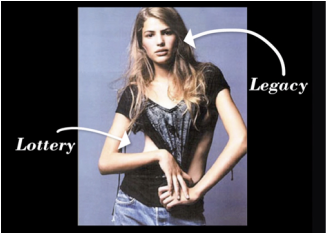 Model Cameron Russell reveals the elusive nature of “the look.” Model Cameron Russell reveals the elusive nature of “the look.”
Tags: bodies, culture, gender, inequality, prejudice/discrimination, race/ethnicity, social construction, beauty culture, floating norms, laissez-faire racism, model industry, white privilege, subtitles/CC, 06 to 10 mins
Year: 2012 Length: 9:30 Access: TEDTalks Summary: Is being a model really all it’s cracked up to be? In this TED Talk, Cameron Russell answers this and other questions by vocalizing some of her experiences in the modeling industry. This video is useful for illustrating the work that takes place behind-the-scenes of the modeling industry in order to produce what sociologist Ashley Mears calls “the look.” In her book Pricing Beauty: The Making of a Fashion Model, Mears articulates that “the look” is something sought after by clients and bookers alike in the fashion industry. It is defined as the varying traits—both physical and personality—that make a model desirable. Yet, after spending more than two years conducting ethnographic fieldwork, Mears finds that industry professionals have a hard time describing what exactly constitutes a good look; rather, they claim they just “know it” when they see it. In this way, Mears illustrates how the look is characterized by a set of “floating norms” against which models are measured. These socially constructed ideals “are elusive benchmarks of fleeting, aesthetic visions of femininity and masculinity” (Mears 2011:92). The challenge with adhering to these norms is that they are consistently out of reach; models must constantly work to achieve them but, since they are ambiguous and always changing, they are ultimately unattainable. The result is that even models are insecure with, and always questioning, the value of their look. • In addition to illustrating the cultural production of the look, this clip also illustrates the various ways white privilege and laissez-faire racism operate in the modeling industry. Once again echoing Mears’s findings, Russell points to the scouting process as a site where ideas about race result in inequalities within the industry. In addition to youth and vitality, Russell asserts that she was also selected for her whiteness. It is both norms around conventional prettiness and the legacy of white privilege that has helped to secure Russell’s success. Mears’s research similarly documents the ways in which white models are significantly hired over African Americans, Latino/as, and people of Asian descent. When models of color are present in the industry, they are often used in exotic campaigns or they exhibit an “ethnicity lite” aesthetic, that is, a look that “blends mainstream white beauty ideals with just a touch of otherness” (Mears 2011:196). • Russell also points to the extensive work that goes into creating a look. Behind each advertisement or photograph is significant makeup and styling, as well as preproduction, postproduction, and Photoshop. How might this create challenges for individuals in society? Many young people seek to emulate “the look” that fashion models project. However, as Mears and Russell demonstrate, the look is unattainable; it is a socially constructed concept that is difficult to describe, and even more difficult to achieve. Nonetheless, people hold themselves up to this impossible standard, resulting in low self-esteem, incredible commercial gains for beauty companies, and a perpetual feeling of insufficiency. Submitted By: Ruth Sheldon and Valerie Chepp  Harriet Washington discusses the history of the Tuskegee Syphilis Study in her book, Medical Apartheid. Harriet Washington discusses the history of the Tuskegee Syphilis Study in her book, Medical Apartheid.
Tags: biology, bodies, health/medicine, inequality, prejudice/discrimination, race/ethnicity, science/technology, violence, informed consent, institutionalized discrimination, eugenics, medical ethics, scientific racism, slavery, tuskegee syphilis experiment, 21 to 60 mins
Year: 2013 Length: 28:27 Access: YouTube Summary: This short interview on Democracy Now with author and scholar Harriet A. Washington provides useful entrée into a discussion about racial discrimination within the medical establishment. Drawing on work from her book Medical Apartheid: the Dark History of Medical Experimentation on Black Americans from Colonial times to the Present, Washington shines a light on many of the systematic abuses African Americans and other People of Color have endured at the hands of scientists and medical professionals. • As Washington explains, the story of medical apartheid begins with scientific racism, the origins of which are often traced to 1779, when German scientist Johan Friedrich Blumenbach is credited with attempting to establish a race-based system of classification among humans (find more on Blumenbach's efforts here, and click on this link for information about how the scientific effort to find a biological basis for race continues into the present). Much has been written about how the legitimacy and authority of science allowed white slaveholders to justify the torture and confinement of their Black slaves; however, as Washington notes, there is a lesser known history of white medical professionals using Blacks as subjects in medical experiments. • In the above clip, Washington discusses The Tuskegee Study of Untreated Syphilis in the Negro Male, as one of the most notorious examples of Blacks being used as subjects in medical experiments. The study was conducted between 1932 and 1972 in Macon County, Alabama, and it tracked 399 poor and mostly illiterate Black sharecroppers who were diagnosed with syphilis. The study subjects were deceived by medical professionals into believing that they were being treated for “bad blood," when in fact the documented intentions of those leading the study was to allow the disease to run its course, which often meant a very painful death. By 1947 penicilin was recognized as a cure for syphilis, but study clinicians denied the antibiotic to subjects and instead gave them a placebo. • As Washington notes, the racism that made something like the Tuskegee Syphilis Study possible was systemic and could be located at all levels of the medical establishment. Seated at the top of the medical hierarchy was the U.S. Surgeon General, Thomas Parran, Jr. Even when presented with the penicillian cure, Parran opted to continue experimentation with the Black men of Macon County. By his assessment, their lives were less valuable than knowledge about syphilis. • For images related to the Tuskegee Syphilis Study, check out our Pinterest board titled "Race: Health/Health Care." Submitted By: Lester Andrist 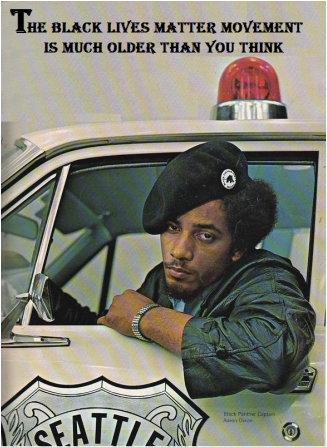 A Black Panther poses in a police car for Seattle Magazine A Black Panther poses in a police car for Seattle Magazine
Tags: crime/law/deviance, inequality, prejudice/discrimination, race/ethnicity, social mvmts/social change/resistance, violence, black lives matter, black panther party, criminal justice system, institutional racism, racism, 06 to 10 mins
Year: 2015 Length: 7:17 Access: New York Times Summary: While it would be a mistake to reduce the Black Lives Matter movement to a mere facsimile of the Black Power movement that grew out of the Civil Rights Era, there are similarities between the movements that are difficult to ignore. Moreover, BLM did not emerge from a historical void or somehow as a response to an unprecedented set of circumstances; rather it is a continuation of the work started by organizations such as the Student Nonviolent Coordinating Committee (SNCC) and the Black Panther Party (BPP). By explicitly calling for an end to patterns of racist police brutality, BLM is also continuing the unfinished work of generations of activists like Ida B. Wells-Barnett, Stokely Carmichael, and Huey P. Newton--Men and Women of Color who have bravely spoke truth to power by calling out the racist actions (and strategic inactions) of U.S. law enforcement officials. • The above news documentary, directed by Stanley Nelson, revisits the history of the Black Panther Party, which was founded by Huey P. Newton and Bobby G. Seale in October 1966. As Newton articulates in the clip, the BPP formed as a direct response to the problem of police brutality in Oakland, California, and the panther was chosen as a symbol of the organization because "The panther is a fierce animal, but he will not attack until he is backed into a corner; then he will strike out." Much like the BLM movement of the current era, soon after its formation the BPP found itself at the vanguard of a larger struggle, which sought to redress a wide array of racial injustices. In only a few short years, local BPP chapters opened all over the country. • Just as the killing of Trayvon Martin, Rekia Boyd, Michael Brown, and countless other young Black men and women has served as a catalyst for the BLM movement, the 1965 Watts Rebellion was cited by Newton and Seale as a catalyst for founding the BPP. For BLM, handheld cameras have proven to be a pivotal tool for igniting a public discussion about racism and racist violence, but people forget that the idea of surveilling the police in order to keep them honest actually grew out of the Watts Rebellion. Following the unrest, the Community Alert Patrol formed and began conducting patrols of police in Black communities. Inspired by this tactic, the BPP organized legally armed groups of Black Panthers to patrol police officers in the performance of their duty. As Party member Elbert "Big Man" Howard explains at the 2:40 mark, Panthers would stand at a distance and observe officers during traffic stops. • The story of the BPP cannot be written without reference to the efforts of the FBI under J. Edgar Hoover's leadership. Hoover successfully portrayed the BPP as a bona fide threat to U.S. national security, which was a gratuitous plank of the FBI's propaganda platform, particularly given the U.S. involvement in Vietnam. Given this history, it is perhaps unsurprising that the BLM movement also finds itself maligned by U.S. law enforcement officials, but as with Hoover's allegations against the BPP, the evidence that BLM members want anything more than justice is sorely lacking. • For more information and resources, check out our Pinterest boards related to the BPP and the BLM movements. Submitted By: Lester Andrist |
Tags
All
.
Got any videos?
Are you finding useful videos for your classes? Do you have good videos you use in your own classes? Please consider submitting your videos here and helping us build our database!
 |
 RSS Feed