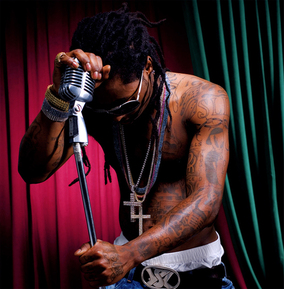
 Mary Bowman, a 22-year-old spoken word poet and HIV/AIDS activist, responds to the pop cultural praise being directed toward Lil Wayne's new "How to Love" video. Rapper Lil Wayne’s new music video “How to Love” has received a lot of attention these past few weeks. On August 23rd the video debuted as the “Jam of the Week” on MTV Jams, and Lil Wayne performed the song at the 2011 MTV Music Awards on August 28th. Much of the video’s recent attention comes from the fact that “How to Love” is very different from Wayne’s other works. For those of you unfamiliar with Lil Wayne’s repertoire, he is usually known for his slanderous lyrics disrespecting women (e.g., see here and here). The messages portrayed in “How to Love,” however, are largely being perceived as an important and welcome departure from Lil Wayne’s previous songs and music videos (e.g., see here and here). Joining the voices of approval, on August 24th radio personality Big Tigger posted a comment on Twitter congratulating Lil Wayne (a.k.a. @lilTunechi) for tackling important issues, including HIV, in his music video “How to Love.” _________________________________________________________________________________________________  @BigTiggerShow Big Tigger #KUDOS out to @lilTunechi for tackling so many #RealLifeIssues including #HIV in his new video #HowToLove! Know ya status - Get TESTED!! RT 24 Aug _________________________________________________________________________________________________
I agree that the video is a very emotionally charged description of situations some women find themselves in everyday. But I disagree with Big Tigger; I don’t believe that Lil Wayne “tackled” the issues at all. If anything, I believe he promoted the stigma that young women raised in a certain environment grow up to be nothing more than a stripper with children who eventually contract HIV by having unprotected sex for money. Due to the damage already done to cultural images of women, especially African American women, by rapper Lil Wayne, I don’t believe that the song “How To Love” is sincere. I actually like the song, and I will go as far to say that I enjoy Lil Wayne's music though I may not agree with everything he says. So this is not a blog piece bashing Lil Wayne, but I am expressing my disappointment that Big Tigger, a public figure who does a considerable amount of service in the community for HIV/AIDS, would go so far as to say that Lil Wayne "tackled" this issue. I am a HIV positive female who is working to remove the stigma that this video reinforces. I have four serious problems with Big Tigger’s statement: 1. Big Tigger is a man. So is Lil Wayne. Men will never be able to tell a woman’s story, whether the story is negative or positive. They will never understand what it means to be a woman in today’s society, so I feel they have no right to impose their opinion on such a young and influential generation of hip hop listeners. 2. Lil Wayne talks about women negatively all the time and now all of a sudden he cares about their issues with self-esteem, drug use, and sexual behavior? For example, the woman portrayed in the "How to Love" video is a stripper. I have heard Lil Wayne talk degradingly about his own experiences with strippers. This video does not provide adequate evidence showing his sympathy, support, and concern for women in this particular profession, especially given that this song is featured on an album, Tha Carter IV, where he continues his blatant disrespect toward women. 3. One of Big Tigger’s causes that he fights for publicly is HIV/AIDS. He couldn’t possibly have thought that the video “tackled” the issue. To me that is a slap in the face to all the work that has been done to remove the stigma surrounding this epidemic. The video basically says that because the young lady’s mother made certain choices, she was forced to grow up with low self-esteem and become a stripper who has sex for money and happens to contract HIV. The video implies that if you live a certain lifestyle deemed to be socially deviant or “negative,” then there are dire consequences to your actions, namely, becoming HIV positive. 4. The video does nothing more than verbalize the acronym “HIV.” It doesn’t promote safe sex. It doesn’t say what you can do if you test positive for HIV. It doesn’t say that it is not the end of the world if you test positive for HIV. It does, however, add insult to injury by having the woman run away from the issue. People need to know that the last thing they should do is run away from HIV/AIDS, whether they are positive or negative. It’s not the end of the world. There are individuals who are living normal lives with HIV. I am proud to be one of them, born with HIV and 22-years-old, yes I struggled with acceptance but I had help. In turn, I use my story and my life to help others affected by and infected with HIV/AIDS. I challenge Big Tigger and Lil Wayne to do the same. They may not be HIV positive, but they are individuals who have a bigger following than me; they can use their fame to advocate safe sex, the importance of getting tested, and promote the idea that if you are HIV positive, there is help and support. At the end of the day, we can’t control the unfavorable things artists and radio personalities say and do in our communities. However, as fans, followers, and listeners, it is our responsibility to stand up for what we believe in and say, “Hey, I don’t agree with what you said or did.” We can’t just sit back and accept what they give us. We have to fight. If not, we make it okay for artists and other public figures to continue promoting negative images of our communities. I will continue to fight until the stigma is completely diminished and I hope that even after I am long gone the fight will continue. Mary Bowman ENDNOTE #1: Click on the links below to learn about some of the ways Mary Bowman fights the stigma associated with HIV/AIDS. Dandelions (performance poem) I Know What HIV Looks (performance poem) Support AIDS Walk DC ENDNOTE #2: If you or people you love have been affected/infected by HIV/AIDS, visit these resources for more information: Metro Teen AIDS AIDS Alliance for Children, Youth & Families Food & Friends
234 Comments
Valerie Chepp
9/17/2011 12:20:00 am
Mary Bowman's call to confront--rather than run away from--the stigma associated with HIV can also be seen in this blog post from the Black Youth Project, which features the "I Will" music video and cites alarming new CDC figures around HIV infection rates among gay and bisexual African American men. If you are using these blog pieces in class, you might consider showing both videos to students and ask them to compare/contrast the messages being portrayed around HIV, and the implications of these messages for confronting the stigma associated with HIV.
marian
5/3/2021 05:34:35 pm
Gain up to 3-9 full inches in length Grow Bigger in days Penis Enlargement Cream & Pills contact DR SANTY JATTO Email address for help
Ruth Cholay
1/6/2022 05:33:21 pm
I'm here to let everyone know that there is a cure for HERPES1&2. The doctors have succeeded in letting people living with Herpes know that there is no cure for Herpes and they have been enslaved to the antiviral and other supplementary Orthodox medicine just to help suppress the virus and not a cure. I got diagnose of herpes1 last year 2021 and i did not believe in my doctor that no cure for herpes rather i went into research online and I was introduce to Dr Osato a herbal healer by a blogger who also narrated Her story online on how she was cured of Herpes after using Dr Osato Herbal Medicine. I got the herbal medicine from Dr Osato and made use of it as I was instructed. I went to the clinic for a checkup after two weeks of using the herbal product. My result came out Negative and I was booked for another appointment after 30days to confirm my result and the test still showed Negative and I was given the green light that I am fully free from herpes. All thanks to God for using this Great herbalist to heal me. You can contact Dr Osato by email: osatoherbalcure@gmail.com or WhatsApp +2347051705853. His website is osatoherbalcure.wordpress.com. I have promised to keep sharing my testimony so people will know that there is a cure for herpes.
Martha Jecorick
2/23/2022 03:42:07 am
DR. OSATO`S CURE FOR HERPES1&2 - A NATURAL WAY TO GET HERPES1&2 CURED. If you have been looking for ways to naturally get rid of the herpes simplex virus from your body totally, then you are welcome to read further. Let's face reality here, you have tried so many counter drugs and you are confused, weak and angry because nothing seems to work. Good News For you my friend.... Yes, I came with good news that will liberate you from the pains and stress of herpes outbreak, you will get total cure from this virus using Dr. Osato Herbal Methodology. Who is Dr. Osato? You may ask. Dr. Osato is a herbalist and a naturalist. He researched and identified some herbs and established a unique methodology to healing the human body using Herbal medicine that was confidently entrenched in his over 30 years of experience. According to him, he has the cure for so many diseases/virus like GENITAL HERPES, HIV, DIABETES, CANCER, HPV, HSV1&2, GENITAL WART, SHINGLES, VIRGINAL INFECTION and so many more. You can reach Dr Osato on his email: osatoherbalcure@gmail.com or WhatsApp +2347051705853. You can also contact him through his website: https://osatoherbalcure.wordpress.com I am using this medium to inform everyone how to get treated of herpes using Dr Osato recommended Herbal methodology.,.
Ruth Cholay
1/6/2022 05:32:56 pm
I'm here to let everyone know that there is a cure for HERPES1&2. The doctors have succeeded in letting people living with Herpes know that there is no cure for Herpes and they have been enslaved to the antiviral and other supplementary Orthodox medicine just to help suppress the virus and not a cure. I got diagnose of herpes1 last year 2021 and i did not believe in my doctor that no cure for herpes rather i went into research online and I was introduce to Dr Osato a herbal healer by a blogger who also narrated Her story online on how she was cured of Herpes after using Dr Osato Herbal Medicine. I got the herbal medicine from Dr Osato and made use of it as I was instructed. I went to the clinic for a checkup after two weeks of using the herbal product. My result came out Negative and I was booked for another appointment after 30days to confirm my result and the test still showed Negative and I was given the green light that I am fully free from herpes. All thanks to God for using this Great herbalist to heal me. You can contact Dr Osato by email: osatoherbalcure@gmail.com or WhatsApp +2347051705853. His website is osatoherbalcure.wordpress.com. I have promised to keep sharing my testimony so people will know that there is a cure for herpes.
Martha Jecorick
2/23/2022 03:41:44 am
DR. OSATO`S CURE FOR HERPES1&2 - A NATURAL WAY TO GET HERPES1&2 CURED. If you have been looking for ways to naturally get rid of the herpes simplex virus from your body totally, then you are welcome to read further. Let's face reality here, you have tried so many counter drugs and you are confused, weak and angry because nothing seems to work. Good News For you my friend.... Yes, I came with good news that will liberate you from the pains and stress of herpes outbreak, you will get total cure from this virus using Dr. Osato Herbal Methodology. Who is Dr. Osato? You may ask. Dr. Osato is a herbalist and a naturalist. He researched and identified some herbs and established a unique methodology to healing the human body using Herbal medicine that was confidently entrenched in his over 30 years of experience. According to him, he has the cure for so many diseases/virus like GENITAL HERPES, HIV, DIABETES, CANCER, HPV, HSV1&2, GENITAL WART, SHINGLES, VIRGINAL INFECTION and so many more. You can reach Dr Osato on his email: osatoherbalcure@gmail.com or WhatsApp +2347051705853. You can also contact him through his website: https://osatoherbalcure.wordpress.com I am using this medium to inform everyone how to get treated of herpes using Dr Osato recommended Herbal methodology..
walker
5/1/2022 03:55:08 pm
via Whatsapp +2348145243120 email drjattosolutionhome@hotmail.com
Scofio
5/24/2022 05:06:18 am
Lucy Morrison
6/28/2022 09:24:02 am
I have been suffering from (HERPES SIMPLEX VIRUS) disease for the past four years and had constant pain, especially in my private parts. During the first year, I had faith in God that i would be healed someday. This disease started circulating all over my body and I have been taking treatment from my doctor, few weeks ago I came on search on the internet if I could get any information concerning the prevention of this disease, on my search I saw a testimony of someone who has been cured from (HERPES VIRUS) by this Man Dr ODIDI and she gave the email address of this man and advise we should contact him for any sickness that he would be of help, so I wrote to Dr.ODIDI telling him about my (HERPES VIRUS) he told me not to worry that I was going to be cured!! hmm I never believed it,, well after all the procedures and remedy given to me by this man few weeks later I started experiencing changes all over me as the Dr assured me that I have been cured, after some time I went to my doctor to confirmed if I have be finally healed behold it was TRUE, So friends my advice is if you have Any Type of Sickness Or Relationship Problem contact Dr. Odidi (odidispelltemple@gmail.com Or What'sApp +2349012515879. Website::: http://odidispelltemple.blogspot.com
Lucy Morrison
8/9/2022 12:54:12 am
I have been suffering from (HERPES SIMPLEX VIRUS) disease for the past four years and had constant pain, especially in my private parts. During the first year, I had faith in God that i would be healed someday. This disease started circulating all over my body and I have been taking treatment from my doctor, few weeks ago I came on search on the internet if I could get any information concerning the prevention of this disease, on my search I saw a testimony of someone who has been cured from (HERPES VIRUS) by this Man Dr ODIDI and she gave the email address of this man and advise we should contact him for any sickness that he would be of help, so I wrote to Dr.ODIDI telling him about my (HERPES VIRUS) he told me not to worry that I was going to be cured!! hmm I never believed it,, well after all the procedures and remedy given to me by this man few weeks later I started experiencing changes all over me as the Dr assured me that I have been cured, after some time I went to my doctor to confirmed if I have be finally healed behold it was TRUE, So friends my advice is if you have Any Type of Sickness Or Relationship Problem contact Dr. Odidi (odidispelltemple@gmail.com Or What'sApp +2349012515879. Website: http://odidispelltemple.blogspot.com
DENILSON CLARK
9/9/2022 04:19:47 pm
QUICK AND SAFE WAY TO ENLARGE YOUR PENIS WITHOUT ANY SIDE EFFECTS AND PERMANENT RESULTS THROUGH DR HARRY HERBAL MIXTURE CREAM website https://drharryherbaltempl.wixsite.com/solutiontemple whatsapp +2349036417079
DENILSON CLARK
9/12/2022 03:35:07 pm
QUICK AND SAFE WAY TO ENLARGE YOUR PENIS WITHOUT ANY SIDE EFFECTS AND PERMANENT RESULTS THROUGH DR HARRY HERBAL MIXTURE CREAM website https://drharryherbaltempl.wixsite.com/solutiontemple whatsapp +2349036417079
Carlito SAVANNAH
9/18/2022 02:33:54 pm
We had everything we wanted as a family except good health. I had to do this for the benefit of those who still doubt the efficacy of genuine herbal medicines just as my dad doubted the moment i came with the news of Dr. WHITE been able to cure Herpes Virus. Unlike Mum, dad is a (RACIST) who never believed something good could come from the black nation. I was beautiful and adventurous but when I had herpes infection spreading in my body like wide fire at a time Dad was battling HIV it was like a dark cloud covering my family. For many years i suffered pain and shame. I decided to surf the internet for alternative cure which lead me to Dr. WHITE whatsapp +2349091844595 a powerful but humble herbalist and healer who promised to cure me and kept to his words. This man is another Daddy from a different nation. At first I was skeptical, I asked him both relevant and irrelevant questions but he was patient to prove my medical doctors and dad wrong who said no cure. Haven made every arrangement; he prepared and sent the cure to me through Courier express service which I received at door step. In 2weeks of using his cure my symptoms disappeared and I was well again though the prescription was for a month. All thanks to Dr. White who put integrity and human sympathy above material things. I had read many testimonies of those who benefited from Dr. WHITE medicines, this actually prompted me to write him but today, I’m herpes free and Dad is HIV negative haven seen my case and got convinced to use herbal cure. Heavenly thanks to Dr. WHITE for restoring our Joy. Carlito Savannah
Carlito SAVANNAH
9/18/2022 02:53:41 pm
We had everything we wanted as a family except good health. I had to do this for the benefit of those who still doubt the efficacy of genuine herbal medicines just as my dad doubted the moment i came with the news of Dr. WHITE been able to cure Herpes Virus. Unlike Mum, dad is a (RACIST) who never believed something good could come from the black nation. I was beautiful and adventurous but when I had herpes infection spreading in my body like wide fire at a time Dad was battling HIV it was like a dark cloud covering my family. For many years i suffered pain and shame. I decided to surf the internet for alternative cure which lead me to Dr. WHITE whatsapp +2349091844595 a powerful but humble herbalist and healer who promised to cure me and kept to his words. This man is another Daddy from a different nation. At first I was skeptical, I asked him both relevant and irrelevant questions but he was patient to prove my medical doctors and dad wrong who said no cure. Haven made every arrangement; he prepared and sent the cure to me through Courier express service which I received at door step. In 2weeks of using his cure my symptoms disappeared and I was well again though the prescription was for a month. All thanks to Dr. White who put integrity and human sympathy above material things. I had read many testimonies of those who benefited from Dr. WHITE medicines, this actually prompted me to write him but today, I’m herpes free and Dad is HIV negative haven seen my case and got convinced to use herbal cure. Heavenly thanks to Dr. WHITE for restoring our Joy. Carlito Savannah
MATT MILLER
11/6/2022 04:32:01 pm
MY HIV HEALING AND LOTTERY WINNING TESTIMONY/HE ALSO CURES SMALL PENIS ,HERPES CURE,STROKE,PILE,LOW SPERM COUNT,SPELLS OF ALL KINDS ETC email drharrysolution@gmail.com his website https://drharryherbaltempl.wixsite.com/solutiontemple ou can also add him on whatsApp +2349036417079 My mouth is short of words, i am so happy because Dr HARRY has healed me from HIV which i have been suffering from the past 5years now, i have spend a lot when getting drugs from the hospital to keep me healthy, i have tried all means in lifeA to always i can become HIV negative one day, but there was no answer until i found Dr HARRY the parish of African who provide me some healing herbs that i uses , now i am glad telling everyone that i am now HIV Negative, i am very happy, thank you Dr HARRY for helping my life comes back newly without any form of crisis, may the good lord that i serve blessed you Dr HARRY and equip you to the higher grade for healing my life. i am so amazed. so i will announced to everyone in this whole world that is HIV positive to please follow my advice and get healed on time, because we all knows that HIV disease is a deadly type,contact Dr HARRY for your HIV healing herbs today at: drharrysolution@gmail.com his website https://drharryherbaltempl.wixsite.com/solutiontemple He will be always happy to assist you online and ensure you get healed on time, contact Dr HARRY today for your healing herbs immediately, you can also add him on whatsApp +2349036417079 for easier communication thank you sir.
WAYNE TRIPPIER
11/18/2022 05:54:35 pm
hello everyone here, I am from England , i want to share a great testimony of Dr HARRY herbal cream saves me from shame , my penis size was a big issue to me as the size was really so embarrassing and discouraging, a 40 year old full grown man like me having 2 inches penis and to worsen it i don't last in sex i cant even last one minutes it was really a thing of shame my wife was really tired of me because my sex life was very poor , she never enjoyed sex, i was always thinking and searching for solutions everywhere until last months when i saw a testimony of how Dr HARRY herbal mixture cream have been helping people from the globe,i saw one MR JERRY testifying of how Dr harry helped him enlarge his penis size so i decided to give him a try ,we talked and he gave me steps to follow which i did and to my greatest surprise in less than 14 days of taking the herbal mixture cream my penis grow to 9 inches i couldn't believe my eyes and as i speak now my penis is now 10.7 inhello everyone here, I am from United State , i want to share a great testimony of how Dr harry herbal mixture cream saves me from shame and disgrace, my penis size was a big problem to me as the size was really so embarrassing and discouraging, a 37 year old full grown man like me having 3 inches penis and to worsen it i don't last in sex i cant even last one minutes it was really a thing of shame my wife was really tired of me because my sex life was very poor , she never enjoyed sex, i was always thinking and searching for solutions everywhere until last months when i saw a testimony of how Dr harry herbal mixture cream have been helping people from the globe,i saw one MR JOHN testifying of how Dr harry helped him enlarge his penis size so i decided to give him a try ,we talked and he gave me steps to follow which i did and to my greatest surprise in less than 14 days of taking the herbal mixture cream my penis grow to 9 inches i couldn't believe my eyes and as i speak now my penis is now 11 inches long and i was amazed when my wife said i satisfy her so well now all thanks to Dr Harry herbal mixture cream,i will forever be grateful to him .you can contact him email drharrysolution@gmail.com or visit his website https://drharryherbaltempl.wixsite.com/solutiontemple and you can call/whatsapp +2349036417079
JEREMY PARKER
10/5/2023 04:38:19 pm
Hello, my name is JEREMY PARKER, I was going through an article and found out about a man called Dr HARRY. I have been suffering from DIVORCES issues with three different women concerning my 2,0 inches penis size. I had to contact the spell caster and herbal healer DR HARRY. Viviana, my 4th wife, was on the verge of leaving me for another man just because of my sexual failure .But I stayed positive and believed I could have her back and make her stay. and behold i Dr HARRY helped me enlarge my penis through his herbal medicine cream . VIVIANA and I got together again and she was so happy the first night we had sex after using his cream for two weeks and I got 10.5 inches and 8.0 girth. Dr HARRY is such a nice man and honest man who takes his patient's happiness as his priority, he also helped me stop my cardiac arrest problem. Thanks to him and thanks to God for the gift given to him. If you have any problem whatsoever, contact him on this email: drharrysolution@gmail.com or website https://drharrysolutionhea.wixsite.com/healinghome Contact him for the following problems and see the great work of Dr HARRY:SPELL(1)If you want your ex back.{2}If you want to be very successful(3)If you are searching for a job(4)You want to be promoted in your office.(5)You want women/men to run after you.(6)If you want a child.(7)You want to be rich.(8)you want to get Marriage Spells(9)Remove Sickness from your body Spells(10)Business spell(11)Lottery winning numbers(12)Bring Back Lost Love
JASON MOORE
1/29/2024 04:36:23 pm
Hello everyone, I am Jason Moore. I am based in Florida. I am here to share my testimony on how Dr Harry helped me enlarge my penis size from 4 inches long to 10 inches long with his herbal mixture cream,Some few months back, Life was hard for me. Having sex with my wife was literally impossible, because my erections were poor unlike when I was younger, I couldn’t bring myself to have sex with my wife, my sperm was watery which will flow out, it was a terrible situation back thefh6n, I had gone to many specialist, subdued myself to many drugs because honestly I needed a home and a normal life, my wife was devastated/disappointed when I confessed to her that all this might be as a result of countless sex and masturbation I engage myself with when I was younger,Now am 35 years old, I felt God was really punishing me now. I am Started going for various counseling in one of our prayer reserved counties, when a woman made testimony of how her husband got out of the same situation I was in. I decided to consult the doctor that helped her husband, “Dr harry” and that was it. just as he assured, within the space of 2-3 weeks. Everything became history, It was like God had blessed me with a second chance, I found myself being Lucky For I was present when that woman made that testimony, So I am telling my own testimony that I am about to become a Dad of a child my wife is carrying. I have also seen others who gave testimonies in relating problems like the one I was in, especially those with
Valerie Chepp
12/4/2011 07:00:20 am
The link to the blog post from the Black Youth Project, which features the "I Will" music video, has changed. Here is the correct address:
millian josh
12/27/2020 04:49:57 am
NATURAL HIV CURE
larry isaac
1/18/2021 01:43:04 pm
HOW I CURED FROM THE HERPES VIRUS
CARLOS DILWORTH
5/20/2021 04:12:56 pm
hello everyone My name is Carlos Dilworth from mexico but base in the united states ,i just want to share my testimony with the world on how Doctor HARRY Help me to enlarge my penis. Please read my good news carefully and i am sure it will affect your life positively on how you will also enlarge your pines,because i know some many people out there also need his help! I came across so many comments about Dr HARRY Penis Enlargement Medicine cream some weeks ago, on his website https://drharryherbaltempl.wixsite.com/solutiontemple though I had really wanted my penis to be large, long and thick,because i was not able to have sex with my wife..It was really affecting our marriage and my wife was about to divorce me. I had about 8.128cm – 3.2 inches before. Am really amazed on the fast results achieved within 7 days of using Dr. harry Penis Enlargement Medicine. It work and now I have got 22.87cm – 10.5 inches now. And my wife love it more now, i began to feel the enlargement of my penis, This went on for a little period of about 14 days and to my surprise my wife keeps screaming that she love my big dick now. And my penis is now 11 inches long on erection and off course very large round. I am very happy for this Penis Enlargement experience. He can help with all kinds of cure you may need as follows Penis Enlargement Low sperm count Weak Erection diabetes type 1and 2 Herpes spell HIV spell Pregnancy spell Marriage for spell cancer ALS watering sperm womb fertilization penis erection witch craft attack s t d diseases internal heat swollen body low sperm count long time sickness kidney,heart,lungs,problem with doctor,Dr. HARRY you are in safe hands your healing is assured Email: drharrysolution@gmail.com Website https://drharryherbaltempl.wixsite.com/solutiontemple Call or whatsapp +2349036417079 thanks
tina richard
9/20/2021 05:32:10 am
Its a miracle that I am alive today. I encounter HERPES SIMPLEX VIRUS (HSV1/2) for good four (4) years, six (6) months and twelve (12) day with my calculations, before I meet the great Dr. Emmanuel. I am Tina Richard from Fresno California, united state of America and I was affected with herpes virus.Herpes is a viral infection cause by the Herpes simplex virus, marked by painful, watery blister in the skin or mucous membrane or on the genitals. This was what I suffered for good four years. I have visited CVS Pharmacy in Fresno for treatment but no improvement. I meet Dr.Emmanuel online while I was searching for herpes cure I read a testimony about his work. I give a try that now becomes a testimony in my life. I contacted Dr.Emmanuel WhatsApp +2348140073965 or E-mail: nativehealthclinic@gmail.com
Williams Mark
9/23/2021 06:12:17 pm
I'm Williams Mark, i was diagnosed with COPD and Hepatitis B in 2009, I was told by my doctor that there's no possible cure for COPD and Hepatitis B. so i started taking antiviral medications lamivudine(Epivir) ..until one day I saw a forum , Dr Riaria website and email was posted so many people talking about his good work .., also I saw a lot of testimonials about him on how he uses herbal medicine to cure deadly diseases . I contacted him and told him my problems, He sent me herbal medicine and I took it for 3weeks after that I went for a check-up and I was totally cured. The medicine has NO SIDE EFFECT, there's no special diet when taking the medicine.
flora
10/10/2021 05:29:45 pm
I GOT RID OF HERPES WITHIN 6 DAYS
flora
10/11/2021 05:55:14 am
I GOT RID OF HIV WITHIN 12 DAYS
Charli Hugo
12/8/2021 03:35:26 am
I am very happy today to share this amazing testimony on how DR KALU, the herbal doctor, was able to cure me from my Herpes Virus with his herbal medicine. I have been a Herpes patient for 5 years now and have tried different treatment to ensure that I am cured of this terrible disease, but none worked for me, I felt so sad and desperate as I was losing almost everything due to my illness, while I was searching the internet I saw different recommendation about DR KALU on how he have been using his herbal Medicine to cure people, I contacted DR KALU and I told him how I got his contact and also about my disease, He prepare for me a medication of herbal herbs, He sent me the medicine to me, I took it as I was directed by him, after a few weeks of taking the medication I began to experience changes in my body, I had to call my doctor at the hospital for some blood test after the test my result came out negative I was no longer with the Herpes virus, I can not even believe this, Friends well today i am Herpes Free and i want everyone to know that there is a cure for Herpes for those who will contact DR KALU after reading my testimony, you can kindly contact him via: doctorkaluherbalhome@gmail.com
Monica harry
12/9/2021 05:44:57 am
I am here to give my testimony about a doctor who saved my life. i was infected with HERPES for than 2 years, I tried different doctors over a period of time but no one work, but when i came on the Internet i saw great testimony about DR OGBOEN how he was able to cure someone from HERPES virus with the help of herbal medicine I contacted him and he promised to cure my herpes virus.well i decided to give him a try, DR OGBOEN put his best in it and gave me good and effective result just as he has promised. Well after taking all the treatment sent to me by Dr OGBOEN I went back to the Hospital for check up, and now i have been confirmed HERPES Negative. You can contact him if you have any kind of sickness like, HERPES, HIV, CANCER, PILE, HEPATITIS, DIABETES, and a lot more you can contact him VIA: doctorogboenherbalhome@gmail.com or WhatsApp him: +16785625698
Ruth Cholay
1/6/2022 05:32:21 pm
I'm here to let everyone know that there is a cure for HERPES1&2. The doctors have succeeded in letting people living with Herpes know that there is no cure for Herpes and they have been enslaved to the antiviral and other supplementary Orthodox medicine just to help suppress the virus and not a cure. I got diagnose of herpes1 last year 2021 and i did not believe in my doctor that no cure for herpes rather i went into research online and I was introduce to Dr Osato a herbal healer by a blogger who also narrated Her story online on how she was cured of Herpes after using Dr Osato Herbal Medicine. I got the herbal medicine from Dr Osato and made use of it as I was instructed. I went to the clinic for a checkup after two weeks of using the herbal product. My result came out Negative and I was booked for another appointment after 30days to confirm my result and the test still showed Negative and I was given the green light that I am fully free from herpes. All thanks to God for using this Great herbalist to heal me. You can contact Dr Osato by email: osatoherbalcure@gmail.com or WhatsApp +2347051705853. His website is osatoherbalcure.wordpress.com. I have promised to keep sharing my testimony so people will know that there is a cure for herpes.
Ruth maris
1/30/2022 11:59:14 pm
All thanks to Dr Alli for curing my herpes virus/hpv with his herbal medicine, i do not have much to say but with all my life i will forever be grateful to him and God Almighty for using Dr Alli to reach me when i thought it was all over, today i am happy with my life again after the medical doctor have confirmed my HERPES SIMPLEX VIRUS / HPV of 5 is gone,i have never in my life believed that HERPES SIMPLEX VIRUS could be cured by herbal medicine. so i want to use this means to reach other persons who have this disease by testifying the power of Dr Alli that all hope is not lost yet, try and contact him by any means for any kind of disease with his email: ( Allispellhelp1@gmail.com ) or his whatsapp number +2348100772528 and get your healing
Cresia Sutherland
2/18/2022 04:02:04 pm
I want to share this great testimony to the world on how Dr Osato cured me from HSV-2 with his herbs, I was nervous when I first contacted him about the cure for HSV-2 but I decided to give him a try because I was desperate to get cured and be free from HSV-2. Dr Osato prepared the cure and sent it to me through UPS,which I used just the way Dr Osato instructed me and thank God today I am a beneficiary of this cure. I went back to the hospital after 14days of taking the herbs and I tested HSV-2 Negative. So I will tell you all who are looking for a cure to his/her HSV1&2 that Dr Osato took research before he could finally get the solution to it and a lot of people are benefiting from him right now. He also cured my friend from HSV-1&2. Dr Osato heals with natural herbs. Please i urge you to contact him now through his email address: osatoherbalcure@gmail.com or call and WhatsApp him on +2347051705853. His website is osatoherbalcure.wordpress.com and he is capable of curing HIV/AIDS, HERPES, HPV, HSV1&2, CANCER of all kinds,DIABETES and so many other infections.
Martha Jecorick
2/23/2022 03:41:20 am
DR. OSATO`S CURE FOR HERPES1&2 - A NATURAL WAY TO GET HERPES1&2 CURED. If you have been looking for ways to naturally get rid of the herpes simplex virus from your body totally, then you are welcome to read further. Let's face reality here, you have tried so many counter drugs and you are confused, weak and angry because nothing seems to work. Good News For you my friend.... Yes, I came with good news that will liberate you from the pains and stress of herpes outbreak, you will get total cure from this virus using Dr. Osato Herbal Methodology. Who is Dr. Osato? You may ask. Dr. Osato is a herbalist and a naturalist. He researched and identified some herbs and established a unique methodology to healing the human body using Herbal medicine that was confidently entrenched in his over 30 years of experience. According to him, he has the cure for so many diseases/virus like GENITAL HERPES, HIV, DIABETES, CANCER, HPV, HSV1&2, GENITAL WART, SHINGLES, VIRGINAL INFECTION and so many more. You can reach Dr Osato on his email: osatoherbalcure@gmail.com or WhatsApp +2347051705853. You can also contact him through his website: https://osatoherbalcure.wordpress.com I am using this medium to inform everyone how to get treated of herpes using Dr Osato recommended Herbal methodology.
Alida
3/2/2022 04:39:21 am
ATTENTION PLEASE!!! Am so glad to be expressing my profound gratitude to a man that is so concerned about other people's well being. I was suffering from (HERPES SIMPLEX VIRUS TYPE II) The doctors keep telling me that there is no cure but i believe that there is a cure somewhere and they don't want people to get cured. I tried searching online if i could see anything that will help me and i a comment on YouTube on how Dr Osato help to cure herpes with herbs and i also saw so many comments about him on many web pages on how he had helped and cured so many people suffering from HERPES 1$2, HPV, CANCER, HIV/AIDS, COLD SORE. So I contacted him through his email and I shared my problems with him and he sent me the herbs through UPS and gave me instructions on how to use it. It took me two weeks to finish the herbs and after I finished using it, he told me to go for a medical test, behold the result was negative, now I am HERPES VIRUS free. I just want to use this platform to thank Dr. Osato for curing me from that horrible disease and also for exposing his herbal cure to the world at large, please you can as well contact Dr Osato on his email,website or WhatsApp below.
Juwan james
3/8/2022 07:00:07 pm
It’s obvious most people living with HERPES are been enslaved to the antiviral and other supplementary antibiotics medicine just to help suppress the virus only.
Joelinton Akil
3/9/2022 04:53:50 am
PURE NATURAL CURE FOR HERPES, HIV, HPV, BLOOD PRESSURE, CANCER AND DIABETES BY DR OSATO HERBAL MEDICINE. CONTACT HIM ON https://osatoherbalcure.wordpress.com
jessica
3/10/2022 12:08:16 pm
It's a great pleasure for me to write this testimony about how I got my Genital Herpes cured a month ago. I have been reading so many comments of some people who were cured from various diseases by Dr Maggie but I never believed them. I was hurt and depressed so I was too curious and wanted to try DR. Maggie then i contacted him through his email, he assured me 100% that he will heal me, i pleaded with him to help me out. My experience with him was great, he healed me just as he promised. He sent me his medication and asked me to go for a medical check up after two weeks of usage. I agreed with him. I took this medication and went for a check up, to my greatest surprise my result was negative, i am really happy that I am cured and healthy again. I have waited for 3weeks to be very sure I was completely healed before writing this testimony. I did another blood test one week ago and it was still Herpes negative. so i guess it's time i recommend anyone going through the same way. reach him through his email address: drmaggieherbalhome82@gmail.com OR call, add him on Whatsapp +14097946086 .
Rosale Mata
3/12/2022 05:57:19 pm
What a great joy in my heart to share this to the entire public on how Dr Osato cures me from herpes1&2 with his herbs, I never believe it will work because the doctors keep saying there is no cure but I was desperate and needed to get this thing out of my body. I saw a comment online testifying how Dr Osato cure her from herpes and hpv and i contact Dr Osato and explain my problem to him and he prepare the cure and send it to me through UPS,which i use it just the way He instructed me and thank God today am a beneficiary to these cure. I went to my doctor for a checkup after 14days of taking the herbs and I did a blood test which i tested Herpes1&2 Negative and my doctor booked me for another appointment after 4 weeks to confirm my result and i retested again after 4 weeks and my result was still Negative and my doctor assured me that the virus is completely gone from my system. So I will tell you all who are looking for a cure to his/her HIV/AIDS and HERPES that Dr Osato took research before he could finally get the solution to it and a lot of people are benefiting from him right now. He also cured my Uncle and his wife from HPV. Dr Osato heals with natural herbs. Please i urge you to contact him now through his email address: osatoherbalcure@gmail.com or WhatsApp him on +2347051705853. His website is osatoherbalcure.wordpress.com and he is capable of curing HIV/AIDS, HERPES, HPV, HSV1&2, COLD SORE, CANCER of all kinds,DIABETES and so many other infections.
Gary Williams
3/16/2022 03:28:23 am
I appreciate Dr Akuna for helping me to cure me from Herpes virus. I have been battling with this for over 4years now. until i found Dr Akuna through a friend that he help to cure, He told me what was needed for my cure to be processed and then after I received the herbal medicine through delivery and I followed the Instruction and behold before 2weeks i noticed the blisters gone, and then went to test myself in the clinic same clinic I was diagnosed, I am forever free and thankful to Dr Akuna for restoring back my life and today I want to pass on this message for others passing through the same, kindly contact Dr Akuna today and i think you will also be free. Drakunasolutiontemple@gmail.com Call/Whatsapp: +2348154625070
Tiffany Beech
3/22/2022 03:10:44 am
Are you heartbroken or thinking of how you are to live the rest of your life with Herpes? I'm here to tell you to cry no more, for Dr Osato is here to help you with the cure for herpes. I was diagnosed with genital herpes in January this year and I have been searching and asking questions to see if I could get something to cure the disease because I did not believe what the doctors say that no cure is found yet. I came across a comment on Youtube and the person testified how she was cured from herpes1&2 after using Dr Osato herbal medicine. I quickly contact Dr Osato on email and explain my problem to him and he prepare the herbs and send it to me through UPS and gave me instructions on how to use it and tell me to go for checkup after usage which i did after two weeks of taken the herbal medicine and my result was NEGATIVE and my doctor confirm with me that am completely free from herpes. I'm so happy and grateful to Dr Osato for curing me from herpes and I will continue to share this for people out there to know that there is a cure for herpes. Dr Osato also has the cure for different types of diseases and viruses like HERPES, HIV, HSV1&2, DIABETES, CANCER, VAGINAL INFECTION, HPV, Sickle Cell, BLOOD PRESURE Cold Sore ect. You can contact Dr Osato on email and WhatsApp.... Email: osatoherbalcure@gmail.com or WhatsApp +2347051705853. His Website is osatoherbalcure.wordpress.com
Jane Baker
3/24/2022 08:57:46 pm
I’m recommending Dr AKHIGBE to everyone who has herpes simplex virus to get the cure from him. I was diagnosed with genital herpes in 2018 and I have been searching and asking questions to see if I could get something to cure the disease because I did not believe what the doctors say that no cure is found yet. I came across a comment on Youtube and the person testified how she was cured from herpes and hpv after using Dr AKHIGBE herbal medicine. I quickly contact Dr AKHIGBE and explain my problem to him and he prepare the herbs and send it to me through UPS and gave me instructions on how to use it and tell me to go for checkup after usage which i did after two weeks of taken the herbal medicine and my result was NEGATIVE. I waited another month and retested, the result was still NEGATIVE and my doctor told me that I am completely free from herpes. Am so happy and grateful to Dr AKHIGBE for what he has done for me and I will continue to share this for people out there to know that there is a cure for herpes. You can contact Dr AKHIGBE on email and WhatsApp to get the cure from him. Email: (Drakhigbeherbalhome5@gmail.com) and WhatsApp +2349021374574.
Ruth Cholay
3/26/2022 04:13:22 am
I'm here to let everyone know that there is a cure for HERPES1&2. The doctors have succeeded in letting people living with Herpes know that there is no cure for Herpes and they have been enslaved to the antiviral and other supplementary Orthodox medicine just to help suppress the virus and not a cure. I got diagnose of herpes1 January this year 2022 and i did not believe in my doctor that there is no cure for herpes rather i went into research online and I was introduce to Dr Osato a herbal healer by a blogger who also narrated Her story online on how she was cured of Herpes after using Dr Osato Herbal Medicine. I got the herbal medicine from Dr Osato and made use of it as I was instructed. I went to the clinic for a checkup after two weeks of using the herbal product. My result came out Negative and I was booked another appointment after 30days to confirm my result and the test still showed Negative and I was given the green light that I am fully free from herpes. All thanks to God for using this Great herbalist to heal me. You can contact Dr Osato by email: osatoherbalcure@gmail.com or WhatsApp +2347051705853. His website is osatoherbalcure.wordpress.com. I have promised to keep sharing my testimony so people will know that there is a cure for herpes.
allen
3/27/2022 09:26:49 am
I'm here to testify about the great work Dr Osebor did for me. I have been suffering from (HERPES) disease for the past 5 years and had constant pain, especially in my knees. During the first year,I had faith in God that i would be healed someday.This disease started circulating all over my body and i have been taking treatment from my doctor, few weeks ago I came across a testimony of one lady on the internet testifying about a Man called Dr Osebor on how he cured her from HIV Virus. And she also gave the email address of this man and advise anybody to contact Dr Osebor for help for any kind of sickness that he would be of help, so I emailed him on ( oseborwinbacktemple@gmail.com ) telling him about my (HERPES Virus) he told me not to worry that i was going to be cured!! Well i never believed it,, well after all the procedures and remedy given to me by this man few weeks later i started experiencing changes all over me as Dr Osebor assured me that i will be cured,after some time i went to my doctor to confirmed if i have be finally healed behold it was TRUE, So
WILLIAMS ALBION
3/28/2022 03:29:01 pm
Hello everyone,I want you all to know that having a small penis is a big problem in your relationship or marriage because i have experienced it in my marriage.
WILLIAMS ALBION
3/28/2022 04:40:38 pm
Hello everyone,I want you all to know that having a small penis is a big problem in your relationship or marriage because i have experienced it in my marriage. 3/31/2022 05:18:09 am
I appreciate Dr Akuna for helping me to cure me from Herpes virus. I have been battling with this for over 4years now. until i found Dr Akuna through a friend that he help to cure, He told me what was needed for my cure to be processed and then after I received the herbal medicine through delivery and I followed the Instruction and behold before 2weeks i noticed the blisters gone, and then went to test myself in the clinic same clinic I was diagnosed, I am forever free and thankful to Dr Akuna for restoring back my life and today I want to pass on this message for others passing through the same, kindly contact Dr Akuna today and i think you will also be free. Drakunasolutiontemple@gmail.com Or drakunasolutiontemple@yahoo.com Call/Whatsapp: +2348154625070 Visit Website: https://drakunasolutiontem14.wixsite.com/my-site-akuna/contact
sofia
4/3/2022 07:27:11 pm
Marcelo Lisa
4/4/2022 03:24:57 am
Maria Stehman
4/8/2022 05:43:57 pm
Hi everyone, I'm here to give my own verdict about the herbal cure Dr Osato is sending out to people to cure them of Herpes and HIV. Dr Osato herbal medicine is the best remedy for Herpes1&2 and HIV/AIDS, I was a carrier of Herpes and I saw a testimony on Youtube on how Dr Osato cure Herpes with herbs, I decided to have a contact with him and asked him for solutions and he started the remedy for my health and prepare the herbal cure for me and send it to me through UPS and he gave me instructions on how to use it which i rightly followed and after 14days of taking the herbal medicine i went for a blood test and my result was Negative. I waited for 3months to confirm my result before sharing this testimony and also to observe myself if i would have an outbreak and nothing came out from my body, i went for another blood test after 3 months of testing Negative and the result still shows Herpes Negative and my doctor was pretty sure i was totally cured from herpes and he confirm with me that I'm free from herpes. Thank God, now everything is fine, I'm cured by Dr Osato herbal medicine, I'm very thankful to Dr Osato and i will not stop publishing his name on the internet because of the good work he did for me, You can contact Dr Osato on email: osatoherbalcure@gmail.com Or you can call and WhatsApp him on +2347051705853. His website is https://osatoherbalcure.wordpress.com
Antonela
4/12/2022 08:05:18 am
Please read, follow and share for others to know about the cure for herpes. I'm here to testify on how I was cured from HERPES 1&2 with the use of herbs. I got the herbs from Dr Osato and he gave me instructions on how to use them. I took the herbal product for a week and 5days after which I went for a blood test and the result was Negative. I waited for another two months and retested the result was still negative and my doctor told me I'm completely free from herpes1&2 and this Gladys my heart and i wish to share it for the benefit of those living with herpes1&2 to also get the herbs from Dr Osato and get cured just like me. You can contact Dr Osato on his email: osatoherbalcure@gmail.com or call him on his phone number and WhatsApp +2347051705853 also through his website https://osatoherbalcure.wordpress.com. Dr Osato also has the cure for the following diseases: HERPES, HIV, HPV, CANCER, DIABETES, SHINGLES,VAGINAL INFECTION, HSV1&2 and so many more.
lidy mesil
4/13/2022 02:58:32 am
Hello everyone. Dr. Maggi Herbs is a good remedy for herpes Virus , I was a carrier of herpes virus and I saw a testimony on how Dr. Maggi cure Herpes Virus, I decided to contact him, I contacted him and he guided me. I asked him for solutions and he started the remedies for my health. After he finished he sent me the herbs which I took for 2 weeks before asking me to go for a check up and getting there. I could not believe that I was confirmed HSV 2 Negative after the test, Today I am so happy because I'm free from herpes disease with the help of Dr. Maggi. Thank God now everything is fine, I'm cured by Dr. Maggi herbal medicine, I'm very thankful to God for making it possible. You can reach him by email, I strongly recommend him to anyone out here looking for a cure.Contact Dr Maggi via email: drmaggiherbalhome@gmail.com call or whatsApp him on+1(917) 979-6387.
harry mary
4/17/2022 03:14:09 am
HOW I WAS CURE FROM HERPES WITHIN 14DAYS WITH THE HELP OF DR OKUNPA 4/18/2022 08:10:34 am
Live Testimony HPV and HERPES is cureable: I am greatful to Dr Aza ,the powerful herbal healer that rescue me from HPV and HERPES. I was diagnosed of these disease in 2019 and because of this, i was very unhappy with my life and i went into research on how i can get cured and i saw a testimony of a lady on how she was cured from HERPES by Dr Aza, i decided to give him a try and when i contact him, he assure me that he will help me and send me the cure.I believed in him because all i wanted was to be cured, so he prepared a herbal cure for me and send it to me through DHL and gave me instructions on how to use it and after one week i should go to hospital for checkup and after one week of using the herbal medicine, i went to the hospital for test and to my surprise the test stated that i am HPV and HERPES negative and i am fully cured from the diseases. This gladdens my heart and my doctor was suprised that am cured because he told me that there is no cure and he requested for Dr Aza contact, So viewers Dr Aza is a God Gifted man and he can cure so many diseases like HIV/AIDS, HERPES,CANCER of all kind, PILE, KIDNEY PROBLEM, SYPHILIS, DIABETES, HSV1&2, HPV and lot's more. You can contact him through his email: drazaherbalcenter@gmail.com or call and whatsapp him on +1(315)7951518 you can also visit his website at; www.drazaherbalcenter.com . I will continue to share this great testimony on the internet and all over the world for the good job Dr Aza has done for me.
Antonela
4/25/2022 01:41:35 am
Please read, follow and share for others to know about the cure for herpes. I'm here to testify on how I was cured from HERPES 1&2 with the use of herbs. I got the herbs from Dr Osato and he gave me instructions on how to use them. I took the herbal product for a week and 5days after which I went for a blood test and the result was Negative. I waited for another 6 months and retested the result was still negative and my doctor told me I'm completely free from herpes1&2 and this Gladys my heart and i wish to share it for the benefit of those living with herpes1&2 to also get the herbs from Dr Osato and get cured just like me. You can contact Dr Osato on his email: osatoherbalcure@gmail.com or call him on his phone number and WhatsApp +2347051705853 also through his website https://osatoherbalcure.wordpress.com. Dr Osato also has the cure for the following diseases: HERPES, HIV, HPV, CANCER, DIABETES, SHINGLES,VAGINAL INFECTION, HSV1&2 and so many more.
Ruth Cholay
4/25/2022 05:29:54 pm
I'm here to let everyone know that there is a cure for HERPES1&2. The doctors have succeeded in letting people living with Herpes know that there is no cure for Herpes and they have been enslaved to the antiviral and other supplementary Orthodox medicine just to help suppress the virus and not a cure. I got diagnose of herpes1 January this year 2022 and i did not believe in my doctor that there is no cure for herpes rather i went into research online and I was introduce to Dr Osato a herbal healer by a blogger who also narrated Her story online on how she was cured of Herpes after using Dr Osato Herbal Medicine. I got the herbal medicine from Dr Osato and made use of it as I was instructed. I went to the clinic for a checkup after two weeks of using the herbal product. My result came out Negative and I was booked another appointment after 30days to confirm my result and the test still showed Negative and I was given the green light that I am fully free from herpes. All thanks to God for using this Great herbalist to heal me. You can contact Dr Osato by email: osatoherbalcure@gmail.com or WhatsApp +2347051705853. His website is osatoherbalcure.wordpress.com. I have promised to keep sharing my testimony so people will know that there is a cure for herpes.
Maria Stehman
4/30/2022 03:09:29 pm
Hi everyone, I'm here to give my own verdict about the herbal cure Dr Osato is sending out to people to cure them of Herpes and HIV. Dr Osato herbal medicine is the best remedy for Herpes1&2 and HIV/AIDS, I was a carrier of Herpes and I saw a testimony on Youtube on how Dr Osato cure Herpes with herbs, I decided to have a contact with him and asked him for solutions and he started the remedy for my health and prepare the herbal cure for me and send it to me through UPS and he gave me instructions on how to use it which i rightly followed and after 14days of taking the herbal medicine i went for a blood test and my result was Negative. I waited for 3months to confirm my result before sharing this testimony and also to observe myself if i would have an outbreak and nothing came out from my body, i went for another blood test after 3 months of testing Negative and the result still shows Herpes Negative and my doctor was pretty sure i was totally cured from herpes and he confirm with me that I'm free from herpes. Thank God, now everything is fine, I'm cured by Dr Osato herbal medicine, I'm very thankful to Dr Osato and i will not stop publishing his name on the internet because of the good work he did for me, You can contact Dr Osato on email: osatoherbalcure@gmail.com Or you can call and WhatsApp him on +2347051705853. His website is osatoherbalcure.wordpress.com
neise charles
5/2/2022 09:01:32 am
A VERY SHORT STORY HOW I GOT CURED FROM HERPES SIMPLEX VIRUS (HSV2) Herpes simplex virus is said to have no cure, just as i was told by my family doctor that herpes can not be cured but can be controlled, Although i was a very stubborn person i never believed in what my doctor told me about herpes having no cure Am a very honest person who believe in nature and i also believed that there could be cure somewhere in the world, I kept my faith so strong and kept on doing my research till i finally came across Dr. Aza Blessed from west Africa He is one of the oldest herbalist after Dr. Sebi and total am a living testimony to his herbal cure to herpes, i became herpes Negative on the 17/05/2021 after using the herbal medication DR. Aza BLESSED mailed to me along with the prescriptions and today its been 2 years and herpes is not traceable in my body system, All thanks To Dr. Aza BLESSED For More Info on how to get cured Contact DR . Aza now on EMAIL : (drazaherbalcenter@gmail.com ) Or CALL/WHATS APP (+1(315) 795 1518 )
vera
5/2/2022 02:27:42 pm
Harrison Joe
5/2/2022 08:26:06 pm
Harrison Joe
5/4/2022 12:12:04 am
Lawson Mario
5/4/2022 05:52:46 am
I was diagnosis with Hepatites B virus & (HPV) fore over 4years ago and I ment a doctor he told me there is no cure. and I have taking some medication the warts multiplied when trying to removed them and it got me embarrass and pains, luckily few weeks ago I was recommend to Dr Ebhota for natural treatment after one week I got 100% cure and all the warts and pains got disappeared, I shared this post because it's part of my life experience,encase anyone need speedy help about this cure you can equally message to him via WhatsApp contact (+2349035324155)his Facebook page 👇👇
Caroline Hashim
5/5/2022 12:16:29 am
Faiza Saleem
5/5/2022 08:45:47 pm
vera
5/7/2022 09:48:52 pm
First, I want to complement this page administrator for creating this platform for us to express our feelings. Herpes is a serious and recurring disease which can't be cured through drugs or injections by the American doctors but the best way to deal with herpes is by taking natural herbs medicine from DR. Tebor the greatest herbalist doctor in the world and is only few American doctors that know about this herbal medicine from Dr Tebor.. I have read about Dr Tebor the great herbalist doctor from African who can cure disease with his powerful herbal medicine. for the people suffering from the following diseases, Herpes,HIV/Aids, Cancer, Also, Hepatitis, Diabetes, Hpv, Infections ETC should contact him for his herbal medicine because i am a living testimony and i was cured of herpes. Although, i sent him what he requested and he sent me his medicine through UPS courier delivery company which i took for 3 weeks and today when i went for test i was tested herpes negative. you can reach him through his email {Teborherbalcenter@gmail.com} or WhatsApp him at +2348106824976 . or website is https:/teborherbalcanter.wordpress.com/
susan
5/8/2022 08:34:39 pm
I am so happy to write this testimony about how I got my HIV cured. I have been on internet searching for the surest way to get my cure. And i saw peoples comments about Dr Otuke curing them from different virus. but i never believed them. I was on doubt but also wanted give a try. I contacted him through his whatsApp number, And he assured me that he will cure me using pure natural roots and herbs. My experience with him was great, He sent me the herbal medicine and gave me instructions. After using, he asked me to go for a medical check up after 22days [3weeks} of usage. I agreed with him. to my greatest surprise my result was negative, i am really happy that i am cured from fibroids and healthy, I went for another test few days ago and also shown negative. you can reach him through on WhatsApp +2347034971061. Email drotukeherbalsolution@gmail.com. and you will be glad you did so my friend
kim paul
5/9/2022 07:34:40 am
I tested positive for HSV-2 few months ago. At first, yes, I was devastated thinking I have an incurable STD for life. After doing hours of research I quickly realized genital herpes is a filthy parasite that just likes to hide in your body. Yes, there’s no “medical cure” but that doesn’t mean your body can’t get rid of it. I literally flush it out of my system with the help of Dr. Aza natural herbal medication which I ordered after doing some research. And now I’m HSV-2 Negative, I never believed it until my doctor finally gave me the test results and behold I was HSV free. I’m so glad that I found you Dr. Aza. Thanks so much for your goodness I’m grateful. You can also get your help from him through his Whats App Contact for fast communication (+1(315) 795 1518 ) OR Email: drazaherbalcenter@gmail.com . ..
Helen Debra
5/10/2022 02:10:27 am
Hello everyone, Now this is to everyone out there with different health challenges, as I know there are still a lot of people suffering from different health issues and are therefore looking for solution. I bring you Good news.There is a man called Dr.Ayomide a herbal practitioner who helped cure me from Genital herpes,this i had suffered from for the past 2years and i have spent so much money trying to survive from it.I got my healing by taking the herbal medicine he sent to me to drink for about 9days.3days after completion of the dosage,I went for a medical checkup and I was tested Genital Herpes NEGATIVE.I'm sharing this so that other people can know of this great healer called Dr Ayomide because I got to know him through a friend he cured from HIV.I was made to understand that he can cure several other deadly diseases and infections.Don't die in ignorance and don't let that illness take your life. Contact Dr.Ayomide through his email address;ayomideherbalhome@gmail.com You can also call him or WhatsApp him on:+2348062443909 Thank you Dr. Ayomide. Be kind enough to share as you received.
AREL KANE
5/21/2022 01:57:27 am
Dr Ishiaku herbal medicine is mighty and genuine, I used Melissa oil and Lavender Healing herbs but result were just still the same but using Dr Ishiaku herbs cured my herpes final and I have being living for 2 years now No Sores. My herpes is truly gone. he can also cure HSV2,HPV,HIV, DIABETICS,HEPATITIS B, TINNITUS, LOVE SPELL AND RESTORE BROKEN MARRIAGE.
Mandel
5/23/2022 02:48:14 am
Herpes cure Testimony I was diagnose with Genital Herpes for the past 6 years and I have been searching for cure. I have several outbreaks on my back and it really affected me morally, I read a testimony on this platform of a lady from Nevada who was cured from Diabetes with Dr Moi Usman Herbal medicine including the doctor official email address. I contacted the doctor through his email, after much discussion and few questions he prepared the Herbal medicine and asked for my address which I received the Herbal medicine days later and with his prescription I drank the Herbal medicine for 3 weeks. After concluding the herbal medicine I went for test and my IgG result was confirmed Negative with no trace of the virus on my blood. Contact Dr Moi and be cured his email: dr_moisolutiontemple@yahoo.com Whatsapp him Directly Through +254772376126
Honestly When I found out I had herpes virous, I was completely lost because I didn't know what to do and I worried about how the incident would affect my relationship. I couldn't go about it but positive thinking and a healthy approach keeps me going. I tried finding help in all possible area but my efforts were to no avail. But with the help of DR Harry , I discussed the issue with him and I was treated so after some times I went back for another test which came out NEGATIVE and I was totally healed with no side effects . And you can reach out to DR Harry he's helpful.
John
5/28/2022 02:49:09 pm
It's been a while since I've written to thank Dr Moi who helped me in my life. I was infected with HERPES SIMPLEX VIRUS in 2021, i went to many hospitals for a cure but there was no solution, so I was thinking how can I get a solution out so that my body can be okay. One day a friend introduce me to Dr Moi having seen so many testimony online about his herbal medication to cure HERPES and gave me his email : dr_moisolutiontemple@yahoo.com , so I email him. He told me all the things I needed to do and also gave me instructions to follow which I followed properly. Before I knew what was happening after one weeks the HERPES that was in my body vanished. so if you are you are having herpes or any kind of disease listed below *DIABETES *CANCER *STROKE *INFERTILITY *HEART DISEASE *HIV *COLD SORES *GENITAL WARTS And you also want cure, you can also email : dr_moisolutiontemple@yahoo.com Whatsapp him Directly Through +254772376126
Francis Johnson
6/5/2022 06:07:03 pm
It's been a while since I've written to thank Dr Moi who helped me in my life. I was infected with HERPES SIMPLEX VIRUS in 2021, i went to many hospitals for a cure but there was no solution, so I was thinking how can I get a solution out so that my body can be okay. One day a friend introduce me to Dr Moi having seen so many testimony online about his herbal medication to cure HERPES and gave me his email : dr_moisolutiontemple@yahoo.com , so I email him. He told me all the things I needed to do and also gave me instructions to follow which I followed properly. Before I knew what was happening after one weeks the HERPES that was in my body vanished. so if you are you are having herpes or any kind of disease listed below *DIABETES *CANCER *STROKE *INFERTILITY *HEART DISEASE *HIV *COLD SORES *GENITAL WARTS And you also want cure, you can also email : dr_moisolutiontemple@yahoo.com Whatsapp him Directly Through +254772376126
Cyril Desire
6/8/2022 06:29:48 pm
Please read, follow and share for others to know about the cure for herpes. I'm here to testify on how I was cured from HERPES 1&2 with the use of herbs. I got the herbs from Dr Osato and he gave me instructions on how to use them. I took the herbal product for a week and 5days after which I went for a blood test and the result was Negative. I waited for another 6 months and retested the result was still negative and my doctor told me I'm completely free from herpes1&2 and this Gladys my heart and i wish to share it for the benefit of those living with herpes1&2 to also get the herbs from Dr Osato and get cured just like me. You can contact Dr Osato on his email: osatoherbalcure@gmail.com or call and WhatsApp him on +2347051705853. Dr Osato website is https://osatoherbalcure.wordpress.com. Dr Osato also has the cure for the following diseases: HERPES, HIV, HPV, CANCER, DIABETES, SHINGLES,VAGINAL INFECTION, HSV1&2 and so many more.
Cyril Desire
6/9/2022 06:18:18 pm
Please read, follow and share for others to know about the cure for herpes. I'm here to testify on how I was cured from HERPES 1&2 with the use of herbs. I got the herbs from Dr Osato and he gave me instructions on how to use them. I took the herbal product for a week and 5days after which I went for a blood test and the result was Negative. I waited for another 6 months and retested the result was still negative and my doctor told me I'm completely free from herpes1&2 and this Gladys my heart and i wish to share it for the benefit of those living with herpes1&2 to also get the herbs from Dr Osato and get cured just like me. You can contact Dr Osato on his email: osatoherbalcure@gmail.com or call him on his phone number and WhatsApp +2347051705853 also through his website https://osatoherbalcure.wordpress.com. Dr Osato also has the cure for the following diseases: HERPES, HIV, HPV, CANCER, DIABETES, SHINGLES,VAGINAL INFECTION, HSV1&2 and so many more
Josphine Loe
6/10/2022 05:51:08 am
Hello viewers all over the world. I am so happy, i never believe i will be this happy again in life, I was working as an air-holster ( cabby crew ) for 3years but early Last year, I loose my job because of this Herpes Virus (HSV), I never felt sick or have any symptoms, Till all workers were ask to bring their doctor report, That was how i got tested and i found out that am HSV positive that make me loose my job, Because it was consider as an STD and is incurable disease, I was so depress was thinking of committing suicide, Till i explain to a friend of mine Who always said to me a problem share is a problem solved, That was how she directed me to Herbalist Dr Kham, That was how i contacted him and get the medication from this Herbalist doctor and i got cured for real, I just went back to my work and they also carry out the test to be real sure and i was negative and Glory be to God Almighty It was Negative. Please contact this Herbalist doctor if you are herpes positive or any STD diseases his email is: dr.khamcaregvier@gmail.com or You can Call/WhatsApp his Contact Number also +2348159922297 or Visit his Website: https://drkhamcaregiver.wixsite.com/drkhamcaregiverherba To know more about his product
randy matthew
6/12/2022 06:15:01 am
I am Veronica Larry From New York.. i want to use this medium to testify how i got cured by Dr Sambola ...I was diagnosed with HIV/AIDS disease, and i have been leaving with it since then, but i kept praying and doing everything possible to get cured, so i never stopped doing research about finding a cure...i came across testimonies about people getting cured through herbal medicine, and i have always believe in herbs and roots its medical preparing, after doing so many research about it i found Dr Sambola and i discovered he was a professional in herbs cured and he has also helped many people to got cured, i contacted Dr sambola i and talked on phone and i confirmed he was genuine herbalist, I asked him for solutions and he started the remedies for my health. Thank been to God, I'm now here to testify and overwhelmed when the doctor confirmed me HIV negative in the same hospital i have been before, i wish to anyone that is sick today and want healing please email: sambolaherbal@gmail.com mkl OR WhatsApp number: +2347011451611
Helen Debra
6/14/2022 01:14:13 pm
Hello everyone, Now this is to everyone out there with different health challenges, as I know there are still a lot of people suffering from different health issues and are therefore looking for solution. I bring you Good news.There is a man called Dr.Ayomide a herbal practitioner who helped cure me from Genital herpes,this i had suffered from for the past 2years and i have spent so much money trying to survive from it.I got my healing by taking the herbal medicine he sent to me to drink for about 9days.3days after completion of the dosage,I went for a medical checkup and I was tested Genital Herpes NEGATIVE.I'm sharing this so that other people can know of this great healer called Dr Ayomide because I got to know him through a friend he cured from HIV.I was made to understand that he can cure several other deadly diseases and infections.Don't die in ignorance and don't let that illness take your life.Contact Dr Ayomide through his email address=ayomideherbalhome@gmail.com You can also call him or WhatsApp him on:+2348062443909 Thank you Dr. Ayomide. Be kind enough to share as you received.
Tracy
6/15/2022 01:57:17 am
I have heard of him before, but after watching the documentary “Last Days of Left Eye” I was turned on to the full story
randy matthew
6/17/2022 04:37:47 pm
living with HIV for the past three years,it has been hell to me and I have tried all possible means to get cure but all to no avail, luckily for me one day as i was browsing through the Internet searching for remedy on HIV/AIDS, and i saw comment of people talking about how Doctor Sambola cured them,so I contacted him base on the testimonies i have been seeing about him on the internet,Lo and behold friends,that was the end of my fear for hiv virus.. I was cured too by him in one week.he collected my three years bad omen(HIV) now i'm free no more matters that touch the heart.Dr Sambola words is just not enough to express what you have done for me,thanks to you.... You are indeed a light to those living with hiv virus and may you remain bless for your good work... please he can save you too !!! kindly contact him today through his email: ;sambolaherbal@gmail.com or whatsapp him on +234807011451611...father to all diseases ... All thanks to you Dr Ukpa for your herbal cure to HIV/Aid...Dr ukpa assured me he can also cure the following diseases....HIV,HERPES.HEPATITIS,DIABETES,EPILEPSY,FIBROID,PILE,LOVE SPELL,COPD ,LOW COUNT,CANCER OF ALL KIND... He's a good God fearing man... catche dr on his email:;sambolaherbal@gmail.com or his whatsapp contact+234807011451611
WINNEFRD HELEN
6/20/2022 06:45:38 pm
Am here to appreciate Dr.Timothy for using his herbal medicine to cure my Herpes virus. since 2016 i have been living with this virus and it has been giving me challenges, I was so perplexed cause i have been taking several drugs to be cured but all of my effort was in vain,one evening i was browsing through the internet then i saw several testimonies about Dr.Timothy curing people from Herpes virus and immediately i contacted his email address i told him about my sickness and he told me that i will be cured within 21 days he gave me some instructions and which i rightly followed. so he prepared a herbal medicine for me and sent it to me which i used for 21 days and everything was like a dream to me and my Herpes virus was totally gone why don't you contact Dr.Timothy he is very good and honest. contact him via email address; goodhealthherbalfoundation@yahoo.com OR website https://5dc41d5b6d60d.site123.me
Lucy Morrison
6/28/2022 09:22:16 am
I have been suffering from (HERPES SIMPLEX VIRUS) disease for the past four years and had constant pain, especially in my private parts. During the first year, I had faith in God that i would be healed someday. This disease started circulating all over my body and I have been taking treatment from my doctor, few weeks ago I came on search on the internet if I could get any information concerning the prevention of this disease, on my search I saw a testimony of someone who has been cured from (HERPES VIRUS) by this Man Dr ODIDI and she gave the email address of this man and advise we should contact him for any sickness that he would be of help, so I wrote to Dr.ODIDI telling him about my (HERPES VIRUS) he told me not to worry that I was going to be cured!! hmm I never believed it,, well after all the procedures and remedy given to me by this man few weeks later I started experiencing changes all over me as the Dr assured me that I have been cured, after some time I went to my doctor to confirmed if I have be finally healed behold it was TRUE, So friends my advice is if you have Any Type of Sickness Or Relationship Problem contact Dr. Odidi (odidispelltemple@gmail.com Or What'sApp +2349012515879. Website::: http://odidispelltemple.blogspot.com
allen
6/30/2022 03:58:30 pm
I'm here to testify about the great work Dr Osebor did for me. I have been suffering from (HERPES) disease for the past 5 years and had constant pain, especially in my knees. During the first year,I had faith in God that i would be healed someday.This disease started circulating all over my body and i have been taking treatment from my doctor, few weeks ago I came across a testimony of one lady on the internet testifying about a Man called Dr Osebor on how he cured her from HIV Virus. And she also gave the email address of this man and advise anybody to contact Dr Osebor for help for any kind of sickness that he would be of help, so I emailed him on ( oseborwinbacktemple@gmail.com ) telling him about my (HERPES Virus) he told me not to worry that i was going to be cured!! Well i never believed it,, well after all the procedures and remedy given to me by this man few weeks later i started experiencing changes all over me as Dr Osebor assured me that i will be cured,after some time i went to my doctor to confirmed if i have be finally healed behold it was TRUE, So
Veronica Larry
7/8/2022 11:16:33 pm
I am Veronica Larry From New York.. i want to use this medium to testify how i got cured by Dr Kachi...I was diagnosed with HIV/AIDS disease, and i have been leaving with it since then, but i kept praying and doing everything possible to get cured, so i never stopped doing research about finding a cure...i came across testimonies about people getting cured through herbal medicine, and i have always believe in herbs and roots its medical preparing, after doing so many research about it i found Dr Kachi and i discovered he was a professional in herbs cured and he has also helped many people to got cured, i contacted Dr Kachi and talked on phone and i confirmed he was genuine herbalist, I asked him for solutions and he started the remedies for my health. Thank been to God, I'm now here to testify and overwhelmed when the doctor confirmed me HIV negative in the same hospital i have been before, i wish to anyone that is sick today and want healing please email: drkachispellcast@gmail.com OR WhatsApp number: +1 (570) 775-3362 visit his Website, https://drkachispellcast.wixsite.com/my-site
Mark
7/10/2022 10:46:04 pm
It’s obvious some patients with herpes are being enslaved to the antiviral and other supplementary Orthodox medicine just to help suppress the virus and not a cure. I have been with the virus since 2017 until I was introduced by a blogger who also narrated her story online on how she was cured of Genital Herpes after using Dr Moi Herbal Medicine. This is a year and 3 weeks since I was delivered from genital Herpes. All thanks to God for using this Great herbalist to heal me. I have promised to keep telling good things about Dr Moi. Please feel free to share Your problems with him and don’t forget to tell him I did refer you to Him. Thanks. Write him on mail dr_moisolutiontemple@yahoo.com He deals with Alzheimer virus, Cancer, HIV, Herpes, Genital, warts, ALS, BV, UTI, Virginal infection, Genital, Wart, HPV, Hepatitis A/B, Good luck, HSV, Pregnancy, Ex back .
Saldana Flick
7/19/2022 08:08:43 am
Finally there is a cure for herpes1&2 and Dr Osato herbal medicine is the cure for herpes1&2. I saw a post in a health forum from miss cherlyn solie on how she was cured from herpes with the use of Dr Osato herbs and she also wrote Dr Osato cure all kind of diseases/virus including Herpes, HIV, ALS, HPV, HSV1&2, MND, Epilepsy, Leukemia, Asthma, Cancer, Diabetes. At first i doubted if it was real but decided to give it a try because i was desperate to get cured from herpes and i contacted this herbal Doctor on email which she provided on the comment and explain my problem to him and he told me that he is going to prepare a herbal medicine for me which he did and he sent it to me through UPS service, when i receive this herbal medicine, he gave me instructions on how to use it, after taken the medicine as instructed, i went for check up and the result was Negative and i went to two other clinic to retested and the result was still Negative and all the symptoms of herpes where gone from my body and my doctor confirm with me that am free from herpes , I am now free from Herpes. You can contact Dr Osato on his email: OSATOHERBALCURE@GMAIL.COM or Whatsapp him on +2347051705853. All thanks to Dr Osato for what he has just done for me and I will continue to share this great testimony on every platform so we can join hands to eradicate these diseases and viruses out of this world. DR Osato website is https://osatoherbalcure.wordpress.com
Juan Laporta
7/20/2022 05:53:05 pm
What a great testimony I would like everyone to read and follow the instructions to get cured from HSV1&2. I got a diagnosis of HSV1&2 January this year and I have been taking pills to prevent an outbreak. I never stop searching for a cure because I strongly believe that there is something somewhere that can get rid of it completely and in May this year, I ran through some comments on Youtube about Dr Osato herbal cure and a lot of people commented about him having the herbs that can get rid of herpes completely. I was excited and I contacted Dr Osato and ordered the cure for myself and he sent it to me through UPS and gave me instructions on how to take it which I rightly followed and behold I went for checkup after two weeks of taking the herbs and my result shows NEGATIVE. My doctor confirmed with me that I am totally clear from HSV1&2. You can as well contact Dr Osato to get the herbal cure from him. His email is osatoherbalcure@gmail.com or WhatsApp him on +2347051705853. Dr Osato also has the cure for the following virus/diseases HIV, HPV, HSV1&2, DIABETES, CANCER of any kind, GENITAL HERPES, COLD SORE, VAGINAL INFECTION, ECT. His website is https://osatoherbalcure.wordpress.com
randy matthew
7/26/2022 02:15:16 pm
Simply the best and genuine doctor I've ever met online. Herbalist Dr. Sambola Your herbal medicine is something phenomenal, I'm so glad I ordered and used your herbal exploit. It truly worked for me! I'll keep testifying about your good work and how powerful your herbal medicine is, I just tested Negative for my long term genital herpes and [HSV1] within just two weeks after using the supernatural native herbal medicine from Doc. Sambola u. God bless you doctor for curing me from herpes disease. I still can't believe that I'm finally cured from herpes disease. All thanks to you doctor, because your medicine works for real and you're so legit. Reach him Via email: sambolaherbal@gmail.com or whats App him today on +2347011451611 . I'm so glad to have contacted you for help. I'm cured and I will tell the whole world about your powerful healing remedies.
Charli Hugo
8/8/2022 04:29:24 pm
I am very happy today to share this amazing testimony on how DR OGBOEN, the herbal doctor, was able to cure me from my Herpes Virus with his herbal medicine. I have been a Herpes patient for 5 years now and have tried different treatment to ensure that I am cured of this terrible disease, but none worked for me, I felt so sad and desperate as I was losing almost everything due to my illness, while I was searching the internet I saw different recommendation about DR OGBOEN on how he have been using his herbal Medicine to cure people, I contacted DR OGBOEN and I told him how I got his contact and also about my disease, He prepare for me a medication of herbal herbs, He sent me the medicine to me, I took it as I was directed by him, after a few weeks of taking the medication I began to experience changes in my body, I had to call my doctor at the hospital for some blood test after the test my result came out negative I was no longer with the Herpes virus, I can not even believe this, Friends well today i am Herpes Free and i want everyone to know that there is a cure for Herpes for those who will contact DR OGBOEN after reading my testimony, you can kindly contact him via: doctorogboenherbalhome@gmail.com or WhatsApp him: +16785625698
Lucy Morrison
8/9/2022 12:52:35 am
I have been suffering from (HERPES SIMPLEX VIRUS) disease for the past four years and had constant pain, especially in my private parts. During the first year, I had faith in God that i would be healed someday. This disease started circulating all over my body and I have been taking treatment from my doctor, few weeks ago I came on search on the internet if I could get any information concerning the prevention of this disease, on my search I saw a testimony of someone who has been cured from (HERPES VIRUS) by this Man Dr ODIDI and she gave the email address of this man and advise we should contact him for any sickness that he would be of help, so I wrote to Dr.ODIDI telling him about my (HERPES VIRUS) he told me not to worry that I was going to be cured!! hmm I never believed it,, well after all the procedures and remedy given to me by this man few weeks later I started experiencing changes all over me as the Dr assured me that I have been cured, after some time I went to my doctor to confirmed if I have be finally healed behold it was TRUE, So friends my advice is if you have Any Type of Sickness Or Relationship Problem contact Dr. Odidi (odidispelltemple@gmail.com Or What'sApp +2349012515879. Website::: http://odidispelltemple.blogspot.com
Martha Jecorick
8/9/2022 05:12:20 pm
DR. OSATO`S CURE FOR HERPES1&2 - A NATURAL WAY TO GET HERPES1&2 CURED. If you have been looking for ways to naturally get rid of the herpes simplex virus from your body totally, then you are welcome to read further. Let's face reality here, you have tried so many counter drugs and you are confused, weak and angry because nothing seems to work. Good News For you my friend.... Yes, I came with good news that will liberate you from the pains and stress of herpes outbreak, you will get total cure from this virus using Dr. Osato Herbal Methodology. Who is Dr. Osato? You may ask. Dr. Osato is a herbalist and a naturalist. He researched and identified some herbs and established a unique methodology to healing the human body using Herbal medicine that was confidently entrenched in his over 30 years of experience. According to him, he has the cure for so many diseases/virus like GENITAL HERPES, HIV, DIABETES, CANCER, HPV, HSV1&2, GENITAL WART, SHINGLES, VAGINAL INFECTION and so many more. You can reach Dr Osato on his email: osatoherbalcure@gmail.com or WhatsApp +2347051705853. You can also contact him through his website: https://osatoherbalcure.wordpress.com . I am using this medium to inform everyone how to get treated of herpes using Dr Osato recommended Herbal methodology.
Janey Cooker
8/10/2022 05:53:20 pm
Being Herpes Patient can be one of the most difficult experiences you go through in life. You may feel scared, sad or even angry – this is OK, and a completely natural part of coping with something that can be life changing.
monica
8/11/2022 03:21:56 pm
Hello, I am here to give my testimony about a doctor who saved my life. I was positive to the deadly virus called HERPES and I lost hope because I was outcast and rejected even by my closest friends. I searched on-line to know an enquirer about cure for HERPES and I read someone testimony on how he was cured from HSV-2 so I decided to contact the same doctor because I know that nature has the power to heal everything. I contacted him to know how he can help me and he told me never to worry that he will help me with the natural herbs after 2 days of contacting him, he told me that the cure has been ready and he sent it to me via FedEx. I used the medicine as he instructed me (MORNING and EVENING) and i was cured! it's really like a dream but i am so happy! That's the reason I decided to also add more comments from Him so that more can be saved just like me! and if you need his help, you can email him via: doctorekiemawellnesshome@gmail.com
Veronica Larry
8/12/2022 11:12:48 am
I am Veronica Larry From New York.. i want to use this medium to testify how i got cured by Dr Kachi...I was diagnosed with HIV/AIDS disease, and i have been leaving with it since then, but i kept praying and doing everything possible to get cured, so i never stopped doing research about finding a cure...i came across testimonies about people getting cured through herbal medicine, and i have always believe in herbs and roots its medical preparing, after doing so many research about it i found Dr Kachi and i discovered he was a professional in herbs cured and he has also helped many people to got cured, i contacted Dr Kachi and talked on phone and i confirmed he was genuine herbalist, I asked him for solutions and he started the remedies for my health. Thank been to God, I'm now here to testify and overwhelmed when the doctor confirmed me HIV negative in the same hospital i have been before, i wish to anyone that is sick today and want healing please email: drkachispellcast@gmail.com OR WhatsApp number: +1 (570) 775-3362 visit his Website, https://drkachispellcast.wixsite.com/my-site
bradley fife
8/16/2022 09:19:41 am
Herpes Cure Testimony
Cresia Sutherland
8/18/2022 04:47:04 pm
I want to share this great testimony to the world on how Dr Osato cured me from Herpes2 with his herbs, I was nervous when I first contacted him about the cure for HSV2 but I decided to give him a try because I was desperate to get cured and be free from HSV2. Dr Osato prepared the cure and sent it to me through UPS,which I used just the way Dr Osato instructed me and thank God today I am a beneficiary of this cure. I went back to the hospital after 14days of taking the herbs and I tested Herpes2 Negative. So I will tell you all who are looking for a cure to his/her HSV1&2 that Dr Osato took research before he could finally get the solution to it and a lot of people are benefiting from him right now. He also cured my friend from HPV. Dr Osato heals with natural herbs. Please i urge you to contact him now through his email address: osatoherbalcure@gmail.com or call and WhatsApp him on +2347051705853. His website is osatoherbalcure.wordpress.com and he is capable of curing HIV/AIDS, HERPES, HPV, HSV1&2, CANCER of all kinds,DIABETES and so many other infections.
JUAN KEITH
8/20/2022 05:49:05 pm
hello everyone i am JUAN KEITH from Texas i have been worried for so many years now because i was trying to figure out how to cure my (erectile dysfunction) and enlarge my SMALL penis but could not find a way out of it ,,my wife has told me if i do not get a cure on time that she will leave me and i love her and my marriage so much .i have used VACCINES,DRUGS,INJECTION AND even did Surgeries just to be happy but none really rendered me the help i needed and i almost gave up when i Used a herbal medicine from a fake bullshit doctor from Malawi .i almost lost my life during that period so i gave up and accepted my fate because my wife already requested for a divorce paper s ,,but on one faithful morning i was reading through a comment on Facebook of one MR JEROME HAVERBEKE from Belgium of how DR HARRY HERBAL CREAM and LIQUID enlarge his penis and cure his younger Brother of CANCER DISEASE within the space of 3 weeks wow i was surprised to see it so i quickly visited his website link https://drharryherbaltempl.wixsite.com/solutiontemple behold i saw lots of solution to my problems there so i emailed him and he got back to me and gave me some comfortable words ,and the next day he told what needed to be done and i did it so he sent me his MIRACULOUS HERBAL CREAM AND LIQUID through UPS delivery service and i got it 4 days after ..i then followed his prescriptions on how to use it and OH MY GOD it is just two weeks of using his herbal cream i now have 10 inches when erected and 8 inches when flaccid my wife love it so much now after i had sex with her with my MONSTER PENIS ..and also apologize for asking for a divorce .i am so happy i now feel like a real man ,,thank you so much for taken away this shame from me DR HARRY so if you need any kind of cure visit his website link https://drharryherbaltempl.wixsite.com/solutiontemple email him on drharrysolution@gmail.com or whatsapp him on +2349036417079 THANKS
Juan Laporta
8/21/2022 01:12:01 am
What a great testimony I would like everyone to read and follow the instructions to get cured from HSV1&2. I got a diagnosis of HSV1&2 March this year and I have been taking pills to prevent an outbreak. I never stop searching for a cure because I strongly believe that there is something somewhere that can get rid of it completely and in June this year, I ran through some comments on Youtube about Dr Osato herbal cure and a lot of people commented about him having the herbs that can get rid of herpes completely. I was excited and I contacted Dr Osato and ordered the cure for myself and he sent it to me through UPS and gave me instructions on how to take it which I rightly followed and behold I went for checkup after two weeks of taking the herbs and my result shows NEGATIVE. My doctor confirmed with me that I am totally clear from HSV1&2. You can as well contact Dr Osato to get the herbal cure from him. His email is osatoherbalcure@gmail.com or WhatsApp him on +2347051705853. Dr Osato also has the cure for the following virus/diseases HIV, HPV, HSV1&2, DIABETES, CANCER of any kind, GENITAL HERPES, COLD SORE, VAGINAL INFECTION, ECT. His website is https://osatoherbalcure.wordpress.com
Patterson
8/22/2022 07:58:28 am
Goodnews to everyone out there with different health challenges as I know there are still a lot of people suffering from different health issues and are therefore looking for solutions. I bring you Good news. There is a man called Dr Osato, a herbal practitioner who cures me from HSV2, i have suffered from this virus for the past 5 years. I got my healing by taking the herbal medicine Dr Osato sent to me to drink for two weeks and after the completion of the dosage, I went for a medical checkup and I tested Negative and my doctor confirmed with me that I was completely free from HSV2. All thanks to God for leading me to Dr Osato who was able to cure me completely from this horrible virus, I’m sharing this so that other people can know of this great healer called Dr Osato because I got to know him through Martha Jecorick post who he cured from HSV1&2 . I was made to understand that he can cure several other deadly diseases and viruses. Don’t die in ignorance or silence thinking that there is no cure for HSV1&2 or HIV and don’t let that illness take your life. Contact Dr Osato and get the cure from him. Dr Osato email is osatoherbalcure@gmail.com or WhatsApp him on +2347051705853 and His website is https://osatoherbalcure.wordpress.com . He cure all forms of diseases/virus {1}HIV/AIDS {2}DIABETES {3}EPILEPSY {4} CANCER or all kind {5} HPV {6} BRAIN TUMOR {7} HEPATITIS {8}COPD{9} SICKLE AND ANAEMIA {9} HSV1&2. Be kind enough to share as you read for others to know and get cured.
Rosale Mata
8/23/2022 06:58:10 pm
What a great joy in my heart to share this to the entire public on how Dr Osato cure me from herpes1&2 with his herbs, I never believe it will work because the doctors keep saying there is no cure but I was desperate and needed to get this thing out of my body. I saw a comment online testifying how Dr Osato cure her from herpes and hpv and i contact Dr Osato and explain my problem to him and he prepare the cure and send it to me through UPS,which i use it just the way He instructed me and thank God today am a beneficiary to these cure. I went to my doctor for a checkup after 14days of taking the herbs and I did a blood test which i tested Herpes1&2 Negative and my doctor booked me for another appointment after 4 weeks to confirm my result and i retested again after 4 weeks and my result was still Negative and my doctor assured me that the virus is completely gone from my system. So I will tell you all who are looking for a cure to his/her HIV/AIDS and HERPES that Dr Osato took research before he could finally get the solution to it and a lot of people are benefiting from him right now. He also cured my Uncle and his wife from HPV. Dr Osato heals with natural herbs. Please i urge you to contact him now through his email address: osatoherbalcure@gmail.com or WhatsApp him on +2347051705853. His website is osatoherbalcure.wordpress.com and he is capable of curing HIV/AIDS, HERPES, HPV, HSV1&2, COLD SORE, CANCER of all kinds,DIABETES and so many other infections.
emily jade
8/24/2022 12:03:45 am
I am from California and a few months ago I was confirmed herpes 1 virus positive and ever since then I have been doing research on how I can get rid of the virus, I was lucky to come across aba herbs. I inbox Dr Aba after scrolling through his page, the doctor responded nicely and told me that he is going to ship the cure medications to me via a shipping company, he also said I am going to get cured within two to three weeks! I never doubted him because many have said so much good news about his herbal medicine on every site and everything really went as planned.. His herbal treatments are completely legit and I recommend you contact him on dr.abaherbalhome@gmail.com or WhatsApp his number on +2348107155060
Rosale Mata
8/24/2022 07:11:48 pm
What a great joy in my heart to share this to the entire public on how Dr Osato cures me from herpes1&2 with his herbs, I never believe it will work because the doctors keep saying there is no cure but I was desperate and needed to get this thing out of my body. I saw a comment online testifying how Dr Osato cure her from herpes and hpv and i contact Dr Osato and explain my problem to him and he prepare the cure and send it to me through UPS,which i use it just the way He instructed me and thank God today am a beneficiary to these cure. I went to my doctor for a checkup after 14days of taking the herbs and I did a blood test which i tested Herpes1&2 Negative and my doctor booked me for another appointment after 4 weeks to confirm my result and i retested again after 4 weeks and my result was still Negative and my doctor assured me that the virus is completely gone from my system. So I will tell you all who are looking for a cure to his/her HIV/AIDS and HERPES that Dr Osato took research before he could finally get the solution to it and a lot of people are benefiting from him right now. He also cured my Uncle and his wife from HPV. Dr Osato heals with natural herbs. Please i urge you to contact him now through his email address: osatoherbalcure@gmail.com or WhatsApp him on +2347051705853. His website is osatoherbalcure.wordpress.com and he is capable of curing HIV/AIDS, HERPES, HPV, HSV1&2, COLD SORE, CANCER of all kinds,DIABETES and so many other infections.
Antonela
8/28/2022 06:20:30 pm
Please read, follow and share for others to know about the cure for herpes. I'm here to testify on how I was cured from HERPES 1&2 with the use of herbs. I got the herbs from Dr Osato and he gave me instructions on how to use them. I took the herbal product for a week and 5days after which I went for a blood test and the result was Negative. I waited for another 6 months and retested the result was still negative and my doctor told me I'm completely free from herpes1&2 and this Gladys my heart and i wish to share it for the benefit of those living with herpes1&2 to also get the herbs from Dr Osato and get cured just like me. You can contact Dr Osato on his email: osatoherbalcure@gmail.com or call and WhatsApp him on +2347051705853 also through his website https://osatoherbalcure.wordpress.com. Dr Osato also has the cure for the following diseases: HERPES, HIV, HPV, CANCER, DIABETES, SHINGLES,VAGINAL INFECTION, HSV1&2 and so many more.
san maria
8/29/2022 11:45:57 am
I am sharing my HEALING Experience on how I got completely CURED of 2 years diagnosed Herpes Virus, After getting in contact with Dr Omole. Healing herbs are very effective in healing various disease be Aware. I am still in shock, cant believe i am herpes cured after 2 years of being diagnosed and suffering, He told me what to do in order to be cured, I did And now i am cured. Contact Dr Omole and live the life you have ever always dreamt of living, A life free from herpes virus. It’s great to know that herpes virus,#HPV,#Warts #Cold Sores, And other STDs can be cured in a 2 weeks treatment (14days)Permanent and complete cure invented by the traditional herbal healers. Connect with Dr Omole On Email Dromoleherbalhome48@gmail.com Or Whatsapp: +2348066247230.
Elizabeth Piers
9/1/2022 04:31:04 pm
I don’t just know the reason why some people is finding it difficult to believe that there is a cure for herpes, i have been suffering from herpes since last two years with my husband but today i am happy that me and my husband are cure from it with the herbal medicine of Dr Zack Balo the great healer, I was browsing through the internet searching for help when i came across a testimony shared by someone on how Dr ZACK BALO cure her herpes i was so much in need of getting his treatment but after all Dr ZACK BALO brought a smile to my face with his herbal medicine. I am so much happy today that we have someone like this great healer out there, so my people out there kindly contact this great healer on his email address: wiseindividualspell@gmail.com please sir keep your good work cause there are so many people out there who is in need of your healing medicine. once more contact him now you can send him message on WhatsApp +917411571217
Anna Stewart
9/1/2022 04:36:37 pm
NATURAL HERBS IS THE REAL DEAL IN CURING HERPES-1&2...Contact Dr Osato to get the natural herbs to cure your herpes-1&2. I got the herbs from Dr Osato and made use of it with the instructions he gave to me on how to use the natural herbal medicine, after usage I went for a checkup and my result was Negative and all the symptoms of herpes were completely cleared from my body. I was cured from herpes-1&2 after using Dr Osato natural herbal medicine. You can contact Dr Osato on his email: osatoherbalcure@gmail.com or WhatsApp +2347051705853 to get herbal medicine from him and his website is https://osatoherbalcure.wordpress.com
Gleidyz Carlos
9/4/2022 02:52:10 pm
Hi, My husband was diagnosed of ALS (Amyotrophic Lateral Sclerosis) 2 years ago at Patton State Hospital California, the doctor told us there was no known cure for the disease, we were given medications to help the symptoms. After 1 year and 2 months, the symptoms has got worse and we had to look for an alternative treatment since the doctors were not helping. I read an article online last month about a herbal healing home in Africa who prepare and sell herbal medicines to cure all kind of disease including ALS, I contacted the herbal Doctor through his email and purchased the ALS herbal remedy, we received the herbal remedy within 6 days and my husband immediately commenced usage, He drank the ALS herb tea Doc. Yare prepared for him 3 times a day for 3 weeks and the healing oil for 2 weeks. OMG It totally cured him and we have told so many people about it. With doc. Yare, you can get that incurable disease cured. Its all thanks to you Doc. Yare, for your continued help, and wonderful knowledge of God's life-saving herbs.You are truly a Godsent!! If you have or know anyone still suffering from ALS/MND you can contact him on: dryareherbalcurehome@gmail.com Call or Whatsup: +2348164653711 you can send me an email: gleidyzcarlos@yahoo.com / gleidyzcarlos@gmail.com. visite his website for better knowledge website: http://bit.ly/2dBFYeW..
Melisa Payne
9/6/2022 05:30:52 pm
NATURAL CURE FOR HSV1&2. It's so unbelievable how wonderful herbs can be. when I first saw a post someone shared about a perfect cure for HSV1&2, I was like could this be real or some kind of joke but due to my frustration and needed to be cured I took the risk of contacting the herbal doctor on email and he gave me reasons to believe he is a real herbalist so I followed all his instructions and he sent me the herbs through UPS and gave me prescription which i rightfully followed. Now all my test results shows am HSV1&2 Negative after taking the herbs and i have done test on two several occasion in different hospitals which i needed to be sure before posting this and the results are all Negative and the symptoms of HSV is completely out of my body and my doctor confirm this with me as well. Dr Osato herbs is the solution to HSV1&2 and other viruses. You can contact him by email: osatoherbalcure@gmail.com or WhatsApp +2347051705853 to get the herbs from him. I will continue sharing this on every platform for people to see and also get cured from HSV1&2, HPV and HIV with Dr Osato herbs. Dr Osato website is osatoherbalcure.wordpress.com
Gleidyz Carlos
9/7/2022 01:27:10 pm
Hi! Some years ago I was tested for HSV2 positive and ever since then I have been taking different kinds of medicine but yet no improvement until I saw testimonies on the internet of how Dr.Excel has been curing different people from different kinds of diseases, immediately I contacted him. After our discussion he prepared the medicine and sent it to me, which I received and took according to his instructions. Now my doctor just confirmed me HSV2 negative. My heart is so filled with joy and thanks so much Dr.Excel for curing me. If you are reading this and you got Herpes disease you can contact Dr.Excel on this Web address: https://excelherbacure.com or you send a WhatsApp message to him on +1 [204] 410-4511 He is a honest man
Bella Mark
9/8/2022 10:06:33 pm
I have been suffering from Human papillomavirus (HPV) for 2years, I was given some tablets at the hospital but I refused to take it, They said I have to be on it for life so I don't want take a drugs everyday for life. No point in taking medicine everyday when you won't get cure from it and I was advice to seek for natural herbal cure, after some time I found dr Ehimare is the most trustful herbalist that have herbs to cure wicked symptom's, I emailed dr Ehimare, for 2weeks been his patient he cured my (HPV) with his herbal. I only used his natural herbs for two weeks it was 100% cure. I'm not (HPV) patient anymore. I'm happy about it i finally got cured out of this mess been in my body for 2years. I also recommend you if you're living with (HPV) or herpes symptoms i also want you to be free contact dr Ehimare with the email attach to my post. drehimare3@gmail.com or whatsapp him on +2347013673212
Ashley
9/11/2022 01:16:16 am
God bless Dr.Zack Balo for his marvelous work in my life, I was diagnosed of HERPES since 2019 and I was taking my medications, I wasn't satisfied i needed to get the HERPES out of my system, I searched about some possible cure for HERPES and i saw a comment about Dr.Zack Balo, how he cured HERPES, DIABETES, HEPATITIS B and CANCER with his herbal medicine, I contacted him and he guided me. I asked for solutions, he started the remedy for my health, he sent me the herbal medicine through DHL. I took the medicine as prescribed by him and 14days later i was cured from HERPES, Dr.Zack Balo truly you are world greatest herbal doctor, do you need his help also? Why don't you contact him today through his email address: wiseindividualspell@gmail.com and his WhatsApp phone number +917411571217 Or visit his website: https://wiseindividualspell.webnode.com
Melisa Payne
9/13/2022 12:26:40 am
NATURAL CURE FOR HSV1&2. It's so unbelievable how wonderful herbs can be. when I first saw a post someone shared about a perfect cure for HSV1&2, I was like could this be real or some kind of joke but due to my frustration and needed to be cured I took the risk of contacting the herbal doctor on email and he gave me reasons to believe he is a real herbalist so I followed all his instructions and he sent me the herbs through UPS and gave me prescription which i rightfully followed. Now all my test results shows am HSV1&2 Negative after taking the herbs and i have done test on two several occasion in different hospitals which i needed to be sure before posting this and the results are all Negative and the symptoms of HSV is completely out of my body and my doctor confirm this with me as well. Dr Osato herbs is the solution to HSV1&2 and other viruses. You can contact him by email: osatoherbalcure@gmail.com or WhatsApp +2347051705853 to get the herbs from him. I will continue sharing this on every platform for people to see and also get cured from HSV1&2, HPV and HIV with Dr Osato herbs. Dr Osato website is https://osatoherbalcure.wordpress.com
Maria Delacruz
9/13/2022 08:45:34 am
Hi everyone, I’m here to give my own verdict about the herbal cure Dr Osato is sending out to people to cure them of Herpes and HIV. Dr Osato herbal medicine is the best remedy for Herpes1&2 and HIV/AIDS, I was a carrier of Herpes and I saw a testimony on Youtube on how Dr Osato cure Herpes with herbs, I decided to have a contact with him and asked him for solutions and he started the remedy for my health and prepare the herbal cure for me and send it to me through UPS and he gave me instructions on how to use it which i rightly followed and after 14days of taking the herbal medicine i went for a blood test and my result was Negative. I waited for 3months to confirm my result before sharing this testimony and also to observe myself if i would have an outbreak and nothing came out from my body, i went for another blood test after 3 months of testing Negative and the result still shows Herpes Negative and my doctor was pretty sure i was totally cured from herpes and he confirm with me that I’m free from herpes. Thank God, now everything is fine, I’m cured by Dr Osato herbal medicine, I’m very thankful to Dr Osato and i will not stop publishing his name on the internet because of the good work he did for me, You can contact Dr Osato on email: osatoherbalcure@gmail.com Or you can call and WhatsApp him on +2347051705853. His website is osatoherbalcure.wordpress.com
DENILSON CLARK
9/14/2022 04:18:53 am
QUICK AND SAFE WAY TO ENLARGE YOUR PENIS WITHOUT ANY SIDE EFFECTS AND PERMANENT RESULTS THROUGH DR HARRY HERBAL MIXTURE CREAM website https://drharryherbaltempl.wixsite.com/solutiontemple whatsapp +2349036417079
Laura Balde
9/14/2022 06:40:12 am
ATTENTION PLEASE!!! Am so glad to be expressing my profound gratitude to a man that is so concerned about other people's well being. I was suffering from (HERPES SIMPLEX VIRUS TYPE II) The doctors keep telling me that there is no cure but i believe that there is a cure somewhere and they don't want people to get cured. I tried searching online if i could see anything that will help me and i a comment on YouTube on how Dr Osato help to cure herpes with herbs and i also saw so many comments about him on many web pages on how he had helped and cured so many people suffering from HERPES 1$2, HPV, CANCER, HIV/AIDS, COLD SORE. So I contacted him through his email and I shared my problems with him and he sent me the herbs through UPS and gave me instructions on how to use it. It took me two weeks to finish the herbs and after I finished using it, he told me to go for a medical test, behold the result was negative, now I am HERPES VIRUS free. I just want to use this platform to thank Dr. Osato for curing me from that horrible disease and also for exposing his herbal cure to the world at large, please you can as well contact Dr Osato on his email,website or WhatsApp below.....
Martha Jecorick
9/14/2022 06:29:49 pm
DR. OSATO`S CURE FOR HERPES1&2 - A NATURAL WAY TO GET HERPES1&2 CURED. If you have been looking for ways to naturally get rid of the herpes simplex virus from your body totally, then you are welcome to read further. Let's face reality here, you have tried so many counter drugs and you are confused, weak and angry because nothing seems to work. Good News For you my friend.... Yes, I came with good news that will liberate you from the pains and stress of herpes outbreak, you will get total cure from this virus using Dr. Osato Herbal Methodology. Who is Dr. Osato? You may ask. Dr. Osato is a herbalist and a naturalist. He researched and identified some herbs and established a unique methodology to healing the human body using Herbal medicine that was confidently entrenched in his over 30 years of experience. According to him, he has the cure for so many diseases/virus like GENITAL HERPES, HIV, DIABETES, CANCER, HPV, HSV1&2, GENITAL WART, SHINGLES, VAGINAL INFECTION, PENIS ENLARGEMENT and so many more. You can reach Dr Osato on his email: osatoherbalcure@gmail.com or WhatsApp +2347051705853. You can also contact him through his website: https://osatoherbalcure.wordpress.com I am using this medium to inform everyone how to get treated of herpes using Dr Osato recommended Herbal methodology.
Martha Jecorick
9/15/2022 04:29:08 am
DR. OSATO`S CURE FOR HERPES1&2 - A NATURAL WAY TO GET HERPES1&2 CURED. If you have been looking for ways to naturally get rid of the herpes simplex virus from your body totally, then you are welcome to read further. Let's face reality here, you have tried so many counter drugs and you are confused, weak and angry because nothing seems to work. Good News For you my friend.... Yes, I came with good news that will liberate you from the pains and stress of herpes outbreak, you will get total cure from this virus using Dr. Osato Herbal Methodology. Who is Dr. Osato? You may ask. Dr. Osato is a herbalist and a naturalist. He researched and identified some herbs and established a unique methodology to healing the human body using Herbal medicine that was confidently entrenched in his over 30 years of experience. According to him, he has the cure for so many diseases/virus like GENITAL HERPES, HIV, DIABETES, CANCER, HPV, HSV1&2, GENITAL WART, SHINGLES, VAGINAL INFECTION and so many more. You can reach Dr Osato on his email: osatoherbalcure@gmail.com or WhatsApp +2347051705853. You can also contact him through his website: https://osatoherbalcure.wordpress.com I am using this medium to inform everyone how to get treated of herpes using Dr Osato recommended Herbal methodology.
reyes sandra
9/16/2022 04:18:34 am
I am so happy, i never believe i will be this happy again in life, I was working as an air-hoster ( cabby crew ) for 3years but early this year, i loose my job because of this deadly disease. called Herpes virus (HSV), I never felt sick or have any symptom, till all workers were ask to bring their doctors report, that was how i got tested and i found out that am HSV positive that make me loose my job, because it was consider as an STD and is incurable disease, i was so depress was thinking of committing suicide, till i explain to a friend of mine, who always said to me a problem share is a problem solved, that was how she directed me to Dr Aba, that was how i contacted him and get the medication from this doctor and i got cured for real, I just went back to my work and they also carry out the test to be real sure and i was negative. Please contact this doctor if you are herpes positive or any STD diseases his email is: dr.abaherbalhome@gmail.com or you can call or whatsApp his mobile number on +2348107155060
Luciana Hedera
9/22/2022 03:16:57 am
Let's join hands together and eradicate HIV and HERPES from this planet earth. Anybody who still thinks there is no cure for hiv or herpes should deviate from it because a cure has been found by Dr Osato. He uses herbs to cure these diseases. I am a living testimony of Dr Osato, he used his herbal medicine to cure me from HIV and HERPES. I was infected with two different viruses, HIV and HERPES VIRUS which cost me my relationship and i could not bear the pains of living with the virus and losing my boyfriend. So i went in search of getting the cure and i saw a comment on YouTube on how Dr Osato uses his herbs to cure people of HIV and other diseases. I quickly contact him on the email that was present on the comment and told him about my illness and he prepare my medicine and send it to me through UPS service and he gave me instructions on how to take it and after i finish taking the herbs,i went to the hospital for checkup and behold the test shows that am HIV and HERPES negative. The doctors at the hospital rejoiced with me and asked for Dr Osato contact. If you are in need of help to get the cure from Dr Osato, you can contact him on email: OSATOHERBALCURE@GMAIL.COM or you can call and WhatsApp him on +2347051705853. His website is https://osatoherbalcure.wordpress.com
Martha Jecorick
9/22/2022 07:59:50 pm
DR. OSATO`S CURE FOR HERPES1&2 - A NATURAL WAY TO GET HERPES1&2 CURED. If you have been looking for ways to naturally get rid of the herpes simplex virus from your body totally, then you are welcome to read further. Let's face reality here, you have tried so many counter drugs and you are confused, weak and angry because nothing seems to work. Good News For you my friend.... Yes, I came with good news that will liberate you from the pains and stress of herpes outbreak, you will get total cure from this virus using Dr. Osato Herbal Methodology. Who is Dr. Osato? You may ask. Dr. Osato is a herbalist and a naturalist. He researched and identified some herbs and established a unique methodology to healing the human body using Herbal medicine that was confidently entrenched in his over 30 years of experience. According to him, he has the cure for so many diseases/virus like GENITAL HERPES, HIV, DIABETES, CANCER, HPV, HSV1&2, GENITAL WART, SHINGLES, VAGINAL INFECTION and so many more. You can reach Dr Osato on his email: osatoherbalcure@gmail.com or WhatsApp +2347051705853. You can also contact him through his website: https://osatoherbalcure.wordpress.com I am using this medium to inform everyone how to get treated of herpes using Dr Osato recommended Herbal methodology.
Melisa Ortega
9/24/2022 06:52:24 pm
NATURAL HERBS IS THE REAL DEAL IN CURING HERPES-1&2...Contact Dr Osato to get the natural herbs to cure your herpes-1&2. I got the herbs from Dr Osato and made use of it with the instructions he gave to me on how to use the natural herbal medicine, after usage I went for a checkup and my result was Negative and all the symptoms of herpes were completely gone from my body. I was cured from herpes-1&2 after using Dr Osato natural herbal medicine. You can contact Dr Osato on his email: osatoherbalcure@gmail.com or WhatsApp +2347051705853 to get the herbal medicine from him and his website is https://osatoherbalcure.wordpress.com
Robert Michael
9/25/2022 03:30:03 pm
Finally got rid of my HIV/AIDS virus. It’s a privilege to share this to the world. You deserve all the praise that comes to you. DR Ofenmu has been a blessing to me since our encounter on the internet. He alone knows it all. I love him so much for his kindness, care, honesty and his help in the life of everyone that has come in contact with him. If not for DR Ofenmu how would I have been able to survive this. He gave me a total cure from Herpes and now am free all thanks to you Dr you are really God sent to mankind. Contact information.... {drofenmu@gmail.com} {WhatsApp +2347063982352} https://drofenmu.simdif.com/
Antonela
10/3/2022 03:32:41 am
Please read, follow and share for others to know about the cure for herpes. I'm here to testify on how I was cured from HERPES 1&2 with the use of herbs. I got the herbs from Dr Osato and he gave me instructions on how to use them. I took the herbal product for a week and 5days after which I went for a blood test and the result was Negative. I waited for another 6 months and retested the result was still Negative and my doctor told me I'm completely free from herpes1&2 and this Gladys my heart and i wish to share it for the benefit of those living with herpes1&2 to also get the herbs from Dr Osato and get cured just like me. You can contact Dr Osato on his email: osatoherbalcure@gmail.com or call and WhatsApp him on +2347051705853 also through his website https://osatoherbalcure.wordpress.com. Dr Osato also has the cure for the following diseases: HERPES, HIV, HPV, CANCER, DIABETES, SHINGLES,VAGINAL INFECTION, HSV1&2 and so many more. Please if you are suffering from any kind of herpes virus I advice you reach out to this great herbal man on his website https://excelherbalcure.com I was able to get rid of mine wit the use of herbal medicine and today its negative and ever since then I now play safe with whomever I come in contact with. I want you'll out there to know that having herpes is not the end of your life cause it can be cured by the use of right herbal medicine and I got this medicine from Dr Excel and you can also check him out on https://excelherbalcure.com or WhatsApp phone number +1(204) 410 4511
Antonela
10/4/2022 05:32:25 pm
Please read, follow and share for others to know about the cure for herpes. I'm here to testify on how I was cured from HERPES 1&2 with the use of herbs. I got the herbs from Dr Osato and he gave me instructions on how to use them. I took the herbal product for a week and 5days after which I went for a blood test and the result was Negative. I waited for another 6 months and retested the result was still negative and my doctor told me I'm completely free from herpes1&2 and this Gladys my heart and i wish to share it for the benefit of those living with herpes1&2 to also get the herbs from Dr Osato and get cured just like me. You can contact Dr Osato on his email: osatoherbalcure@gmail.com or call him on his phone number and WhatsApp +2347051705853 also through his website https://osatoherbalcure.wordpress.com. Dr Osato also has the cure for the following diseases: HERPES, HIV, HPV, CANCER, DIABETES, SHINGLES,VAGINAL INFECTION, HSV1&2 and so many more.
Maria Stehman
10/5/2022 07:19:24 am
Hi everyone, I’m here to give my own verdict about the herbal cure Dr Osato is sending out to people to cure them of Herpes and HIV. Dr Osato herbal medicine is the best remedy for Herpes1&2 and HIV/AIDS, I was a carrier of Herpes and I saw a testimony on Youtube on how Dr Osato cure Herpes with herbs, I decided to have a contact with him and asked him for solutions and he started the remedy for my health and prepare the herbal cure for me and send it to me through UPS and he gave me instructions on how to use it which i rightly followed and after 14days of taking the herbal medicine i went for a blood test and my result was Negative. I waited for 3months to confirm my result before sharing this testimony and also to observe myself if i would have an outbreak and nothing came out from my body, i went for another blood test after 3 months of testing Negative and the result still shows Herpes Negative and my doctor was pretty sure i was totally cured from herpes and he confirm with me that I’m free from herpes. Thank God, now everything is fine, I’m cured by Dr Osato herbal medicine, I’m very thankful to Dr Osato and i will not stop publishing his name on the internet because of the good work he did for me, You can contact Dr Osato on email: osatoherbalcure@gmail.com Or you can call and WhatsApp him on +2347051705853. His website is https://osatoherbalcure.wordpress.com
Barbara Romney
10/7/2022 02:21:18 am
Amazing love spell to get back with your partner and fix your broken relationship
Lucy Morrison
10/7/2022 06:46:59 am
I have been suffering from (HERPES SIMPLEX VIRUS) disease for the past four years and had constant pain, especially in my private parts. During the first year, I had faith in God that i would be healed someday. This disease started circulating all over my body and I have been taking treatment from my doctor, few weeks ago I came on search on the internet if I could get any information concerning the prevention of this disease, on my search I saw a testimony of someone who has been cured from (HERPES VIRUS) by this Man Dr. Odidi and she gave the email address of this man and advise we should contact him for any sickness that he would be of help, so I wrote to Dr.ODIDI telling him about my (HERPES VIRUS) he told me not to worry that I was going to be cured!! hmm I never believed it,, well after all the procedures and remedy given to me by this man few weeks later I started experiencing changes all over me as the Dr assured me that I have been cured, after some time I went to my doctor to confirmed if I have be finally healed behold it was TRUE, So friends my advice is if you have Any Type of Sickness Or Relationship Problem contact Dr. Odidi (odidispelltemple@gmail.com Or What'sApp +2349012515879. Website::: http://odidispelltemple.blogspot.com
Tracy Alex
10/7/2022 05:06:04 pm
Thanks to Dr. Oriri of droririremedyherbalhome@gmail.com for his marvelous work in my life. I was diagnosed with HERPES SIMPLEX VIRUS(HSV) in 2020 and I have been on medication without a permanent cure. After so many efforts to get rid of it, I almost gave up until I decided to go online and search for help. I came across a testimony of how this great herbal doctor helped her in curing her sickness. I saw lots of herbal doctors email but I was moved to this particular Dr. Oriri. I contacted him and explained everything to him without hiding anything. He told me that I will get cured once I use his herbal medicine. It sounds unreal to me but I decided to give him a try and trust his work. He gave me an assurance that within a week, I will see changes. He prepared the medicine and sent it to me and within one week of usage, I felt a huge change in my body. I couldn't believe what I just experienced and I called him to let him know of the effect of the medicine and he just smiled and said, "I told you everything will be fine." I want the world to know what this great man has done for me and my family. I have spent so much on medications all these years but I finally got my cure in not less than a month. I will keep thanking you and telling the world about your wonderful work. If you want to get in touch with him, you can send him an email on droririremedyherbalhome@gmail.com or message him on WhatsApp with this number +2348068521381 and also follow his Facebook page at https://www.facebook.com/droririherbalhome/ . Thank you Dr. Oriri. You're truly amazing. Your work speaks volumes about you.
Maria Stehman
10/7/2022 06:38:24 pm
Hi everyone, I’m here to give my own verdict about the herbal cure Dr Osato is sending out to people to cure them of Herpes and HIV. Dr Osato herbal medicine is the best remedy for Herpes1&2 and HIV/AIDS, I was a carrier of Herpes and I saw a testimony on Youtube on how Dr Osato cure Herpes with herbs, I decided to have a contact with him and asked him for solutions and he started the remedy for my health and prepare the herbal cure for me and send it to me through UPS and he gave me instructions on how to use it which i rightly followed and after 14days of taking the herbal medicine i went for a blood test and my result was Negative. I waited for 3months to confirm my result before sharing this testimony and also to observe myself if i would have an outbreak and nothing came out from my body, i went for another blood test after 3 months of testing Negative and the result still shows Herpes Negative and my doctor was pretty sure i was totally cured from herpes and he confirm with me that I’m free from herpes. Thank God, now everything is fine, I’m cured by Dr Osato herbal medicine, I’m very thankful to Dr Osato and i will not stop publishing his name on the internet because of the good work he did for me, You can contact Dr Osato on email: osatoherbalcure@gmail.com Or you can call and WhatsApp him on +2347051705853. His website is https://osatoherbalcure.wordpress.com
I tested positive for HSV a few months ago and At first I was devastated thinking I have an incurable STD for life. After doing hours of research I quickly realized genital herpes is a filthy parasite that just likes to hide in the human nerves.
Nancy Brian
10/10/2022 04:39:10 am
I finally got rid of my long term genital herpes after suffering from it for 2 years. I'm so excited when a friend of mine whose family doctor got verified information about a cure for herpes by a herbal doctor named Dr. Oriri and she told me about the whole thing. I felt I needed to try it out so I contacted the doctor and took the liquid medicine he gave me according to his prescription. After 1 week and 5 days I was cured. I went for a medical check up and the doctors confirmed me free from herpes virus. Thank you so much Dr. Oriri. You can as well contact Dr. Oriri for other diseases like Diabetes, HPV, cancer, HIV, syphilis and other STDS. You can easily reach him on his Facebook page https://www.facebook.com/droririherbalhome/ or via email droririremedyherbalhome@gmail.com and on his WhatsApp number +2348068521381. I thank you once again my friend, doctor Oriri.
smith lusi
10/11/2022 01:47:17 pm
I thought the physicians said there is no cure for HSV 2!!! I am telling you today that DR.UMA cured HSV 2 with his herbal medicine and his cure is forever, it is never reversible, I have been suffering from this deadly disease called HSV 2 for more than 2years and lost all hope because my doctor says there is no cure for HSV 2. Brethren I saw a testimony on the internet on how DR.UMA cured HSV, Hepatitis etc with his herbal medication and an email and whatsapp to contact him was also displayed, I thought this was joke but I decided to contact him and he replied telling me not to worry that my problem is over . DR.UMA sent me a herbal medication to drink for one month but after only 2weeks I felt strange and I went to my doctor and he confirmed me negative. He can help you too. Contact him via email...dr.umaherbalcenter@gmail.com WhatsApp +2347035619585. He is capable of curing FIBROID, HERPES, HPV, HSV1&2, HEPATITIS A B C, and DIABETES.
Morgan Clara
10/12/2022 06:07:22 pm
I want to appreciate a great man called DR. ORIRI. I have been going through a lot due to my HERPES SIMPLEX VIRUS(HPV) for a very long time now and I have taken all supplements and none has been able to cure it. I have looked everywhere and spent a whole lot trying to find a cure and all to no avail until I came across this man via the internet and decided to give him a try. I have never been a fan of traditional or herbal solutions but I needed to give this a try as all efforts to get a cure were futile. I contacted him via WhatsApp +2348068521381 and I got a swift response. I explained to him how I have been battling with it for so long. He gave me assurance that everything will be fine and I said okay. He did everything and I received herbal medicine. Few weeks of using the medicine, it dawned on me that my HERPES was gone. I can't thank you enough DR. ORIRI for your excellent and magnificent work. I will tell the whole world about you if it's the last thing I do. If you are going through any kind of sickness or diseases, waste no time and contact this man via his email droririremedyherbalhome@gmail.com or write to him on WhatsApp +2348068521381. You can also message him on his Facebook page https://www.facebook.com/droririherbalhome/ and I assure you one thing, success is guaranteed. droririremedyherbalhome@gmail.com is the real deal.
Rosale Mata
10/13/2022 04:26:46 pm
What a great joy in my heart to share this to the entire public on how Dr Osato cured me from herpes1&2 with his herbs, I never believe it will work because the doctors keep saying there is no cure but I was desperate and needed to get this thing out of my body. I saw a comment online testifying how Dr Osato cure her from herpes and hpv and i contact Dr Osato and explain my problem to him and he prepare the cure and send it to me through UPS,which i use it just the way He instructed me and thank God today am a beneficiary to these cure. I went to my doctor for a checkup after 14days of taking the herbs and I did a blood test which i tested Herpes1&2 Negative and my doctor booked me for another appointment after 4 weeks to confirm my result and i retested again after 4 weeks and my result was still Negative and my doctor assured me that the virus is completely gone from my system. So I will tell you all who are looking for a cure to his/her HIV/AIDS and HERPES that Dr Osato took research before he could finally get the solution to it and a lot of people are benefiting from him right now. He also cured my Uncle and his wife from HPV. Dr Osato heals with natural herbs. Please i urge you to contact him now through his email address: osatoherbalcure@gmail.com or WhatsApp him on +2347051705853. His website is https://osatoherbalcure.wordpress.com and he is capable of curing HIV/AIDS, HERPES, HPV, HSV1&2, COLD SORE, CANCER of all kinds,DIABETES and so many other infections.
I have searched about some possible cure for HERPES after I was diagnosed of it and I saw several comments about Excel how he cured HERPES with his traditional roots and herbs! I contacted him and asked for solutions immediately. He started the remedy for my health and sent me a bottle of herbal medicine and a tree root through dhl delivery company. I took the herbal medication as prescribed by him. A month later I was cured from herpes confirmed by my doctor after the outbreak and obvious symptoms had long gone, You can also reach out to him through his phone WhatsApp number +1 [204] 410-4511 or his page https://excelherbalcure.com I was diagnosed of HERPES in 2019 and I have tried all possible means to get rid of it but all to no avail, until I saw on health forum about a herbal doctor who prepare herbal medicine to cure all kinds of herpes virus, at first I doubted if it was real but decided to give it a try, when I contact this herbal doctor through his web, he prepared a herbal medicine and sent it to me via courier service and he gave me instructions how to use it which I did, I was cured of this nasty HERPES virus within 3weeks of usage and I am now free from the virus, I was tested negative. Please if you are suffering from any kind of herpes virus I advice you reach out to this great herbal man on his website https://excelherbalcure.com and his number +1(204) 410 4511
Rosale Mata
10/20/2022 03:59:26 am
What a great joy in my heart to share this to the entire public on how Dr Osato cure me from herpes1&2 with his herbs, I never believe it will work because the doctors keep saying there is no cure but I was desperate and needed to get this thing out of my body. I saw a comment online testifying how Dr Osato cure her from herpes and hpv and i contact Dr Osato and explain my problem to him and he prepare the cure and send it to me through UPS,which i use it just the way He instructed me and thank God today am a beneficiary to these cure. I went to my doctor for a checkup after 14days of taking the herbs and I did a blood test which i tested Herpes1&2 Negative and my doctor booked me for another appointment after 4 weeks to confirm my result and i retested again after 4 weeks and my result was still Negative and my doctor assured me that the virus is completely gone from my system. So I will tell you all who are looking for a cure to his/her HIV/AIDS and HERPES that Dr Osato took research before he could finally get the solution to it and a lot of people are benefiting from him right now. He also cured my Uncle and his wife from HPV. Dr Osato heals with natural herbs. Please i urge you to contact him now through his email address: osatoherbalcure@gmail.com or WhatsApp him on +2347051705853. His website is https://osatoherbalcure.wordpress.com and he is capable of curing HIV/AIDS, HERPES, HPV, HSV1&2, COLD SORE, CANCER of all kinds,DIABETES and so many other infections.
Diamomd
10/20/2022 06:34:51 am
Even though I was reluctant to buy this product immediately because of fear and doubts, I eventually did and it worked for me. My herpes has been cured permanently and I was tested negative. I conducted the test severally after completing the medication and all test results read negative. It is one of the best decisions I have ever made, just give it a try WhatsApp him on his cellphone number+2348051145606 or email Aremionkialedesmond@gmail.com
Andrea Roman
10/20/2022 10:05:12 am
Dr Osato has truly proven to the world that he is real and genuine and he has used his herbal exploit to save many people from HERPES, HIV, HPV, COLD SORE, CANCER, DIABETES and so on. I was diagnosed with herpes and HPV and I have been searching and asking questions to see if i could get something to cure the virus because i did not believe what the doctors are saying that no cure is found yet. I came across a comment on Youtube and the person testified how she was cured from HSV2 after using Dr Osato herbal medicine. I quickly contacted Dr Osato and explained my problem to him and he prepared the herbs and sent it to me through UPS and gave me instructions on how to use it and told me to go for checkup after usage which I did after two weeks of taking the herbal medicine and my result was NEGATIVE. I waited another month and retested, the result was still NEGATIVE and my doctor told me that I am completely free from herpes and hpv. Am so happy and grateful to Dr Osato for what he has done for me and I will continue to share this for people out there to know that there is a cure for herpes and hpv. You can contact Dr Osato on email and WhatsApp to get the cure from him. Email: osatoherbalcure@gmail.com and WhatsApp +2347051705853. His website is https://osatoherbalcure.wordpress.com
lidy mesil
10/22/2022 02:47:55 am
Hello everyone. Dr. Maggi Herbs is a good remedy for herpes Virus , I was a carrier of herpes virus and I saw a testimony on how Dr. Maggi cure Herpes Virus, I decided to contact him, I contacted him and he guided me. I asked him for solutions and he started the remedies for my health. After he finished he sent me the herbs which I took for 2 weeks before asking me to go for a check up and getting there. I could not believe that I was confirmed HSV 2 Negative after the test, Today I am so happy because I'm free from herpes disease with the help of Dr. Maggi. Thank God now everything is fine, I'm cured by Dr. Maggi herbal medicine, I'm very thankful to God for making it possible. You can reach him by email, I strongly recommend him to anyone out here looking for a cure.Contact Dr Maggi via email: drmaggiherbalhome@gmail.com call or whatsApp him on+1(917) 979-6387.
Thomas Stainker
10/22/2022 05:34:51 pm
Natural herbs have cured so many illnesses that drugs and injections can’t cure. I’ve seen the great importance of natural herbs and the wonderful work they have done in people’s lives. I read people’s testimonies online on how they were cured of herpes, hiv, hpv, hsv1&2, cancer and diabetes by Dr Osato herbal medicine, I was diagnosed with HSV1&2. So I decided to contact Dr Osato because I do believe in herbs and I was desperate to get cured from HSV. Dr Osato sent me the herbal medicine through UPS which I used and after two weeks of usage I went for a checkup and my result was Negative. I referred my friend to him immediately because he also has hsv2 and he was cured too. I know it is hard to believe but I am a living testimony. There is no harm trying herbs. You can contact Dr Osato to get the herbal cure for your disease/virus. You can reach Dr Osato on email: osatoherbalcure@gmail.com or WhatsApp +2347051705853. His website is https://osatoherbalcure.wordpress.com
Flores
10/24/2022 11:16:28 am
NATURAL HERBS IS THE REAL DEAL IN CURING HERPES-1&2...Contact Dr Osato to get the natural herbs to cure your herpes-1&2. I got the herbs from Dr Osato and made use of it with the instructions he gave to me on how to use the natural herbal medicine, after usage I went for a checkup and my result was Negative and all the symptoms of herpes were completely gone from my body. I was cured from herpes-1&2 after using Dr Osato natural herbal medicine. You can contact Dr Osato on his email: osatoherbalcure@gmail.com or WhatsApp +2347051705853 to get herbal medicine from him and his website is https://osatoherbalcure.wordpress.com
I got tested negative to HSV 2 after being diagnosed for years' I have spent much funds on medications like acyclovir (Zovirax), Famciclovir (Famvir), and Valacyclovir (Valtrex) But it was all a waste of time because it can only suppress the virus but I literally flush it outta my system using herbal medication, I'm glad that herbal remedies is gaining so much awareness and many people are getting off medications and activating their entire body system with natural herbal remedies and they are become holistically healed totally. Quickly contact Dr Excel herbal cure now https://Excelherbalcure.com call him or send a direct message to his WhatsApp +1 (204) 410 4511 I want to appreciate the great work of a herbal man called Excel, I have been diagnosis of herpes virus for a period of 2years, I lost all hope that there is no cure and I have been taken medicine to sustain the virus till I got to know about a herbalist called Excel through a friend who he cured of same virus with his boyfriend. I contacted him and he sent me a Herbal Medicine to drink and a tree root (branch) to chew which I took as prescribed for some period of days and I went to the hospital after consuming the Herbal medicine and I was confirmed Herpes Negative after 2 years of being positive, it is indeed a miracle, Dr Excel is a great herbal man, I have heard so much about how he has help lot of people, if you have same virus you can contact him for help on his Website: Excelherbalcure.com or you call or send WhatsApp message to him +1(204) 410 4511 10/31/2022 07:11:02 pm
There is no other medication that can cure herpes and other STDs, or STIs, permanently, i have come to find out that herbal medication is the only form of medication that has cured herpes successfully, i was once tested positive of herpes but herbal medicine i got from Dr Ofua Ofure help me to get rid of herpes totally, now am free from herpes virus permanetly. contact dr ofua ofure thegreatherbalhealinghome@gmail.com to know more about his herbal healing products.
James Dewayne Stotts
11/3/2022 04:03:51 am
I have been playing euro million for many years now and I have never won anything. Instead I wasted money in buying tickets, on one faithful day, everything changed when I saw testimony of a woman Sophia on the internet , speaking on how Dr Prince helped her in winning A LOTTERY POWERBALL. I love playing POWERBALL lottery but winning big is always the issue I had. I will never forget the day I came in contact with Dr Prince who used his great lottery spell to make me a winner of $200,000 Hundred Thousand dollars. Dr Prince gave me guaranteed lucky winning numbers within 24hours to play the lottery after he prepared the lottery spell for me. My financial status has changed for good, i am James Dewayne Stotts. All thanks to Dr Prince , I will advise everyone out there to contact Dr Prince if you want to win big in your lottery game. you can reach him via his email obinnaspelltemple@yahoo.com WhatsApp him on +18144484537 or text him. Appreciation is the key to do more and that is why I have took time out to thank someone who cured me of my 2 years hsv1,2 It became a major problem to me as it was affecting my daily life as I was no longer comfortable so I decided to look for solution which I came across several posts about how Dr Excel has been helping people of the same problem then I quickly contacted him and told him all I have been facing in my life. He told me how to get his product and how to take it after everything. I found out that all was okay with me and that my Herpes problem was gone, that is why I have come out today to say thanks to him and for others to also believe that there's cure for herpes Contact him today on his webpage https://excelherbalcure.com or write him directly on WhatsApp on +1 [204] 410-4511
Maria Stehman
11/3/2022 04:16:44 pm
Hi everyone, I’m here to give my own verdict about the herbal cure Dr Osato is sending out to people to cure them of Herpes and HIV. Dr Osato herbal medicine is the best remedy for curing Herpes1&2 and HIV/AIDS, I was a carrier of Herpes and I saw a testimony on Youtube on how Dr Osato cure Herpes with herbs, I decided to have a contact with him and asked him for solutions and he started the remedy for my health and prepare the herbal cure for me and send it to me through UPS and he gave me instructions on how to use it which i rightly followed and after 14days of taking the herbal medicine i went for a blood test and my result was Negative. I waited for 3months to confirm my result before sharing this testimony and also to observe myself if i would have an outbreak and nothing came out from my body, i went for another blood test after 3 months of testing Negative and the result still shows Herpes Negative and my doctor was pretty sure i was totally cured from herpes and he confirm with me that I’m free from herpes. Thank God, now everything is fine, I’m cured by Dr Osato herbal medicine, I’m very thankful to Dr Osato and i will not stop publishing his name on the internet because of the good work he did for me, You can contact Dr Osato on email: OSATOHERBALCURE@GMAIL.COM or you can call and WhatsApp him on +2347051705853. His website is https://osatoherbalcure.wordpress.com
William Eric
11/3/2022 06:03:24 pm
Good morning to you all on this page, i know this comment might or not be related to this post or page, but am over happy today to share to you all how i was cured of a deadly disease Herpes simplex virus (HSV) by the herbs from Dr.Zack Balo after trying many things without a result i also read a post like this about Dr.Zack Balo and i decided to contact him , he told me what to do i did it and he sent me this herbal medicine i saw it with my eyes and used it as he instructed only 14 days i started to see changes and that was how i got cured from this Herpes simplex virus, i want to say a big thank you to Dr.Zack Balo and also refer anyone who is having any kind of diseases, pregnancy issues (copd or asthma ASTHMA etc to contact Dr.Zack Balo via his Email: wiseindividualspell@gmail.com Or visit his blog: https://wiseindividualspellherbalhome.blogspot.com
Pasty
11/6/2022 01:35:32 pm
God is wonderful. It still feels incredible that my life has changed. I thank Dr Amber everyday and I’m hugely grateful for his help. It is the best feeling in the world knowing that I am financially secure. Dr Amber prayed and prepared a lottery spell for me and gave me some numbers to play the lottery game. I played the set for life lottery game as Dr Amber instructed with my full hopes and trust on him to win it because I have never been known for winning anything. I was shocked, surprised and couldn’t believe what my eyes were seeing when I checked my ticket at the shop I bought it from. I was declared the winner of the set for life lottery of $67,500,000! I stopped working as a midwife after I won and ever since then, my life and that of my family has changed and I want to say a very big thank you to Dr Amber for making a tremendous change in my life. WA Dr Amber for help via +12096910783 or call +13183065044 For more enquiries or you email: amberlottotemple@yahoo.com
MATT MILLER
11/6/2022 02:54:04 pm
MY HIV HEALING AND LOTTERY WINNING TESTIMONY/HE ALSO CURES SMALL PENIS ,HERPES CURE,STROKE,PILE,LOW SPERM COUNT,SPELLS OF ALL KINDS ETC
Mary
11/11/2022 06:29:06 am
Natural herbs have cured so many illness that drugs and injection cant cure. I've seen the great importance of natural herbs and the wonderful work they have done in people's lives. i read people's testimonies online on how they were cured of herpes, hiv, diabetics etc by Dr. Ogba Kosu herbal medicine, so i decided to contact the doctor because i know nature has the power to heal anything. I was diagnosed with hiv for the past 7 years but Dr. Ogba Kuso cured me with his herbs and i referred my aunt and her husband to him immediately because they were both suffering from herpes and they were cured too .I know is hard to believe but am a living testimony. There is no harm trying herbs. He is also a spell caster, he cast spells to restore broken marriages and a good luck spells to prosper and excel in life. Contact Dr. Ogba Kosu on:drogbakosu@gmail.com
Martha Jecorick
11/15/2022 02:24:12 pm
DR. OSATO`S CURE FOR HERPES1&2 - A NATURAL WAY TO GET HERPES1&2 CURED. If you have been looking for ways to naturally get rid of the herpes simplex virus from your body totally, then you are welcome to read further. Let's face reality here, you have tried so many counter drugs and you are confused, weak and angry because nothing seems to work. Good News For you my friend.... Yes, I came with good news that will liberate you from the pains and stress of herpes outbreak, you will get total cure from this virus using Dr. Osato Herbal Methodology. Who is Dr. Osato? You may ask. Dr. Osato is a herbalist and a naturalist. He researched and identified some herbs and established a unique methodology to healing the human body using Herbal medicine that was confidently entrenched in his over 30 years of experience. According to him, he has the cure for so many diseases/virus like GENITAL HERPES, HIV, DIABETES, CANCER, HPV, HSV1&2, GENITAL WART, SHINGLES, VAGINAL INFECTION and so many more. You can reach Dr Osato on his email: osatoherbalcure@gmail.com or WhatsApp +2347051705853. You can also contact him through his website: https://osatoherbalcure.wordpress.com I am using this medium to inform everyone how to get treated of herpes using Dr Osato recommended Herbal methodology. The creator bless Dr.Excel for his marvelous work in my life, my name is Sarah from Denver, I got this nasty herpes since 2016 and was taking my medications from my doctor but wasn't satisfied I needed to get the virus outta my system, I searched about some possible cure for herpes which I saw several comments about Dr Excel how he use herbal meds to cure this same virus so immediately I contact him for solutions and he started the remedy for my health, he sent me the medicine through DHL delivery company. I drank the medicine as prescribed by him and weeks later I tested negative for the virus, Dr.Excel truly is great and real' call him on +1(204) 410 4511 visit his website to know more about this herbalist https://excelherbalcure.com
Martha Jecorick
11/16/2022 03:19:34 pm
DR. OSATO`S CURE FOR HERPES1&2 - A NATURAL WAY TO GET HERPES1&2 CURED. If you have been looking for ways to naturally get rid of the herpes simplex virus from your body totally, then you are welcome to read further. Let's face reality here, you have tried so many counter drugs and you are confused, weak and angry because nothing seems to work. Good News For you my friend.... Yes, I came with good news that will liberate you from the pains and stress of herpes outbreak, you will get total cure from this virus using Dr. Osato Herbal Methodology. Who is Dr. Osato? You may ask. Dr. Osato is a herbalist and a naturalist. He researched and identified some herbs and established a unique methodology to healing the human body using Herbal medicine that was confidently entrenched in his over 30 years of experience. According to him, he has the cure for so many diseases/virus like GENITAL HERPES, HIV, DIABETES, CANCER, HPV, HSV1&2, GENITAL WART, SHINGLES, VAGINAL INFECTION and so many more. You can reach Dr Osato on his email: osatoherbalcure@gmail.com or WhatsApp +2347051705853. You can also contact him through his website: https://osatoherbalcure.wordpress.com I am using this medium to inform everyone how to get treated of herpes using Dr Osato recommended Herbal methodology.
Alicia Kay
11/16/2022 03:59:41 pm
Powerful Herbal treatment is 100% guaranteed for HSV cure, the reason why most people are finding it difficult to cure HSV 1 or 2 is because they believe in medical reports, drugs and medical treatments which are not helpful to cure HSV and haven't proved any sign of helping. Natural roots/herbs are the best remedy which can easily eradicate herpes forever. I never believed it until I was helped and cured of my 16 months genital herpes with natural herbal medicines from Dr Ebose . Where other medical prescribed drugs and treatments failed, Dr Ebose natural herbs helped save me from Genital herpes permanently and I’m so grateful for this. You can also get help from this great and powerful African Herbalist Dr Ebose by reaching him eboseherbalcure@gmail.com or WhatsApp +2348077168235 he also cure DIABETES, FIBROID, HIV, and HEPATITIS.
Juan Laporta
11/21/2022 04:27:28 pm
What a great testimony I would like everyone to read and follow the instructions to get cured from HSV1&2. I got a diagnosis of HSV1&2 March this year and I have been taking pills to prevent an outbreak. I never stop searching for a cure because I strongly believe that there is something somewhere that can get rid of it completely and in August this year, I ran through some comments on Youtube about Dr Osato herbal cure and a lot of people commented about him having the herbs that can get rid of herpes completely. I was excited and I contacted Dr Osato and ordered the cure for myself and he sent it to me through UPS and gave me instructions on how to take it which I rightly followed and behold I went for checkup after two weeks of taking the herbs and my result shows NEGATIVE. My doctor confirmed with me that I am totally clear from HSV1&2. You can as well contact Dr Osato to get the herbal cure from him. His email is osatoherbalcure@gmail.com or WhatsApp him on +2347051705853. Dr Osato also has the cure for the following virus/diseases HIV, HPV, HSV1&2, DIABETES, CANCER of any kind, GENITAL HERPES, COLD SORE, VAGINAL INFECTION, ECT. His website is https://osatoherbalcure.wordpress.com
Dorothy
11/24/2022 06:13:55 pm
God bless Dr zack balo for the wonderful works he is doing in people's life. Both those that referred me to him and those that wants to contact him will find help in him. My name is Dorothy from US. I have been healed of Herpes Simplex Virus (HSV) by Dr zack balo. I didn't know herbs are that powerful until I read a testimony online about how Dr zack balo has been helping people with this sickness and curing HIV/AIDS,DIABETES,HEPATITIS B,IMPOTENCE,DIARRHEA. Dr zack balo email address: wiseindividualspell@gmail.com or visit his website: wiseindividualspell.webnode.com This man sent me the herbs and within 14 days, I was cured. I would direct anyone who needs help to get in touch with Dr zack balo herbal medicine and you will be helped immediately. I am sure of his help. WhatsApp him on +917411571217 or visit his blog: wiseindividualspellherbalhome.blogspot.com today to get your help. Just like you! I read about herpes cure and herbalist on the internet, like you I had my doubts and was skeptical but unlike many I decided to place my destiny in my own hands by going further to contact and follow his instructions. This is not a testimony but the words of one who has felt the pains of being infected and affected with genital Herpes virus and got cured using natural roots and herbs after being in pain for several years. I am a witness today that herbal medication can cure genital herpes. you should contact Doctor Excel by visiting his website https://excelherbalcure.com or call him directly +1 (204) 410 4511
Juan Laporta
11/28/2022 02:44:25 pm
What a great testimony I would like everyone to read and follow the instructions to get cured from HSV1&2. I got a diagnosis of HSV1&2 March this year and I have been taking pills to prevent an outbreak. I never stop searching for a cure because I strongly believe that there is something somewhere that can get rid of it completely and in August this year, I ran through some comments on Youtube about Dr Osato herbal cure and a lot of people commented about him having the herbs that can get rid of herpes completely. I was excited and I contacted Dr Osato and ordered the cure for myself and he sent it to me through UPS and gave me instructions on how to take it which I rightly followed and behold I went for checkup after two weeks of taking the herbs and my result shows NEGATIVE. My doctor confirmed with me that I am totally clear from HSV1&2. You can as well contact Dr Osato to get the herbal cure from him. His email is osatoherbalcure@gmail.com or WhatsApp him on +2347051705853. Dr Osato also has the cure for the following virus/diseases HIV, HPV, HSV1&2, DIABETES, CANCER of any kind, GENITAL HERPES, COLD SORE, VAGINAL INFECTION, ECT. His website is https://osatoherbalcure.wordpress.com
marie banite
12/2/2022 04:56:45 am
Natural herbs have cured so many illnesses that drugs and injection cant cure. I've seen the great importance of natural herbs and the wonderful work they have done in people's lives. I read people's testimonies online on how they were cured of herpes, hiv, diabetics etc by Dr. Maggi herbal medicine, so I decided to contact the doctor because I know nature has the power to heal anything. I was diagnosed with hiv for the past 7 years but Dr. Maggi cured me with his herbs and I referred my aunt and her husband to him immediately because they were both suffering from herpes and they were cured too .I know it is hard to believe but I am a living testimony. There is no harm trying herbs. He is also a spell caster, he casts spells to restore broken marriages and good luck spells to prosper and excel in life. Contact Dr. Maggi on drmaggiherbalhome@gmail.com Phone/Whatsap no: +19179796387
WAYNE TRIPPIER
12/3/2022 05:34:55 pm
hello everyone here, I am from England , i want to share a great testimony of Dr HARRY herbal cream saves me from shame , my penis size was a big issue to me as the size was really so embarrassing and discouraging, a 40 year old full grown man like me having 2 inches penis and to worsen it i don't last in sex i cant even last one minutes it was really a thing of shame my wife was really tired of me because my sex life was very poor , she never enjoyed sex, i was always thinking and searching for solutions everywhere until last months when i saw a testimony of how Dr HARRY herbal mixture cream have been helping people from the globe,i saw one MR JERRY testifying of how Dr harry helped him enlarge his penis size so i decided to give him a try ,we talked and he gave me steps to follow which i did and to my greatest surprise in less than 14 days of taking the herbal mixture cream my penis grow to 9 inches i couldn't believe my eyes and as i speak now my penis is now 10.7 inhello everyone here, I am from United State , i want to share a great testimony of how Dr harry herbal mixture cream saves me from shame and disgrace, my penis size was a big problem to me as the size was really so embarrassing and discouraging, a 37 year old full grown man like me having 3 inches penis and to worsen it i don't last in sex i cant even last one minutes it was really a thing of shame my wife was really tired of me because my sex life was very poor , she never enjoyed sex, i was always thinking and searching for solutions everywhere until last months when i saw a testimony of how Dr harry herbal mixture cream have been helping people from the globe,i saw one MR JOHN testifying of how Dr harry helped him enlarge his penis size so i decided to give him a try ,we talked and he gave me steps to follow which i did and to my greatest surprise in less than 14 days of taking the herbal mixture cream my penis grow to 9 inches i couldn't believe my eyes and as i speak now my penis is now 11 inches long and i was amazed when my wife said i satisfy her so well now all thanks to Dr Harry herbal mixture cream,i will forever be grateful to him .you can contact him email drharrysolution@gmail.com or visit his website https://drharryherbaltempl.wixsite.com/solutiontemple and you can call/whatsapp +2349036417079 There is a great herbal man called Dr excel who cure me from genital herpes virus and others too with the use of natural herbs to neutralize the virus. He is from Namibia and he is a great doctor and he can also cure you as well if you have the herpes virus and here is his web address https://excelherbalcure.com
Chris Behrens
12/5/2022 03:11:23 pm
NATURAL CURE FOR HSV1&2. It's so unbelievable how wonderful herbs can be. when I first saw a post someone shared about a herbal cure for HSV1&2, I was like could this be real or some kind of joke but due to my frustration and needed to be cured I took the risk of contacting the herbal doctor on email and he gave me reasons to believe he is a real herbalist so I followed all his instructions and he sent me the herbs through UPS and gave me prescription which i rightfully followed. Now all my test results shows am HSV1&2 Negative after taking the herbs and i have done test on two several occasion in different hospitals which i needed to be sure before posting this and the results are all Negative and the symptoms of HSV is completely out of my body and my doctor confirm this with me as well. Dr Osato herbs is the solution to HSV1&2 and other viruses. You can contact Dr Osato on email: osatoherbalcure@gmail.com or WhatsApp +2347051705853 to get the herbs from him. I will continue sharing this on every platform for people to see and also get cured from HSV1&2, HPV and HIV with Dr Osato herbs. Dr Osato website is osatoherbalcure.wordpress.com
Rosale Mata
12/12/2022 02:42:20 pm
What a great joy in my heart to share this to the entire public on how Dr Osato cured me from herpes1&2 with his herbs, I never believe it will work because the doctors keep saying there is no cure but I was desperate and needed to get this thing out of my body. I saw a comment online testifying how Dr Osato cure her from herpes and hpv and i contact Dr Osato and explain my problem to him and he prepare the cure and send it to me through UPS,which i use it just the way He instructed me and thank God today am a beneficiary to these cure. I went to my doctor for a checkup after 14days of taking the herbs and I did a blood test which i tested Herpes1&2 Negative and my doctor booked me for another appointment after 4 weeks to confirm my result and i retested again after 4 weeks and my result was still Negative and my doctor assured me that the virus is completely gone from my system. So I will tell you all who are looking for a cure to his/her HIV/AIDS and HERPES that Dr Osato took research before he could finally get the solution to it and a lot of people are benefiting from him right now. He also cured my Uncle and his wife from HPV. Dr Osato heals with natural herbs. Please i urge you to contact him now through his email address: osatoherbalcure@gmail.com or WhatsApp him on +2347051705853. His website is osatoherbalcure.wordpress.com and he is capable of curing HIV/AIDS, HERPES, HPV, HSV1&2, COLD SORE, CANCER of all kinds,DIABETES and so many other infections.
ATMCARD
12/16/2022 10:19:13 am
We have a specially programmed ATM Card that can be used to hack ATM Machines, the ATM cards can be used to withdraw at the ATM or swipe at stores and POS. We sell these cards to all our customers and interested buyers worldwide, the card has a daily withdrawal limit of $5000 on ATM and up to $50,000 spending limit in stores. And also if you are in need of any other Cyber hack services, We are here for you anytime any day.
Cherlyn Solie
12/19/2022 02:27:10 pm
All thanks belong to Dr Osato, the great herbal man that cured me from HERPES. I got diagnosed 7 months ago and I was desperately looking for a possible way to get this virus out of my body because I believe there is a cure somewhere. I keep searching until i saw people's testimony about Dr Osato recommendation online for how he has being curing HERPES with his herbs and i emailed him and tell him my problem and he prepare my cure and send it to me through UPS and gave me instructions on how to use the herbal medicine and behold after usage i went to the hospital for checkup and the result was Negative and the symptoms of herpes was completely gone from my body. You can contact Dr Osato to get your herbs too and cure yourself from this horrible virus. His email is osatoherbalcure@gmail.com or through WhatsApp +2347051705853. His website is https://osatoherbalcure.wordpress.com. Dr Osato cures so many different types of diseases/viruses with his herbs such as HERPES, HIV/AIDS, CANCER of all kinds, HSV 1&2, DIABETES, HPV and so many more. I want to thank God for using Dr Osato to cure me from genital herpes. I want to share this great story to the world on how Dr Excel cure me from HSV1&2 with his herbs, I was nervous when I first contact him about the cure for HSV but I decided to give him a try because I was desperate to get cured and be free from HSV. Dr excel prepared the herbal medication and sent it to me through the delivery company, which I use just the way he instructed me. I'm glad to be a beneficiary of this herbal cure! I went back to the hospital after waitin two to three weeks and I tested Negative of the virus after all the symptoms had long gone! If you are going through the same situation you can contact him on his website https://excelherbalcure. com! don't live all your life with such nasty viruses, it's not worth it! he on WhatsApp too. +1 [204] 410-4511
leewei
1/6/2023 04:45:38 am
Hello, Dr. OZ Odin, I want to thank you for the love spell you did for me. My boyfriend is back to me after using your returning love spell. Thank you so much, we will never forget this great happiness you brought to my life. If you are in need of this powerful spell caster you can reach him through this WHATSAPP +2348139424847
Cherlyn Solie
1/11/2023 10:32:04 am
All thanks belong to Dr Osato, the great herbal man that cured me from HERPES. I got diagnosed 7 months ago and I was desperately looking for a possible way to get this virus out of my body because I believe there is a cure somewhere. I keep searching until i saw people's testimony about Dr Osato recommendation online for how he has being curing HERPES with his herbs and i emailed him and tell him my problem and he prepare my cure and send it to me through UPS and gave me instructions on how to use the herbal medicine and behold after usage i went to the hospital for checkup and the result was Negative and the symptoms of herpes was completely gone from my body. You can contact Dr Osato to get your herbs too and cure yourself from this horrible virus. His email is osatoherbalcure@gmail.com or through WhatsApp +2347051705853. His website is https://osatoherbalcure.wordpress.com. Dr Osato cures so many different types of diseases/viruses with his herbs such as HERPES, HIV/AIDS, CANCER of all kinds, HSV 1&2, DIABETES, HPV and so many more. I want to thank God for using Dr Osato to cure me from genital herpes.
Patterson
1/12/2023 04:04:29 pm
Goodnews to everyone out there with different health challenges as I know there are still a lot of people suffering from different health issues and are therefore looking for solutions. I bring you Good news. There is a man called Dr Osato, a herbal practitioner who cures me from HSV2, i have suffered from this virus for the past 5 years. I got my healing by taking the herbal medicine Dr Osato sent to me to drink for two weeks and after the completion of the dosage, I went for a medical checkup and I tested Negative and my doctor confirmed with me that I was completely free from HSV2. All thanks to God for leading me to Dr Osato who was able to cure me completely from this horrible virus, I’m sharing this so that other people can know of this great healer called Dr Osato because I got to know him through Martha Jecorick post who he cured from HSV1&2 . I was made to understand that he can cure several other deadly diseases and viruses. Don’t die in ignorance or silence thinking that there is no cure for HSV1&2 or HIV and don’t let that illness take your life. Contact Dr Osato and get the cure from him. Dr Osato email is osatoherbalcure@gmail.com or WhatsApp him on +2347051705853 and His website is https://osatoherbalcure.wordpress.com . He cure all forms of diseases/virus {1}HIV/AIDS {2}DIABETES {3}EPILEPSY {4} CANCER or all kind {5} HPV {6} BRAIN TUMOR {7} HEPATITIS {8}COPD{9} SICKLE AND ANAEMIA {9} HSV1&2. Be kind enough to share as you read for others to know and get cured. I was checking on new developments about this virus then I saw how different persons talks about getting cure for herpes through a particular herbalist called Excel so I Contacted him through his website https://Excelherbalcure.com and he responded with instructions about what he needs to prepare the herbal medication which I did and he sent it to me in LA and after drinking the herbal medicine as he instructed I went back to the hospital few months later and the test result shows I'm negative after all the blister symptoms were gone and now I'm completely free of genital Herpes thanks to Dr.Excel for his medication, you can call or chat him on WhatsApp too. +1 [204] 480 7423
Maria Stehman
1/16/2023 05:11:46 pm
Hi everyone, I’m here to give my own verdict about the herbal cure Dr Osato is sending out to people to cure them of Herpes-1&2 and HIV. Dr Osato herbal medicine is the best remedy for Herpes-1&2 and HIV/AIDS, I was a carrier of Herpes and I saw a testimony on Youtube on how Dr Osato cure Herpes with herbs, I decided to have a contact with him and asked him for solutions and he started the remedy for my health and prepare the herbal cure for me and send it to me through UPS and he gave me instructions on how to use it which i rightly followed and after 14days of taking the herbal medicine i went for a blood test and my result was Negative. I waited for 3months to confirm my result before sharing this beautiful testimony of mine and also to observe myself if i would have an outbreak and nothing came out from my body, i went for another blood test after 3 months of testing Negative and the result still shows Herpes Negative and my doctor was pretty sure i was totally cured from herpes and he confirm with me that I’m free from herpes. All the symptoms of Herpes were completely gone from my body. Thank God, now everything is fine, I’m cured by Dr Osato herbal medicine, I’m very thankful to Dr Osato and i will not stop publishing his name on the internet because of the good work he did for me, You can contact Dr Osato on email: osatoherbalcure@gmail.com Or you can call and WhatsApp him on +2347051705853. His website is https://osatoherbalcure.wordpress.com
Dollie Hash
1/18/2023 11:31:25 pm
Hi everyone, I was sad for so long when my husband left me. I searched for a lot of psychics who would help me but they all turned me down because I didn’t have enough. Dr Raypower had compassion and helped me and I am happy again as my husband is back home, cause this man has put in everything he had to help me and I will forever be grateful. I will encourage and recommend anyone to contact this psychic. He does all kinds of spells aside from love spells. You can reach out to him via WhatsApp +27634918117 or email: urgentspellcast@gmail.com visit his website: http://urgentspellcast.wordpress.com I'm so delighted to completely be cured of genital Herpes After having it since 2020 I did some online research when I came Across Herbalist Excel Herbal Exploits, I was amazed when I Came across some of his Works And those he has help, I decided to Contact him For help Which He Kindly did Wholeheartedly, I'm glad To be finally healed Of HSV through Herbalist Dr Excel Traditional Herbal medicine! contact him on his website https://excelherbalcure.com! don't live all your life with such nasty virus, it's not worth it! he on WhatsApp too. +1 [204] 480 7423
Rosale Mata
1/19/2023 03:07:06 pm
What a great joy in my heart to share this to the entire public on how Dr Osato cured me from herpes1&2 with his herbs, I never believe it will work because the doctors keep saying there is no cure but I was desperate and needed to get this thing out of my body. I saw a comment online testifying how Dr Osato cure her from herpes and hpv and i contact Dr Osato and explain my problem to him and he prepare the cure and send it to me through UPS,which i use it just the way He instructed me and thank God today am a beneficiary to these cure. I went to my doctor for a checkup after 14days of taking the herbs and I did a blood test which i tested Herpes1&2 Negative and my doctor booked me for another appointment after 4 weeks to confirm my result and i retested again after 4 weeks and my result was still Negative and my doctor assured me that the virus is completely gone from my system. So I will tell you all who are looking for a cure to his/her HIV/AIDS and HERPES that Dr Osato took research before he could finally get the solution to it and a lot of people are benefiting from him right now. He also cured my Uncle and his wife from HPV. Dr Osato heals with natural herbs. Please i urge you to contact him now through his email address: osatoherbalcure@gmail.com or WhatsApp him on +2347051705853. His website is osatoherbalcure.wordpress.com and he is capable of curing HIV/AIDS, HERPES, HPV, HSV1&2, COLD SORE, CANCER of all kinds,DIABETES and so many other infections.
Dollie Hash
1/20/2023 04:08:04 am
Hi everyone, I was sad for so long when my husband left me. I searched for a lot of psychics who would help me but they all turned me down because I didn’t have enough. Dr Raypower had compassion and helped me and I am happy again as my husband is back home, cause this man has put in everything he had to help me and I will forever be grateful. I will encourage and recommend anyone to contact this psychic. He does all kinds of spells aside from love spells. You can reach out to him via WhatsApp +27634918117 or email: urgentspellcast@gmail.com visit his website: http://urgentspellcast.wordpress.com
I have spent a lot on drugs which has all proved abortive and only suppress the virus and I have tried all means in life to cure this herpes virus but there was no actual cure until I met Doc Excel whom I contacted and he prepare medicine for me which I took I am now Herpes Negative, I am very very happy, thanks to Doc Excel for helping my life come back newly again without any form of crisis, I promise to tell your name and good deeds to the whole world. Kindly contact him for cure regarding any type of Herpes virus: Excelherbalcure.com His contact number +1(204) 410 4511
Rosale Mata
1/25/2023 12:28:41 pm
What a great joy in my heart to share this to the entire public on how Dr Osato cured me from herpes1&2 with his herbs, I never believe it will work because the doctors keep saying there is no cure but I was desperate and needed to get this thing out of my body. I saw a comment online testifying how Dr Osato cure her from herpes and hpv and i contact Dr Osato and explain my problem to him and he prepare the cure and send it to me through UPS,which i use it just the way He instructed me and thank God today am a beneficiary to these cure. I went to my doctor for a checkup after 14days of taking the herbs and I did a blood test which i tested Herpes1&2 Negative and my doctor booked me for another appointment after 4 weeks to confirm my result and i retested again after 4 weeks and my result was still Negative and my doctor assured me that the virus is completely gone from my system. So I will tell you all who are looking for a cure to his/her HIV/AIDS and HERPES that Dr Osato took research before he could finally get the solution to it and a lot of people are benefiting from him right now. He also cured my Uncle and his wife from HPV. Dr Osato heals with natural herbs. Please i urge you to contact him now through his email address: osatoherbalcure@gmail.com or WhatsApp him on +2347051705853. His website is osatoherbalcure.wordpress.com and he is capable of curing HIV/AIDS, HERPES, HPV, HSV1&2, COLD SORE, CANCER of all kinds,DIABETES and so many other infections.
Diana
1/25/2023 02:52:20 pm
Can't still believe that i got cured from Genital Herpes through herbal treatment from Dr Zack Balo who I met through the internet, I actually couldn't believe it at first because it sounded impossible to me knowing how far I have gone just to get rid of it. Dr Zack Balo send me his medicine which I took as instructed and here I am living a happy life once again, a big thanks to Dr Zack Balo, I am sure there are many herbal doctors out there but Dr Zack Balo did it for me, contact him on wiseindividualspell@gmail.com or send him message on whatsapp +917411571217 , also check his website: https://wiseindividualspell.webnode.com
Darien Mitchel
1/30/2023 05:19:40 pm
Natural herbs are truly the remedy for HSV-1&2 and HIV..Dr Osato herbal medicine cures HSV-1&2 and HIV within two weeks. I just tested Negative for HSV-2 after using Dr Osato herbal meds for two weeks! To place an order and get yours today visit his website https://osatoherbalcure.wordpress.com or email him at osatoherbalcure@gmail.com or WhatsApp +2347051705853
Darien Mitchel
1/30/2023 05:32:55 pm
Natural herbs are truly the remedy for HSV-1&2 and HIV...Dr Osato herbal medicine cures HSV-1&2 and HIV within two weeks. I just tested Negative for HSV-2 after using Dr Osato herbal meds for two weeks! To place an order and get yours today visit his website https://osatoherbalcure.wordpress.com or email him at osatoherbalcure@gmail.com or WhatsApp +2347051705853
I tested positive for HSV a few months ago and At first I was devastated thinking I have an incurable STD for life. After doing hours of research I quickly realized genital herpes is a filthy parasite that just likes to hide in the human nerves.
Gabriel
2/14/2023 05:02:00 pm
Hello viewers, Am here to appreciate DR ZACK BALO for helping me to cure my herpes virus with his herbal medicine. I was so depressed due to my predicament, until i came across a lady called Chantel Haynes sharing her testimony about how DR ZACK BALO cure her herpes, so i decided to gave a try and contacted him for help so he prepared a herbal medicine and sent to me which i took just as he instructed and i was totally cured from herpes with his herbs and I promised him that i will testify my healing to everyone. DR ZACK BALO also cure all types of diseases, you can also contact him for your healing through his email via wiseindividualspell@gmail.com and website: https://wiseindividualspell.webnode.com you can also reach him via whatsapp +917411571217.
Darien Mitchel
2/22/2023 03:41:44 pm
Natural herbs are truly the remedy for HSV-1&2 and Dr Osato herbal medicine cures HSV within two weeks. I just tested Negative for HSV-2 after using Dr Osato herbal meds for two weeks! To place an order and get yours today visit his website https://osatoherbalcure.wordpress.com or email him at osatoherbalcure@gmail.com
Patterson
3/7/2023 05:20:56 pm
Goodnews to everyone out there with different health challenges as I know there are still a lot of people suffering from different health issues and are therefore looking for solutions. I bring you Good news. There is a man called Dr Osato, a herbal practitioner who cures me from HSV2, i have suffered from this virus for the past 5 years. I got my healing by taking the herbal medicine Dr Osato sent to me to drink for two weeks and after the completion of the dosage, I went for a medical checkup and I tested Negative and my doctor confirmed with me that I was completely free from HSV2. All thanks to God for leading me to Dr Osato who was able to cure me completely from this horrible virus, I’m sharing this so that other people can know of this great healer called Dr Osato because I got to know him through Martha Jecorick post who he cured from HSV1&2 . I was made to understand that he can cure several other deadly diseases and viruses. Don’t die in ignorance or silence thinking that there is no cure for HSV1&2 or HIV and don’t let that illness take your life. Contact Dr Osato and get the cure from him. Dr Osato email is osatoherbalcure@gmail.com or WhatsApp him on +2347051705853 and His website is https://osatoherbalcure.wordpress.com . He cure all forms of diseases/virus {1}HIV/AIDS {2}DIABETES {3}EPILEPSY {4} CANCER or all kind {5} HPV {6} BRAIN TUMOR {7} HEPATITIS {8}COPD{9} SICKLE AND ANAEMIA {9} HSV1&2. Be kind enough to share as you read for others to know and get cured.
Maria Stehman
3/12/2023 04:13:38 pm
Hi everyone, I’m here to give my own verdict about the herbal cure Dr Osato is sending out to people to cure them from Herpes and HIV. Dr Osato herbal medicine is the best remedy for Herpes1&2 and HIV/AIDS, I was a carrier of Herpes and I saw a testimony on Youtube on how Dr Osato cure Herpes with herbs, I decided to have a contact with him and asked him for solutions and he started the remedy for my health and prepare the herbal cure for me and send it to me through UPS and he gave me instructions on how to use it which i rightly followed and after 14days of taking the herbal medicine i went for a blood test and my result was Negative. I waited for 3months to confirm my result before sharing this testimony and also to observe myself if i would have an outbreak and nothing came out from my body, i went for another blood test after 3 months of testing Negative and the result still shows Herpes Negative and my doctor was pretty sure i was totally cured from herpes and he confirm with me that I’m free from herpes. Thank God, now everything is fine, I’m cured by Dr Osato herbal medicine, I’m very thankful to Dr Osato and i will not stop publishing his name on the internet because of the good work he did for me, You can contact Dr Osato on email: osatoherbalcure@gmail.com Or you can call and WhatsApp him on +2347051705853. His website is https://osatoherbalcure.wordpress.com
Travis Smith
3/14/2023 05:33:38 pm
HOW I GOT CURED FROM HERPES VIRUS, I was diagnosed of HERPES VIRUS and i have tried all to get my self free from this virus but I was unable to get cured from this virus until I saw a post in a health forum about a herbalist man who prepare herbal medications to cure all kind of diseases including HERPES VIRUS at first i doubted if it was real but i decided to give it a try, when I contacted this herbalist via his Email and he prepared a HERPES herbal cure and sent it to me via DHL delivery company service, when i received this herbal medicine, he gave me step by direction on how to apply it, after applying it the way i was instructed, I was totally cured of this deadly disease called HERPES, All thanks to Dr. ZACK BALO and you can WhatsApp this great herbal doctor via WhatsApp +917411571217 or Email him via wiseindividualspell@gmail.com, you can also check his website https://wiseindividualspell.webnode.com
lenda rovit
3/16/2023 03:48:14 am
Hello! I'm very excited to inform everyone that I'm completely cured from my HSV 1&2 recently. I have used Oregano oil, Coconut oil, Acyclovir, Valacyclovir, Famciclovir, and some other products and it's really help during my outbreaks but I totally got cured! from my HSV with a strong and active herbal medicine ordered from a powerful herbalist and it completely fought the virus from my nervous system and I was tested negative after 12 days of using the herbal medicine. I'm here to let y'all know that herpes virus has a complete cure, I got rid of mine with the help of Dr maggi and his herbal exploit. Contact him via email: drmaggiherbalhome@gmail.com call or whatsApp him on +1(917) 979-6387.
Darien Mitchel
3/24/2023 03:19:54 am
NATURAL HERBS IS THE REAL DEAL IN CURING HERPES-1&2...Contact Dr Osato to get the natural herbs to cure your herpes-1&2. I got the herbs from Dr Osato and made use of it with the instructions he gave to me on how to use the natural herbal medicine and after usage I went for a checkup and my result was Negative and all the symptoms of herpes were completely gone from my body. I was cured from herpes-1&2 after using Dr Osato natural herbal medicine. You can contact Dr Osato on his email: osatoherbalcure@gmail.com or WhatsApp +2347051705853 to get herbal medicine from him and his website is https://osatoherbalcure.wordpress.com
Rosale Mata
3/27/2023 02:44:52 am
What a great joy in my heart to share this to the entire public on how Dr Osato cured me from herpes1&2 with his herbs, I never believe it will work because the doctors keep saying there is no cure but I was desperate and needed to get this thing out of my body. I saw a comment online testifying how Dr Osato cure her from herpes and hpv and i contact Dr Osato and explain my problem to him and he prepare the cure and send it to me through UPS,which i use it just the way He instructed me and thank God today am a beneficiary to these cure. I went to my doctor for a checkup after 14days of taking the herbs and I did a blood test which i tested Herpes1&2 Negative and my doctor booked me for another appointment after 4 weeks to confirm my result and i retested again after 4 weeks and my result was still Negative and my doctor assured me that the virus is completely gone from my system. So I will tell you all who are looking for a cure to his/her HIV/AIDS and HERPES that Dr Osato took research before he could finally get the solution to it and a lot of people are benefiting from him right now. He also cured my Uncle and his wife from HPV. Dr Osato heals with natural herbs. Please i urge you to contact him now through his email address: osatoherbalcure@gmail.com or WhatsApp him on +2347051705853. His website is osatoherbalcure.wordpress.com and he is capable of curing HIV/AIDS, HERPES, HPV, HSV1&2, COLD SORE, CANCER of all kinds,DIABETES and so many other infections.
There is a great herbal man called Excel who cured me from genital herpes virus with the use of natural herbs to neutralize the virus and flush it out, He is a real herbal man and great herbal doctor and I believe he can also cure you as well if you got same virus! and here is his web address https://excelherbalcure.com and his WhatsApp numb +1 [859] 429 1007
It's very difficult to trust someone you haven't met or seen before.. But this man has done a lot in many life's' He has helped me and my friend in situations of Herpes positive. he cured me with his herbs, There is no harm in trying to get help curing your mess. Know about this herbalist on his web he's got potentials in putting herbs together to cure herpes virus https://excelherbalcure.com
Cassandra Arthur
4/25/2023 08:59:23 pm
Dr Zack Balo herbal medicine is a good remedy for herpes simplex virus cure. I want to inform the general public how i was cured from (HERPES SIMPLEX VIRUS) by Dr Zack Balo, I visited different hospital but they gave me list of drugs like familiar, zovirax, and valtrex which is very expensive to treat the symptoms and never cured me. I was browsing through the internet searching for remedy on HERPES and i saw comment of people talking about how Dr Zack Balo cured them, when i contacted him he gave me hope and send a herbal medicine via DHL to me and i drank it with the instruction that was given to me, seriously it worked for me within 14 days of usage, am a free person now without any Herpes symptoms, my Herpes result came out negative... Contact him today if you need his assistance, email him on wiseindividualspell@gmail.com or check his website https://wiseindividualspell.webnode.com I have had the herpes virus since 2020 and have been taking medications to suppress it but I wasn't satisfied. I needed to get the virus outta my system then I searched about some possible cure for the virus and i saw several comments about Excel how he has cured the virus with his roots and herb meds! I contacted him and asked for solutions immediately and he started the remedy for my health and sent me a bottle of herbal medicine and a tree root through the delivery company. I took the herbal medication as prescribed by him. A month later I was cured from herpes confirmed by my doctor after the pains had long gone. Excel truly you are great, do you need his help also? Why don't you contact him through his web: Excelherbalcure.com
Claudia
5/19/2023 09:05:29 pm
Hello everyone out there, I am Claudia, here to give my testimony about a Natural Herbal Healer called Dr Grant, who helped me in my life. I was infected with HERPES SIMPLEX VIRUS 2 in 2020, I went to many hospitals for cure but there was no solution, while on a lot of thoughts on how to get my health back, I saw comments on internet of a lady sharing testimony on how she got cure from Herpes within 2 weeks and i copy the email address: grantingheartdesiresspell@gmail.com , so i sent him a message that very day. He told me all the things I needed to do. Before i knew what is happening after two weeks, the HERPES SIMPLEX VIRUS 2 that was in my body got cure. I will advice you all to contact Dr Grant today for you to get your instant cure of herpes. You can email him at: grantingheartdesiresspell@gmail.com God bless you Dr Grant!
I was diagnosed with herpes 1&2 and have been dealing with the virus for over 3 years, I recently got cured of herpes by using natural herbal treatment. I read a several articles online about how a herbal man cure other people of their illness with herbal roots and herbs and I contacted him and gave him a try, after one month I got rid of herpes virus after drinking dr excel natural medicine, I will like to advice the world that natural herbal medicine is the best way to cure this mess called herpes. I shared my experience with other patients who are suffering from herpes virus to get contact with excel, his web address.. https://excelherbalcure.com or Call him on +1 (204)-410-4511...
Faith Kings
5/26/2023 04:03:04 pm
People love to be appreciated. It inspires us to do more,thank you Dr Ogudugu for doing what no other doctor could do, thank you for curing me of herpes,you are amazing..E-mail: greatogudugu@gmail.com , WhatsApp: +2348063739701 , Website: https://greatogudugu.wixsite.com/website
Melissa Tiffany
6/23/2023 01:32:40 am
I was healed from HERPES through the help of Dr Grant. I saw a blog on how he cured people with his herbal medicine, I did not believe but i just decided to give him a try, I contacted him through his email and he prepared the herbal medicine for me which i took. after taking it 14 days, he told me to go for check up. could you believe that i was confirm HERPES negative after the test, and i went to a different hospital and it was also negative, I am so happy. If you are also infected with any disease like (1) HERPES,(2) DIABETES,(3) HIV&AIDS,(4) URINARY TRACT INFECTION,(5) HEPATITIS B,(6) IMPOTENCE,(7) BARENESS/INFERTILITY(8) DIARRHEA(9) ASTHMA… ETC kindly contact him now with his Email: grantingheartdesiresspell@gmail.com and you will have a testimony... Good luck
Maria Stehman
7/11/2023 06:16:17 pm
Hi everyone, I’m here to give my own verdict about the herbal cure Dr Osato is sending out to people to cure them of Herpes and HIV. Dr Osato herbal medicine is the best remedy for Herpes1&2 and HIV/AIDS, I was a carrier of Herpes and I saw a testimony on Youtube on how Dr Osato cure Herpes with herbs, I decided to have a contact with him and asked him for solutions and he started the remedy for my health and prepare the herbal cure for me and send it to me through UPS and he gave me instructions on how to use it which i rightly followed and after 14days of taking the herbal medicine i went for a blood test and my result was Negative. I waited for 3months to confirm my result before sharing this testimony and also to observe myself if i would have an outbreak and nothing came out from my body, i went for another blood test after 3 months of testing Negative and the result still shows Herpes Negative and my doctor was pretty sure i was totally cured from herpes and he confirm with me that I’m free from herpes. Thank God, now everything is fine, I’m cured by Dr Osato herbal medicine, I’m very thankful to Dr Osato and i will not stop publishing his name on the internet because of the good work he did for me, You can contact Dr Osato on email: osatoherbalcure@gmail.com Or you can call and WhatsApp him on +2347051705853. His website is https://osatoherbalcure.wordpress.com
I was tested for HSV2 positive and ever since then I have been taking different kinds of medicine but yet no improvement until I saw testimonies on the internet of how Doc has been curing different people from different kinds of diseases, immediately I contacted him. After our discussion he prepared the medicine and sent it to me, which I received and took according to his instructions. Now my doctor just confirmed me HSV2 negative. My heart is so filled with joy and thanks you so much Doc for curing me. If you are reading this and you got Herpes disease you can contact Doc on this Web address: https://excelherbacure.com or you send a WhatsApp message to him on +1 (204)-410-4511 He's a honest man
Mechille Danis
8/4/2023 05:25:31 pm
What a great joy in my heart to share this to the entire public on how Dr Awolowo cured me from herpes1&2 with his herbs, I never believe it will work because the doctors keep saying there is no cure but I was desperate and needed to get this thing out of my body. I saw a comment online testifying how Dr Awolowo cure her from HERPES and HIV and i contacted him and explained my problem to him and he prepared the cure and sent it to me through DHL ,which I use just the way He instructed me and thank God today I am well being to this cure. I went to my doctor for a checkup after Two weeks of taking the herbs and I did a blood test which i tested Herpes1&2 Negative and my doctor booked me for another appointment after 4 weeks to confirm my result and i retested again after 7 weeks and my result was still Negative and my doctor assured me that the virus is completely gone from my system. So I will tell you all who are looking for a cure to his/her HIV/AIDS and HERPES that Dr Awolowo took research before he could finally get the solution to it and a lot of people are benefiting from him right now. He also cured my Uncle and his wife from HPV,Dr Awolowo heals with natural herbs. Please i want you to contact him now through his Email ; awolowoherbalcure@gmail.com... or WhatsApp him on +2349116785663
Virginia Carrington
8/8/2023 04:12:46 pm
There is no problem without a solution, And today God has used a Dr. Awolowo to solve my own problem with his herbal medicine, i was diagnosed with Herpes virus 2 years ago, and i was told it has no cure that i have told me taking drugs, this break my heart because i hate drugs, this made me started looking for ways and means to get this virus out of my body, and i started making research and one day i came across a man who was sharing testimony how Dr. Awolowo Cure him and his wife from Herpes Virus, hearing this news Gladys my heart and i quickly collected the contact of the doctor he posted and message him, and after telling him all my problems he said he can help me and told me the cost of the medicine and said i will have to pay for the delivery first that when i receive the medicine before i will pay for the medicine and then i send him my address. This makes it two weeks now that I have finished taking his treatment and have done 3 different tests and all came out negative and i'm now living a normal life free from drugs. You can also contact this Doctor for any health issues or challenges for solution. Here is his contact Email Address: awolowoherbalcure@gmail.com or whatsapp him on +2349116785663 Congratulations as you find solutions to all your health problems.
Richard Lowe
8/10/2023 06:37:04 pm
Hello! I’m very excited to inform everyone that I’m completely cured from HSV1&2. I have used Oregano oil, Coconut oil, Acyclovir, Valacyclovir, Famciclovir, and some other products and it really help during my outbreaks but I totally got cured from HSV1&2 with a strong and active herbal medicine i ordered from a herbalist and it completely flush the virus out from my system and I tested Negative after 14 days of using the herbal medicine. I’m here to let y’all know that herpes1&2 virus has a complete cure, I got rid of mine using Dr Osato herbal medicine. Contact him via email: osatoherbalcure@gmail.com or WhatsApp +2347051705853 to get yours and be cured from HSV1&2, HPV, HIV, HERPES completely.His website is osatoherbalcure.wordpress.com
Patterson
8/12/2023 12:11:55 pm
Goodnews to everyone out there with different health challenges as I know there are still a lot of people suffering from different health issues and are therefore looking for solutions. I bring you Good news. There is a man called Dr Osato, a herbal practitioner who cures me from HSV2, i have suffered from this virus for the past 5 years. I got my healing by taking the herbal medicine Dr Osato sent to me to drink for two weeks and after the completion of the dosage, I went for a medical checkup and I tested Negative and my doctor confirmed with me that I was completely free from HSV2. All thanks to God for leading me to Dr Osato who was able to cure me completely from this horrible virus, I’m sharing this so that other people can know of this great healer called Dr Osato because I got to know him through Martha Jecorick post who he cured from HSV1&2 . I was made to understand that he can cure several other deadly diseases and viruses. Don’t die in ignorance or silence thinking that there is no cure for HSV1&2 or HIV and don’t let that illness take your life. Contact Dr Osato and get the cure from him. Dr Osato email is osatoherbalcure@gmail.com or WhatsApp him on +2347051705853 and His website is https://osatoherbalcure.wordpress.com . He cure all forms of diseases/virus {1}HIV/AIDS {2}DIABETES {3}EPILEPSY {4} CANCER or all kind {5} HPV {6} BRAIN TUMOR {7} HEPATITIS {8}COPD{9} SICKLE AND ANAEMIA {9} HSV1&2. Be kind enough to share as you read for others to know and get cured.
Darien Mitchel
8/23/2023 06:35:13 am
Natural herbs are truly the remedy for HSV-1&2 and HIV. Dr Osato herbal medicine cures HSV within two weeks. I just tested Negative for HSV-2 after using Dr Osato herbal meds for two weeks! To place an order and get yours today visit his website https://osatoherbalcure.wordpress.com or email him at osatoherbalcure@gmail.com and WhatsApp +2347051705853
Patrick Claude
8/30/2023 05:44:18 pm
THE BEST AND MOST RELIABLE HERBAL DOCTOR IN AFRICA VISIT HIS WEBSITE LINK ON https://wiseindividualspell.webnode.com OR CONTACT HIM ON HIS WHATSAPP +1 659-220-4013, I can't still believe that i got cured from Genital Herpes through herbal treatment from Dr Zack Bal who I met through the internet, I actually couldn't believe it at first because it sounded impossible to me knowing how far I have gone just to get rid of it. Dr Zack Balo send me his medicine which I took as instructed and here I am living a happy life once again, a big thanks to you Dr Zack Balo for helping me with your herbal medicine, I am sure there are many herbal doctors out there but Dr Zack Balo is genuine and reliable, contact him now via wiseindividualspell@gmail.com …
Lucia Pedana
8/31/2023 05:43:21 pm
I was having Herpes Simplex Virus then I came across a review of people testifying how they got cured and got rid of Herpes completely from their body by using Dr Osato herbal medicine. So I contacted him through his email and explained my problem to him. He told me all the things I needed to do and he sent the herbal medicine to me through UPS and he also gave me instructions on how to take the herbal medicine, which I rightly followed. After I finished taking the cure, I went for a checkup and my result was Negative and all the symptoms of herpes were completely gone from my body. If you are down with any of the following diseases/viruses like HERPES-1&2, HIV, HPV, LOW SPERM, DIABETES, CANCER, PENIS ENLARGEMENT or any other disease or ailment. I recommend you to contact this great herbalist called Dr Osato he uses natural herbs to cure diseases/viruses. Be rest assured you will surely testify like the way I am doing right now by writing this amazing testimony. You can contact Dr Osato via email: osatoherbalcure@gmail.com or through WhatsApp +2347051705853.
Martha Jecorick
9/8/2023 04:26:24 pm
DR. OSATO`S CURE FOR HERPES1&2 - A NATURAL WAY TO GET HERPES1&2 CURED. If you have been looking for ways to naturally get rid of the herpes simplex virus from your body totally, then you are welcome to read further. Let's face reality here, you have tried so many counter drugs and you are confused, weak and angry because nothing seems to work. Good News For you my friend.... Yes, I came with good news that will liberate you from the pains and stress of herpes outbreak, you will get total cure from this virus using Dr. Osato Herbal Methodology. Who is Dr. Osato? You may ask. Dr. Osato is a herbalist and a naturalist. He researched and identified some herbs and established a unique methodology to healing the human body using Herbal medicine that was confidently entrenched in his over 30 years of experience. According to him, he has the cure for so many diseases/virus like GENITAL HERPES, HIV, DIABETES, CANCER, HPV, HSV1&2, GENITAL WART, SHINGLES, VAGINAL INFECTION and so many more. You can reach Dr Osato on his email: osatoherbalcure@gmail.com or WhatsApp +2347051705853. You can also contact him through his website: https://osatoherbalcure.wordpress.com I am using this medium to inform everyone how to get treated of herpes using Dr Osato recommended Herbal methodology.
emily jade
10/2/2023 07:36:05 am
AN AMAZING REMEDY FOR HSV 1 & 2. It's so unbelievable how wonderful herbs can be. when I first saw a post that said that a man have a perfect cure for HSV 1&2, i was like could this be real or some kind of scam but due to my eagerness to be cured I took the risk of contacting him, he gave me reasons to believe he is a real herbalist so I followed all his instructions on how to take the drugs for 14 days and now all my test results shows HSV 1&2 (-) negative , Dr Aba have the most safe cure for herpes and other stubborn virus which are HSV 1&2,STI,STD just name it he has the cure for them all. Contact him via his personal email address which is dr.abaherbalhome@gmail.com . Trust me you will like this method, it's safe, cheap and easy. Do well to let others know about this.
Maude Quinn
10/3/2023 05:21:10 pm
A great testimony that i must share to all diabetes patient in the world i never believed that their could be any complete cure for diabetes or any cure for DISEASE 1&2, i saw people's testimony on blog sites of how Dr Awolowo prepare herbal Medicine and brought them back to life again. i use the diabetes type 1 & 2 DRUGS the doctor gave to me. Right now i can tell you that few months now i have not had any pain, delay in treatment leads to death. All thanks to Dr Awolowo herbal Solution you can also contact him if you have any problem like ,you can contact him through WhatsApp number +2349116785663 or Email address awolowoherbalcure@gmail.com, He also has herbs that can cure all kinds of illness or ailments. p. ex. CANCER, DIABETES, HIV and AIDS, URINARY TRACT INFECTION, HERPES SIMPLEX AND GENITAL Herpes, IMPOTENCE, SCARCITY / Infertility, DIARRHEA, MENOPAUSE, ASTHMA CHRONIC OBSTRUCTIVE PULMONARY DISEASE (COPD) CHRONIC E.T.C
emily jade
10/4/2023 03:20:31 am
AN AMAZING REMEDY FOR HSV 1 & 2. It's so unbelievable how wonderful herbs can be. when I first saw a post that said that a man have a perfect cure for HSV 1&2, i was like could this be real or some kind of scam but due to my eagerness to be cured I took the risk of contacting him, he gave me reasons to believe he is a real herbalist so I followed all his instructions on how to take the drugs for 14 days and now all my test results shows HSV 1&2 (-) negative , Dr Aba have the most safe cure for herpes and other stubborn virus which are HSV 1&2,STI,STD just name it he has the cure for them all. Contact him via his personal email address which is dr.abaherbalhome@gmail.com . Trust me you will like this method, it's safe, cheap and easy. Do well to let others know about this.
sandra
10/7/2023 07:46:01 am
I never believe there is a cure to this herpes 1&2 because all the hospitals have told me there is no cure to it, a few months ago I came across this EMAIL dr.abaherbalhome@gmail.com on the internet from a message shared by someone who he helped with his herbal cure. I contacted him through the email and asked for the cure and he informed me about the process and this man sent me a herbal medicine from africa which I took according to the way he instructed for weeks. I can’t believe when I go for a test my result comes out negative after all the symptoms have gone. I am so happy to share this to the world there is real cure to this herpes you can also contact DR ABA through his email address on dr.abaherbalhome@gmail.com Hello friends I'm here to share how a herbalist cured me from genital herpes virus by using his herbal medicine, I thought it was all over until the medical doctor confirmed severally that the virus of 3 years is gone, I have never in my life believed that herpes virus could be cured by herbal medicine. you also try him out' it might as well work for you. reach him today via his website https://excelherbalcure.com
Maude Quinn
10/12/2023 03:43:10 am
A great testimony that i must share to all diabetes patient in the world i never believed that their could be any complete cure for diabetes or any cure for DISEASE 1&2, i saw people's testimony on blog sites of how Dr Awolowo prepare herbal Medicine and brought them back to life again. i use the diabetes type 1 & 2 DRUGS the doctor gave to me. Right now i can tell you that few months now i have not had any pain, delay in treatment leads to death. All thanks to Dr Awolowo herbal Solution you can also contact him if you have any problem like ,you can contact him through WhatsApp number +2349116785663 or Email address awolowoherbalcure@gmail.com, He also has herbs that can cure all kinds of illness or ailments. p. ex. CANCER, DIABETES, HIV and AIDS, URINARY TRACT INFECTION, HERPES SIMPLEX AND GENITAL Herpes, IMPOTENCE, SCARCITY / Infertility, DIARRHEA, MENOPAUSE, ASTHMA CHRONIC OBSTRUCTIVE PULMONARY DISEASE (COPD) CHRONIC E.T.C
Patrick Claude
10/14/2023 09:59:17 am
THE BEST AND MOST RELIABLE HERBAL DOCTOR IN AFRICA VISIT HIS WEBSITE LINK ON https://wiseindividualspell.webnode.com OR CONTACT HIM ON HIS WHATSAPP +1 659-220-4013, I can't still believe that i got cured from Genital Herpes through herbal treatment from Dr Zack Bal who I met through the internet, I actually couldn't believe it at first because it sounded impossible to me knowing how far I have gone just to get rid of it. Dr Zack Balo send me his medicine which I took as instructed and here I am living a happy life once again, a big thanks to you Dr Zack Balo for helping me with your herbal medicine, I am sure there are many herbal doctors out there but Dr Zack Balo is genuine and reliable, contact him now via wiseindividualspell@gmail.com …
I was tested positive for HSV2 and ever since then I was taking different kinds of medicine from my medical doctor but yet no improvement until I saw on the internet of how a herbal man has been curing several people from different kinds of herpes virus. immediately I contacted him so after our discussion he prepared the medicine and sent it to me which I received and drink it according to his instructions. My doctor just confirmed me HSV2 negative and my heart is so filled with joy' I appreciate this herbal man for curing me with his herbal medication. If you are reading this and you got Herpes virus you can contact him through his Web address: https://excelherbacure.com
Maude Quinn
10/16/2023 05:52:16 pm
A great testimony that i must share to all diabetes patient in the world i never believed that their could be any complete cure for diabetes or any cure for DISEASE 1&2, i saw people's testimony on blog sites of how Dr Awolowo prepare herbal Medicine and brought them back to life again. i use the diabetes type 1 & 2 DRUGS the doctor gave to me. Right now i can tell you that few months now i have not had any pain, delay in treatment leads to death. All thanks to Dr Awolowo herbal Solution you can also contact him if you have any problem like ,you can contact him through WhatsApp number +2349116785663 or Email address awolowoherbalcure@gmail.com, He also has herbs that can cure all kinds of illness or ailments. p. ex. CANCER, DIABETES, HIV and AIDS, URINARY TRACT INFECTION, HERPES SIMPLEX AND GENITAL Herpes, IMPOTENCE, SCARCITY / Infertility, DIARRHEA, MENOPAUSE, ASTHMA CHRONIC OBSTRUCTIVE PULMONARY DISEASE (COPD) CHRONIC E.T.C 11/1/2023 11:31:59 am
I was diagnosed of genital Herpes 3years ago and lived in pain with the knowledge that I wasn't going to ever be well again, I contacted so many herbal doctors on this issue and wasted a large sum of money but my condition never got better I was determined to get my life back so one day I saw several post about Dr excel a herbalist how he's used natural herbal meds to cure this particular virus. Immediately I contacted excel on his website and we spoke on the issue. I told him all that I've been through and he told me not to worry that everything will be fine again so he prepared the medicine and sent it to me through DHL delivery including a tree root to chew which he said was very important.. After 14days of usage, the Pain, itching, and sores were gone after about a month. I am the happiest woman on earth now. this testimony is real and thanks to Dr excel you can also reach him on his website https://Excelherbalcure.com
Amos Harrison
11/5/2023 07:04:07 am
11/11/2023 03:54:02 am
It was very difficult to trust someone you haven't met or seen before but this herbalist has restored my life by curing me from a nasty virus, He has helped me and my friend in situations of Herpes positive. he cured me with his herbs, There is no harm in trying to get help curing your mess so get to know about this herbalist on his web if you're in same situation because he's got potentials in putting herbs together to cure herpes virus https://excelherbalcure.com
larry
1/5/2024 08:22:27 pm
I have been suffering from Herpes for the past 1 years and 8 months, and ever since then i have been taking series of treatment but there was no improvement until i came across testimonies of Dr. Kibaki on how he has been curing different people from different diseases all over the world, then i contacted him as well. After our conversation he sent me the medicine which i took according .to his instructions. When i was done taking the herbal medicine i went for a medical checkup and to my greatest surprise i was cured from Herpes. My heart is so filled with joy. If you are suffering from Herpes or any other disease you can contact Dr. Kibaki today on this Email address: moikibaki3@gmail.com or whatsapp +2349112627735.
Martha Jecorick
1/10/2024 05:39:27 am
DR. OSATO`S CURE FOR HERPES1&2 - A NATURAL WAY TO GET HERPES1&2 CURED. If you have been looking for ways to naturally get rid of the herpes simplex virus from your body totally, then you are welcome to read further. Let's face reality here, you have tried so many counter drugs and you are confused, weak and angry because nothing seems to work. Good News For you my friend.... Yes, I came with good news that will liberate you from the pains and stress of herpes outbreak, you will get total cure from this virus using Dr. Osato Herbal Methodology. Who is Dr. Osato? You may ask. Dr. Osato is a herbalist and a naturalist. He researched and identified some herbs and established a unique methodology to healing the human body using Herbal medicine that was confidently entrenched in his over 30 years of experience. According to him, he has the cure for so many diseases/virus like GENITAL HERPES, HIV, DIABETES, CANCER, HPV, HSV1&2, GENITAL WART, SHINGLES, VAGINAL INFECTION and so many more. You can reach Dr Osato on his email: osatoherbalcure@gmail.com or WhatsApp +2347051705853. You can also contact him through his website: https://osatoherbalcure.wordpress.com I am using this medium to inform everyone how to get treated of herpes using Dr Osato recommended Herbal methodology.
isent
1/17/2024 08:28:43 am
Natural roots/herbs are the best remedy which can easily eradicate herpes forever. I never believed it until I was helped and cured of my 3 years genital herpes with natural herbal medicines from Dr Kibaki. Were other medical prescribed drugs and treatments failed, Dr Kibaki natural herbs helped saved me and my family from Genital herpes permanently and I’m so grateful for this . You can also get help from this great and powerful African Herbalist Dr Kibaki by reaching him via email: moikibaki3@gmail.com or WhatsApp:+2349112627735.
I want to share this great story to the world about how I was cured from HSV1&2 with herbal medication, I was nervous when I first contact this herbalist about the cure for HSV but I still decided to give him a try because I was desperate to get cured and be free from HSV. he prepared the herbal medication and sent it to me through Dhl delivery company which I use just the way he instructed me. I'm glad to be a beneficiary of this herbal cure! I went back to the hospital after waitin two to three weeks I tested Negative for the virus after all the symptoms had long gone! If you are going through the same situation you can contact him on his website https://excelherbalcure.com don't live all your life with such nasty viruses, it's not worth it.
kirsten Britton
1/25/2024 06:41:35 pm
GENITAL HERPES CURE ( https://ehiagwinaherbalhom.wixsite.com/home Or whatsapp +2348162084504)
Cresia Sutherland
2/6/2024 06:39:53 am
I want to share this great testimony to the world on how Dr Osato cured me from Herpes with his herbs, I was nervous when I first contacted him about the cure for HSV but I decided to give him a try because I was desperate to get cured and be free from HSV. Dr Osato prepared the cure and sent it to me through UPS,which I used just the way Dr Osato instructed me and thank God today I am a beneficiary of this cure. I went back to the hospital after 14days of taking the herbs and I tested Herpes Negative. So I will tell you all who are looking for a cure to his/her HSV1&2 that Dr Osato took research before he could finally get the solution to it and a lot of people are benefiting from him right now. He also cured my friend from HPV. Dr Osato heals with natural herbs. Please i urge you to contact him now through his email address: osatoherbalcure@gmail.com or call and WhatsApp him on +2347051705853. His website is osatoherbalcure.wordpress.com and he is capable of curing HIV/AIDS, HERPES, HPV, HSV1&2, CANCER of all kinds,DIABETES and so many other infections.
I have a boyfriend who at a time had a cold sore and we assumed that it was just a spot because we never got to know about herpes until now, We engaged in oral sex and that’s how I got herpes. I'm glad that I found Dr. Excel online who prepared me a herbal meds that I only drink for 14 days with faith that I will be cured, then I went for a check up and I was totally cured (herpes Negative). His medication has no SIDE EFFECT, there is no special diet when drinking the medication. you can contact him on his website: https://excelherbalcure.com
Melissa Clifford
3/5/2024 01:52:49 am
Hi everyone my name is Melissa Clifford from Michigan, Am so overwhelmed to let the world to know about this man Dr Kuda that cure me from HPV Disease , I have been infected with HPV Viurs since 5year now, i contacted this disease through my husband before he pass away and this disease makes me feel so sad every time I look up too myself I feel that am out of this world, i only stay indoor because no one come close to me, i have been going to so many hospital for treatment they only give me some instructions to take and stop eating some food because of my health, last month i read a Testimony about this man called Dr Kuda on Youtube how he cured a lady call Samantha with he herbal medicine, the Testimony sounds good, then i contact Dr Kuda through his email drkudaspelltemple@gmail.com for him to help me with his powerful herbal medicine to cured my HPV Disease, Dr Kuda provide me his herbal medicine and give me a step to be taking the medicine for two weeks, after taking the herbal medicine i went for a checkup for my status, then i was surprise to been comfirmed that i have be cured totally from HPV Disease, Dr Kuda is a very good and powerful a man that God brought to restore my life back, and also know that their are a lot of people out there need to seeking for his help I will recommend Dr Kuda to everyone suffering from any type of disease. you can Contact him on Call/WHATSAPP Number +1 (346) 478-1991
Rachelle Hollie
3/6/2024 04:44:56 pm
I want to thank Dr Osato for curing me from HSV-2 with his herbal medication. All the symptoms of herpes are completely gone from my body and it's been over 3yrs now since i got cured from herpes with Dr Osato herbal medicine and my result still shows Negative and my doctor confirmed with me that I am totally cleared from herpes. I just want to let you all know that Dr Osato herbs cures herpes completely from the body and you can contact him for the cure if you are suffering from HIV/AIDS, HERPES-1 & 2, HPV, DIABETES AND CANCER. You can contact Dr Osato on his to get the herbal product and get rid of the virus away from your body. Dr Osato is real and a great herbalist who can help you cure your illness. His website is https://osatoherbalcure.wordpress.com or you can message him on his facebook page: https://www.facebook.com/Dr-Osato-Herbal-Cure-106002928040920
Josh Datt
4/19/2024 05:55:33 pm
I'm recommending Dr Osato to everyone who has herpes simplex virus to get the cure from him. I was diagnosed with genital herpes in 2019 and i have been searching and asking questions to see if i could get something to cure the disease because i did not believe what the doctors say that no cure is found yet. I came across a comment on Youtube and the person testified how she was cured from herpes and hpv after using Dr Osato herbal medicine. I quickly contacted Dr Osato and explained my problem to him and he prepared the herbs and sent it to me through UPS and gave me instructions on how to use it and told me to go for checkup after usage which i did after two weeks of taking the herbal medicine and my result was NEGATIVE. I waited another month and retested, the result was still NEGATIVE and my doctor told me that I am completely free from herpes. Am so happy and grateful to Dr Osato for what he has done for me and i will continue to share this for people out there to know that there is a cure for herpes. You can contact Dr Osato on email and WhatsApp to get the cure from him. Email: osatoherbalcure@gmail.com and WhatsApp +2347051705853.
Kyle Lea
4/22/2024 06:19:04 pm
NATURAL HERBS CURE HSV1&2 PERMANENTLY...Dr Osato herbal medicine cures HSV1&2 permanently from the body. I am a living testimony to it and I was cured from HSV1&2 after using Dr Osato herbal medication for two weeks. My test result was Negative and all the symptoms of HSV are completely gone from my body. I want to let you all know that there is a cure for herpes and don't let any medical doctor convince you to believe that no cure is found yet for herpes. Rather, make them know that there is cure and natural herbs cure the virus completely from the body. Get Dr Osato Natural herbs today and get rid of that virus from your body. You can reach out to Dr Osato on email: osatoherbalcure@gmail.com or WhatsApp him on +2347051705853. Dr Osato's website is https://osatoherbalcure.wordpress.com
Nyla Debbs
4/24/2024 06:35:45 pm
I want to thank Dr OSATO for the help he has rendered to me by getting Rid of my Herpes with herbs. I was Diagnosed this year February 2024 but after the Usage of Dr OSATO Herbal Medicine, My test result was Negative and I was cured from Herpes. The virus and its Symptoms are completely gone from my body. I urge anyone who is having herpes should contact Dr OSATO for the herbal medicine. Dr Osato also have the cure for different types of diseases/viruses like HERPES, HIV, HSV1&2, DIABETES, CANCER, HPV. You can contact Dr Osato on email: osatoherbalcure@gmail.com or WhatsApp him on +2347051705853. His website is https://osatoherbalcure.wordpress.com Leave a Reply. |
.
.
Tags
All
|
 RSS Feed