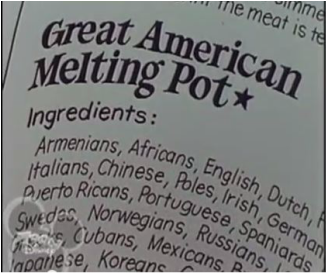
 What does this imagery evoke in the American context? What does this imagery evoke in the American context?
Tags: culture, education, immigration/citizenship, multiculturalism, nationalism, race/ethnicity, american, cultural assimilation, melting pot, 00 to 05 mins
Year: 1976 Length: 3:20 Access: YouTube Summary: This episode of "The American Melting Pot" is from Schoolhouse Rock!, the popular animated and musical education series for children. While it sought to promote awareness of immigration and diversity, it also illustrates the concept of cultural assimilation and the ideology of the US as a melting pot. The song's chorus communicates "Lovely Lady Liberty / With her book of recipes / And the finest one she's got / Is the great American melting pot." The animation reveals her book of recipes (e.g. Irish Stew) from various immigrant groups, but also a recipe for "The Great American Melting Pot," with these ingredients: "Armenians, Africans, English, Dutch, Italians, Chinese, Poles ..." The concept of the melting pot is that these cultures have peacefully intermixed throughout American history, thus building and then becoming a part of a dominant culture of American values and customs—which continues to welcome immigrants that "melt" or assimilate into a unified mainstream American culture (Native American culture and its destruction are never mentioned). It's clear intention is to promote equality: "You simply melt right in / It doesn't matter what your skin / It doesn't matter where you're from / Or your religion, you jump right in / To the great American melting pot." But in an educational context, its ideological effect can be to obscure that race and religion both mattered at the time the series was aired in the 1970s, and that they continue to matter today. Proponents of multiculturalism have critiqued this concept and suggested new metaphors (e.g. salad bowl, cultural mosaic, or kaleidoscope) where different ethnic groups maintain their own cultural identities within a shared space. The video does, however, suggest a more nuanced notion of the melting pot when it states "How great to be an American / And something else as well" while it reveals a flag-waving grandmother's button that reads "Kiss me, I'm Polish." Thank you to Nicole Spitzer for recommending this clip! Submitted By: Paul Dean
3 Comments
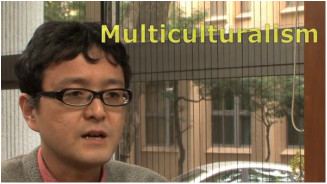 Dr. Shiobara uses a comparative methodology to examine how policies of multiculturalism shape different cultures. Dr. Shiobara uses a comparative methodology to examine how policies of multiculturalism shape different cultures.
Tags: culture, demography/population, globalization, immigration/citizenship, methodology/statistics, multiculturalism, race/ethnicity, australia, japan, migration, multiculturalism, subtitles/CC, 00 to 05 mins
Year: 2014 Length: 4:17 Access: YouTube Summary: In this video, Professor Yoshikazu Shiobara of the Keio University Department of Political Science (Faculty of Law) discusses his research on multiculturalism in Japan and Australia. As noted by Dr. Shiobara, "I study various changes in societies associated with globalization, changes in industrial structures, multi-ethnic and multicultural developments in nation-states, migration of people, and growth in immigration. In particular, I specialize in the concept and policies of multiculturalism, and I investigate how they affect people in the host society which accepts ethnic minorities, in the form of immigrants, social minorities, and indigenous peoples. I research these issues in terms of both theory and evidence." His work compares multiculturalism in Australia, which was one of the first to implement a policy of multiculturalism, and Japan, which has yet to systematize policies at the national level. This approach identifies social policies of migrants in these two countries, and their impacts on dominant cultures, migrating cultures, and indigenous populations. This is a useful example of comparative research methods, cross-cultural studies, migration, and global sociology. A full transcript of the short clip is available in the video's description on YouTube. Submitted By: Bhoomi K. Thakore 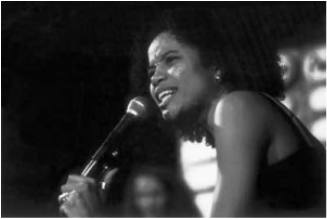 Poet Stayceyann Chin performs "Feminist or a Womanist" Poet Stayceyann Chin performs "Feminist or a Womanist" Tags: art/music, community, discourse/language, intersectionality, lgbtq, multiculturalism, race/ethnicity, categories, labels, spoken word poetry, 00 to 05 mins Year: 2007 Length: 3:32 Access: YouTube Summary: I had to watch Stayceyann Chin’s video several times before her message began resonating within me. She critiques the notion that we must side with one group over another, arguing that we need to have a sense of understanding about each other that transcends differences. She does a phenomenal job in challenging the common claim that "if you are not for us, you are against us.” She well articulates that we miss the beauty of our being by living in fear of ridicule, and when "people get scared enough, they pick a team" that may satisfy others, but not themselves. Our need to box-in and stereotype what we cannot understand or agree with only limits our ability to see each other as common creatures. Child star Raven Symone makes a similar point in her adamant denial about the personal relevance of labels. Oprah warns her during the interview that she will get push-back for doing this, and she indeed did receive significant adverse publicity in claiming the she is neither lesbian nor black/African-American. Such reactions to a pronouncement from a person who seems before her time, from a generation that believes they are ahead of their time, indicate how uncomfortable people are when group labels are deemed irrelevant for establishing personal identity. It also suggests associated questions, including: What is wrong about failing to identify as either black/African-American or lesbian? Does it betray those who are otherwise like her, but who do see themselves as belonging to such categories? Moreover, are we truly free to be individuals, even in a society held to promote the value of individual autonomy? (Note: A version of this post originally appeared on SoUnequal.) Submitted By: Ayanna Allen 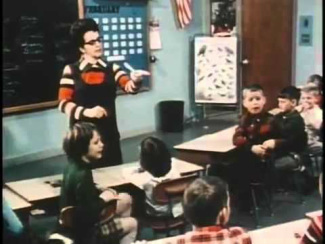 Elliott's exercise teaches students about racial discrimination. Elliott's exercise teaches students about racial discrimination. Tags: inequality, multiculturalism, prejudice/discrimination, race/ethnicity, jane elliott, racism, segregation, white privilege, white supremacy, 21 to 60 mins Year: 2009 Length: 47:27 Access: YouTube Summary: This video features Jane Elliott's famous, yet controversial, "Blue Eyes / Brown Eyes" exercise. Elliott originally designed the exercise in the 1960s as a way to illustrate the inhumanity, the irrationality, and the immorality of racism, a system that, as her experiment has shown, people quite readily endorse. At that time, Elliott was a third grade school teacher in an all-white Iowa town, and she wanted her students to understand the arbitrary and unfair treatment associated with judging people based on the color of their skin. To do this, she developed an exercise that subjected her white students to this type of treatment, so they could experience it first-hand. While her original exercise was developed during a time of overt racism characterized by 1960s America, her contemporary workshops reveal how racism continues to operate in more covert ways in present-day multicultural societies. This clip features a recent workshop conducted in Britain, and is supplemented by footage from her exercise with children in the 1960s, as well as commentary from two psychologists, Professor Dominic Abrams and Dr. Funké Baffour. As demonstrated in the video, Elliott divides workshop participants according to eye color; those with brown eyes are given a privileged majority status, while blue-eyed participants are segregated, treated harshly, and subjected to constant surveillance. The aim is to simulate a racist apartheid-style regime, and throughout the exercise Elliott is the authoritative leader. After she segregates the group by eye color, the next phase of the exercise is to get the brown-eyed group to turn against the blue-eyed group. While Elliott has been conducting this exercise with adults for over 40 years throughout the world, we learn from the video that the workshop in Britain was a bit anomalous in that the brown-eyed group was less vocal than past groups, and the blue-eyed group was more defiant. What is strikingly clear, however, is how white people in the blued-eyed group end up defending the current racial system, revealing their ignorance around their own racial privilege and their obliviousness around the profound discrimination experienced by people of color. Elliott's exercise is controversial and confrontational, and her abrasive approach to authority has been criticized as a form of bullying. At the end of the clip, Krishnan Guru-Murthy interviews Elliott about her methods and some of the critiques surrounding her approach. This exchange would be useful in a discussion about research methods and ethics, and whether Elliot's workshop inflicts any harm upon the human subjects involved. More broadly, this video is useful for teaching about racism, discrimination, and white supremacy. Elliott's exercise is also documented in an award-winning PBS FRONTLINE program, A Class Divided (1985), available for free online here. There is also a website dedicated to the exercise, which features additional learning resources. Submitted By: Valerie Chepp 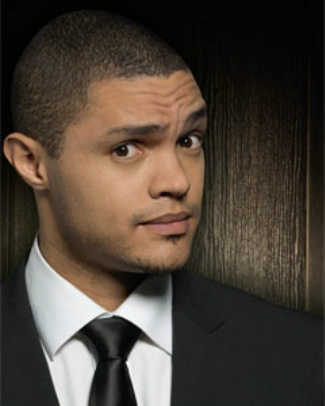 Trevor Noah describes his experience being multiracial. Trevor Noah describes his experience being multiracial. Tags: crime/law/deviance, multiculturalism, race/ethnicity, social construction, apartheid, multiracial identity, racism, stigma, 06 to 10 mins Year: 2013 Length: 8:02 Access: YouTube Summary: This clip features a set from stand-up comedian Trevor Noah's show at the Apollo Theatre in London. In his humorous commentary, Noah illustrates how meanings ascribed to race are socially constructed, and how social mechanisms--such as laws--function to create, reproduce, and reinforce socially ascribed meanings of race. Noah begins by talking about his experience growing up under apartheid, the South African law that made it illegal for white and black people to interact. Born to a black mother and white father, Noah recounts the legal consequences his parents faced for their relationship (with Noah as the evidence of that relationship and thus a liability for his parents in public). Noah also addresses the stigma he felt as a result of these very real legal dangers, offering a particularly compelling description of what the stigma felt like: "It was horrible. I felt like a bag of weed" (when his parents had to "drop" him any time authorities or would-be snitches came by). Growing up, Noah was also teased by others and called derogatory names like "mixed breed" and "half caste." Noah reflects on these names: "I hate that term 'half'. Why not 'double'?" Noah's critique highlights a common conceptualization of race, the presumption being that mixed race constitutes some form of dilution. Viewers are encouraged to take Noah's question seriously: Why is the notion of mixed race so often depicted as a "thinning" or "watering down" of some sort? Why aren't multiracial identities described as an augmentation? Pushed further, why are they presumed to constitute some type of meaningful transformation in the first place (i.e., "half" or "double")? What are the implications of such presumptions? As Noah continues to describe his own story and racialization experience, he further illustrates another dimension of the social construction of race, as race takes on different meaning in different social contexts. In South Africa, Noah longed to be considered black. He was told that, in America, people would think of him as black, as any (known) African ancestry tends to constitute "blackness" in the United States. Of course, this American racialized phenomenon has its own long legal history in the so-called "one-drop rule." Yet, upon arrival in the U.S. and much to his bewilderment, Noah is mistaken for Mexican. Here, viewers can see how race means different things in different contexts: In South Africa, Noah wanted to be "more black." In the U.S., he was told that he'd be "super black." Noah studied performances of American blackness in hopes of acquiring this super black status. However, upon arrival, Noah was deemed neither American black nor multiracial South African. Instead, he was perceived to be Mexican. The clip usefully illustrates some of the fluidity, complexity, and consequences of different racial formation systems. Submitted By: Margaret Austin Smith  In second grade, Facundo's name was un-renameable. In second grade, Facundo's name was un-renameable. Tags: children/youth, discourse/language, education, immigration/citizenship, multiculturalism, race/ethnicity, hidden curriculum, identity, language politics, mexican-americans, subtitles/CC, 00 to 05 mins Year: 2012 Length: 1:51 Access: YouTube Summary: This video is one of several animated short videos that make up the larger StoryCorps oral history project, an archive of over 45,000 interviews with nearly 90,000 participants from across America telling their stories. The story recounted in this video is told by Ramón "Chunky" Sanchez. As described here, Chunky "was raised in a small farming community in southern California in the 1950s. As was common practice at that time, teachers at his local elementary school Anglicized the Mexican American students' names." The anglicisation of personal names is the practice by which non-English-language personal names are either changed so that their spellings are closer to English sounds or English personal names are substituted for non-English names. This practice can be a personal choice or it can be imposed upon people by (more powerful) others, such as immigration officials or, in the case of Chunky's story, school administrators. While sociologists and others have documented the ways in which immigrant groups have strategically chosen to adopt or reject "American-sounding names," Chunky's story is one in which he and his classmates were subject to this practice without choice. Children with "Mexican-sounding" names had their names anglicized. For example, as Chunky explains, Maria became Mary and Juanita became Jane. Chunky's own name, Ramón, was changed to Raymond. Yet, Chunky recounts a time in second grade when his teachers had a difficulty renaming the new kid in class, Facundo. After watching the video, viewers might consider some of the following questions: (1) Why did teachers anglicize the names of students in Chunky's class? What messages did this renaming send to the students? (2) In Chunky's story, why is Facundo celebrated as a hero, and his non-renaming a victory? Each StoryCorps conversation is preserved at the American Folklife Center at the Library of Congress, and weekly StoryCorps segments are broadcasted on NPR’s Morning Edition. For more on Chunky Sanchez and the making of this short animation, click here. Submitted By: Anonymous 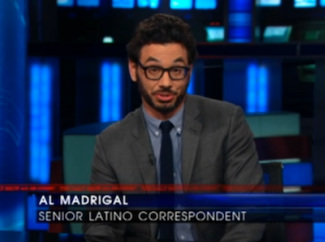 The Daily Show critiques Latino stereotypes from many angles. The Daily Show critiques Latino stereotypes from many angles. Tags: multiculturalism, prejudice/discrimination, race/ethnicity, comedy, hispanic, latinos, 06 to 10 mins
Year: 2013 Length: 6:21 Access: The Daily Show Summary: In recognizing that race entails socially constructed categories as opposed to biological groupings of people, sociologists understand that race is not only subjective, but also relative to a subjective standpoint. For example, many racial categories used in the US, such as “Asian” or “Caucasian,” are “catch-all categories” for many cultural or ethnic groups who, from their own self-identified subjective position, see themselves as unique. In this clip from The Daily Show, Al Madrigal critiques the idea of treating Latinos as a culturally homogenous group. He emphasizes the diversity among Latinos, noting their diverse political positions as similar to the broader population, and identifies ways in which treating them as a homogenous group is offensive (adding "it's even offensive that you'd have me cover this because I am Latino"). He goes further to interview “Latinos” to illustrate how individuals from (or who trace their ancestry from places in) Latin America not only 1) see themselves as culturally (and perhaps also racially in the biological sense) unique; but 2) actually harbor prejudices and stereotypes toward other supposed “Latinos” from cultures different than their own. Accordingly, while Latinos are socially constructed as being quite different from “Mainstream Americans,” Madrigal concludes that perhaps supposed “Latinos” are actually quite similar to other ethnic groups (e.g. whites with European ancestry) in the US because they share a core cultural belief with many in our society: prejudice towards “Latinos.” Viewers should also be critical of the way The Daily Show, like much comedy, uses stereotypes to get laughs (e.g. Latinos liking "ultimate fighting and pigeon racing") at the same time it critiques them. Submitted By: Jason T. Eastman  Cultures have unique ideas of beauty, such as long neck length. Tags: bodies, culture, emotion/desire, gender, multiculturalism, sex/sexuality, social construction, cultural relativity, ideal beauty, 06 to 10 mins
Year: 1997 Length: 9:56 Access: YouTube Summary: What is beauty? Is beauty an objective feature or is it in the "eye of the beholder"? According to a 2012 competition hosted by Lorraine Cosmetics, the most "natural" and "objectively" beautiful woman was determined "scientifically" through such measures as facial symmetry. While the incident ignited a public debate about the ability to "scientifically" measure beauty, a review of the research shows that people's sense of beauty varies across time and culture. In this video, famous anthropologist Desmond Morris notes that while there is a "biological language of sex" in which people are attracted to others through physical characteristics, this process is mediated through a "complex cultural adventure." Throughout cultures across the world, people exaggerate the features of beauty that their culture deems attractive. A study looking at beauty across 200 different cultures found hardly any qualities that existed across all cultures. The video documents several of these physical features on women, including neck length, foot size, and lip size. It illustrates the cultural evaluation of beauty and the (often painful) techniques used to achieve the unnaturally extreme forms of beauty. What notions of female beauty in your culture might be similar to or different from conceptions of beauty found in the video? Viewers may also note the heteronormativity of the video, in which beauty is explicitly stated to attract members of the opposite sex. Submitted By: omowbray 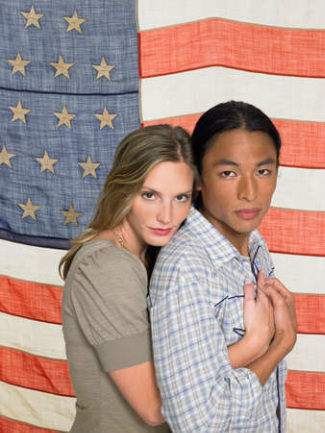 Multi-racial and multi-ethnic identities are on the rise Tags: children/youth, community, demography/population, immigration/citizenship, marriage/family, multiculturalism, nationalism, race/ethnicity, social construction, 00 to 05 mins Year: 2011 Length: 5:16 Access: New York Times Summary: This video accompanies a New York Times article about mixed race students on college campuses in America. Profiling students at the University of Maryland, young adults speak out about multi-racial and multi-ethnic identities, relationships, and "racial distinctions of behavior" (as one student puts it). Driven by increasing immigration and interracial marriages, young people today represent a significant and unprecedented demographic shift in the United States. Students respond to this changing environment by raising awareness about multi-racial and multi-ethnic issues and creating a safe space for a multi-cultural community on college campuses. This clip would be useful for initiating class discussions around racial and ethnic identities, social constructions of race, as well as a critical conversation around racial and ethnic behaviors, interactions and performances (stemming from the student's remark about "racial distinctions of behavior"). Finally, students can use the clip to contemplate the future of race and ethnicity in America, and the potential for change. Do students think racism will disappear as America becomes increasingly multi-racial and multi-ethnic? Submitted By: Valerie Chepp  Tags: multiculturalism, psychology/social psychology, race/ethnicity, stereotypes, 00 to 05 mins
Year: 2009 Length: 0:55 Access: Vimeo Summary: In this clip from Up in the Air, George Clooney rattles off several stereotypes of people in an airport (including Asians, people with infants, and the elderly). When his co-star (Anna Kendrick) replies "That's racist," Clooney responds with "I'm like my mother. I stereotype. It's faster." This short clip demonstrates stereotyping, which begins in the physical world, and is used to simplify and control judgments about everyday situations. Students can be encouraged to think about how individuals belong to a wide range of group memberships, ethnic and cultural groups, large-scale social categories (sex, gender, race, age, social class, religion, etc.), occupational and other groups, but as shown by this video, stereotyped groups are reduced to a single physically-apparent status. This can then be linked to the broader social structure, noting that when there is a history of conflict or social inequality between two groups, people tend to rationalize discriminatory behavior through stereotypes; people then use stereotypes to change or maintain the status quo. Suggested readings to pair with video: (1) Taylor, D. and McKirnan, D. 1984. "A Five-Stage Model of Intergroup Relations ." British Journal of Social Psychology. 23: 291-300. (2) Turner, J., Hogg, M., Oakes, P., Reicher, S. and Wetherell, M. 1987. Rediscovering the Social Group: A Self-Categorisation Theory. Oxford: Blackwell. Submitted By: Simone Belli |
Tags
All
.
Got any videos?
Are you finding useful videos for your classes? Do you have good videos you use in your own classes? Please consider submitting your videos here and helping us build our database!
 |
 RSS Feed