 News clip editing reproduces stereotypes of black boys. News clip editing reproduces stereotypes of black boys.
Tags: crime/law/deviance, inequality, media, prejudice/discrimination, psychology/social psychology, race/ethnicity, confirmation bias, framing, linguistic intergroup bias, journalism, news media, 00 to 05 mins
Year: 2011 Length: 1:42 Access: YouTube Summary: This video is put together by the Maynard Institute, which is "dedicated to helping the news media accurately portray all segments of society, particularly those often overlooked, such as communities of color." The beginning of the video shows a real Chicago CBS news segment that covers the shooting of two teenagers, which was witnessed by several children, including a 4-year old. The commentator describes the "disturbing reaction" by the 4-year old boy, who is shown saying that “I’m not scared of nothing.” When the reporter asks him if he will stay away from guns, the boy responds: “I’m going to have me a gun!” The segment ends with Anchor Steve Bartelstein saying, “that is scary indeed.” The issue with this clip is what was omitted from the story. In the actual interview with the 4-year old boy, the reporter next asks “Why do you want to have [the gun]?” The boy states “I'm going to be the police!” and the reported responds “Okay then you can have one." Subsequent content from the video, and this Maynard Institute analysis, outline some of the problems with the edit, including its portrayal of African American boys in a stereotypical manner. While it is unclear why this particular video was edited in this way (the news station removed the story once the problem was identified), the reality is that such editing decisions frequently occur and continue reproducing stereotypes. Indeed, "studies of media content consistently find that black criminal suspects are portrayed more frequently and more menacingly than white suspects in television news stories of violent crime" (Peffley et al 1996). It could be a result from a news editor's confirmation bias, where an individual looked for content in the video that confirmed his expectations, thereby using that footage and eliminating the (real) footage that would have led to an alternative framing. It might also derive from the economic drive for media to present controversial news that they believe viewers will be more interested in watching (thereby consuming more advertisements). For example, research shows that viewers find crime news stories more memorable when the perpetrator is dark-skinned male. What is the impact of this on race relations? Experimental studies show that such "even a brief visual image of an African American male suspect in a televised crime story was capable of activating racial stereotypes, which in turn heavily biased whites’ evaluations of the suspect along racial lines" (Peffley et al 1996). Such race-related TV news stories also lead to linguistic intergroup bias, where "people use more abstract language to describe stereotype-congruent behaviors, particularly when that person is a member of an out-group" (Gorham 2006). Thanks to Logan Webster for suggesting this video. Submitted By: Paul Dean
20 Comments
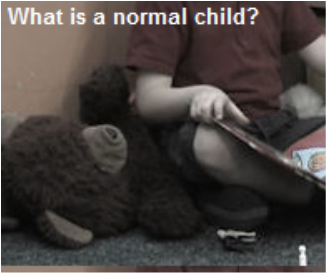 A combination of visual images, sound, and text provokes discussion. A combination of visual images, sound, and text provokes discussion.
Tags: children/youth, education, emotion/desire, psychology/social psychology, theory, philosophy, postmodernism, 11 to 20 mins
Year: 2010 Length: 16:20 Access: ESRC Summary: This unconventional and provocative film challenges viewers to reflect upon what constitutes problematic behavior in children. As described on the film's website, "it presents a thought-provoking collection of visual, sound, and text images drawn from a range of sources, including art, education, psychology, special education, policy documents, popular media, and philosophy. These materials are organized around 5 key themes: What counts as problem behavior?; What is a normal child?; Difficult Bodies; Parents; and Observing and Monitoring." The film "depart[s] from the usual didactic conventions of the educational film or the in-service training video and invit[es] a more open and critical engagement from audiences." Its organization and style reflect some of its postmodern influences (e.g. Gilles Deleuze), and have provoked interesting responses from viewers (which have been shared by the film's creators). For example, viewers have noted its highly "emotional" and "somber" tone that suggests how education "controls children"; but its open-ended nature encourages a very diverse range of responses. The film also has accompanying educational support materials, "which can be used for training and professional development purposes, [and] provides some questions to guide discussion and further activity." Submitted By: Rachel Holmes 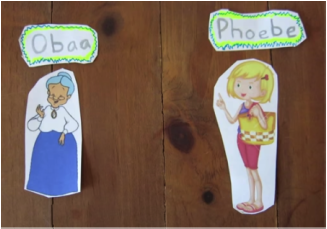 Filmmaker compares the life transitions of his grandma and sister Filmmaker compares the life transitions of his grandma and sister
Tags: aging/life course, children/youth, health/medicine, marriage/family, psychology/social psychology, change, college, depression, high school graduation, moving, retirement home, transition, turning point, 06 to 10 mins
Year: 2015 Length: 6:07 Access: YouTube Summary: Sociologists that study the life course emphasize the importance of turning points. The life course refers to the various interconnected sequences of events that take place over the course of a person’s lifetime. Transitions are changes that people experience in different stages or roles of their life; examples include entry into marriage, divorce, parenthood, employment, or military service. These transitions can, but don’t necessarily, lead to turning points, which are marked by long-term changes in behavior that “redirect” a person’s life path. Whether or not a turning point has taken place only becomes apparent after the passage of time, when one can look back and confirm that a long-term change has occurred (e.g., see Elder 1985; Sampson and Laub 1996; Abbott 2001, ch. 8). Rutter (1996) highlights three types of life events can serve as turning points: (1) life events that either close or open opportunities, (2) life events that make a lasting change on the person’s environment, and (3) life events that change a person’s self-concept, beliefs, or expectations. For example, Uggen (2000) examined whether work serves as a turning point in the life course of criminals, and whether age and employment status can explain recidivism rates. In the short film above, a young filmmaker chronicles the transitions taking place in the lives of two family members: his 82-year-old grandmother, Obaa, and his 17-year-old sister, Phoebe. Obaa has recently sold her house and is moving into a retirement home; Phoebe is graduating high school in two weeks and will soon be heading off to college. Both women experience depression. As viewers, we don’t know whether these transitions will lead to turning points in the lives of Obaa or Phoebe. Viewers are encouraged to consider how these life changes constitute a transition, using Rutter’s (1996) criteria above. Also, how might mental illnesses, such as depression or dementia, intersect with the ability for a transition to result in a turning point? How might transitions help or hinder people with mental illnesses? What about a person’s age? Do viewers believe that Obaa’s or Phoebe’s age will play an important role in their transition or potential turning point? What unique and/or similar challenges and/or opportunities will each woman face as they transition into a new stage of their life? Submitted By: Anonymous  This baby is engaged in what Mead calls "pure play." This baby is engaged in what Mead calls "pure play." Tags: children/youth, psychology/social psychology, theory, game, george herbert mead, I, play, pure play, the self, subtitles/CC, 00 to 05 mins Year: 2009 Length: 2:39 Access: YouTube Summary: In many of my classes, I have students explore George Herbert Mead’s discussions regarding the genesis of the self. Although the phases of play and game seem to be very well spelled out, I like to see just how well students can actually identify them and use that as a chance to explore what they may look like in the actual activities of others. In the classroom, I solicit example stories of children’s behaviors and activities, and we have fun exploring them and their variations in some depth. Since it is not as well spelled out in Mead’s discussions, students typically find it more difficult to grasp the idea of “pure play,” which precedes and helps to better develop the play and game of older individuals. This difficulty is often confounded by a common misunderstanding I’ve discovered among students who have previously been taught or read about Mead’s ideas. Specifically, students have indicated an understanding that “imitation” is the first thing babies do on the road to self genesis. So, in addition to exploring Mead’s lengthy assertion that a baby/child cannot imitate until after they have begun to develop a sense of self (until after they develop at least a rudimentary ability to play), I encourage students to give concerted attention to the engagement of “pure play.” This clip (which was submitted to me by a student) is an excellent example of what Mead referred to in various places as pure play: as those attitudes and activities which are not oriented to others, are not part of the construction of meaning with others, but which emerge from an unsocialized ‘I’, and, as Mary Jo Deegan emphasizes, emerge from a stimulus that calls out a detached act. The time lapsed video very clearly shows how a continuous and random shifting of focus expresses itself as the baby moves from stimuli to stimuli. From here the conversation can move to what a parent would do if they were in the room: helping the child learn to connect response and stimuli by acting as though the child were making meaningful choices and channeling/directing the child’s attention. In addition to the concept of pure play, it would seem very appropriate as an example of a human who is not yet able to treat themselves as an object and is acting only as a subject in the environment. (Note: A longer version of this post originally appeared on The Society Pages.) Submitted By: Timothy B. Gongaware, PhD  Film about 1980 US Olympic win illustrates social identity theories. Film about 1980 US Olympic win illustrates social identity theories. Tags: psychology/social psychology, sports, theory, henri tajfel, intragroup processes, intergroup processes, john turner, role identities, self-categorization theory, social identities, social identity theory, 06 to 10 mins Year: 2004 Length: 10:25 Access: YouTube Summary: This montage of two clips from the 2004 movie Miracle documents the United States Hockey Team’s win over Russia to secure the gold medal at the 1980 Winter Olympics; the montage also features footage from the actual game. In the first clip, U.S. head coach Herb Brooks asks the players to introduce themselves, which they do using their names, cities of origin, and university affiliations. In the second clip, the team has just lost a scrimmage game and Brooks keeps them on the ice to run drills despite the players’ exhaustion and coaching staff’s disapproval, until one of the players “reintroduces” himself; Brooks asks again who the player, Mike Eruzione, plays for, and Eruzione replies, “I play for the United States of America.” Upon hearing this, Brooks appears satisfied and ends the drills. This video can be used to illustrate several dimensions of Henri Tajfel’s social identity theory and/or John Turner’s self-categorization theory. I show this clip after students have read an overview of role and social identity theories by Thoits and Virshup (1997). First, it can be used to distinguish generally between role identities (who I am) and group or social identities (who we are). Sports teams, in general, are basic examples of I’s coming together to form we’s. Second, more specific principles within theories of social identity are illustrated. Tajfel’s psychologically oriented social identity theory focuses on intergroup processes of in-group and out-group formation, group conflict, and prejudice. Turner’s self-categorization theory is more focused on intragroup processes of categorization and depersonalization; in other words, the process by which individuals form a group. The Miracle montage is an illustration of both intergroup and intragroup processes, with the U.S.-Russia rivalry illustrating group conflict (intergroup) and the post-loss drills leading Eruzione to declare that he plays for the United States (depersonalization and categorization). This montage is especially useful at illustrating the processes of depersonalization and categorization as we watch the players go from identifying themselves as individuals to identifying themselves as members of the U.S. team. The somewhat artificial context of sports can be an accessible entry point to talking about other more “real world” contexts of group identity, both in terms of intergroup conflict and intragroup processes of depersonalization (e.g., ethnic, tribal, and state identifications and conflicts). Submitted By: Kathleen E. Denny 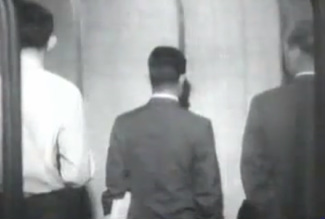 Social conformity is tested in this elevator experiment. Social conformity is tested in this elevator experiment. Tags: methodology/statistics, psychology/social psychology, asch conformity experiments, breaching experiments, harold garfinkel, norms, solomon asch, 00 to 05 mins Length: 2:31 Year: 1962 Access: YouTube Summary: This clip from a 1962 episode of Candid Camera is based on a series of social psychological experiments called the Asch conformity experiments. Originally directed by Solomon Asch in the 1950s, these experiments were designed to examine how individuals conform to group dynamics. In this episode, unsuspecting subjects enter into an elevator where Candid Camera actors are all facing backwards, and we watch as a hidden camera captures the non-actor individuals slowly turning around to conform with the group. Sociologist Harold Garfinkel used a similar method to explore various dimensions of social rules and sanctions. Specifically, he used breaching experiments as a method to demonstrate the presence of social norms, arguing that we can test the existence of social norms and expectations by violating them. This clip would be useful for introducing Garfinkel's famous breaching experiments, and would pair well with assignments that require students to conduct their very own breaching experiment, such as this assignment on The Sociological Cinema. Submitted By: Valerie Chepp  Steven Pinker discusses his new book with Stephen Colbert Steven Pinker discusses his new book with Stephen Colbert Tags: crime/law/deviance, knowledge, media, psychology/social psychology, violence, cultivation theory, terrorism, tsa, subtitles/CC, 00 to 05 mins
Year: 2013 Length: 4:45 Access: The Colbert Report Summary: Neuroscientist Steven Pinker shares his book, The Better Angels of Our Nature: Why Violence Has Declined. This video explains (without mentioning it) cultivation theory, which is the idea that the more you watch the news, the more you have a tendency to overestimate the crime rate. Specifically, the video discusses terrorism, and Americans' fixation on it as a source of danger, when more mundane sources like flammable pajamas and peanut allergies cause far more deaths. This video works well as a means of introducing cultivation theory, but it is also a good starting point for a more general conversation about how the media misleads the public about how dangerous the world is and from where dangers come. Note that The Sociological Cinema has previously explored the way media is used as a tool for dispersing propaganda in a democratic political system (here), and also as a supplicant to the demands of corporate power (here). Submitted By: Nickie Michaud Wild 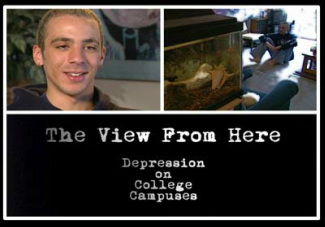 This short film explores depression in higher education This short film explores depression in higher education Tags: health/medicine, psychology/social psychology, depression, higher education, mental health, stigma, 21 to 60 mins
Year: 2012 Length: 29:08 Access: University of Michigan Summary: As stated on the University of Michigan Depression Center's website: "Created to promote awareness about depression on the college campus, [The View From Here] features students from differing identity groups, ages, and degree programs telling of their experiences with the disease. It also features faculty and staff who have worked with depressed students, and faculty and staff who have suffered from depression themselves." Specifically, the documentary draws attention to the complexity of depression, as many people—including those who suffer from it—are unaware of the symptoms and prevalence of depression. Part of the complexity relates to the numerous symptoms that are associated with the condition, which range from anxiety, anger, feelings of emptiness, substance abuse, reckless behavior, suicidal thoughts, loss of appetite, and panic, among many others. Because of this, depression can often go undiagnosed. The video would be useful to feature in a class on the sociology of mental health, as it offers many points of entry for discussing the various social factors that influence mental health. In addition to social triggers, the video also discusses treatment, which can include social and non-social forms of treatment such as counseling, spiritual treatments, and medication. Submitted By: AuntJessica 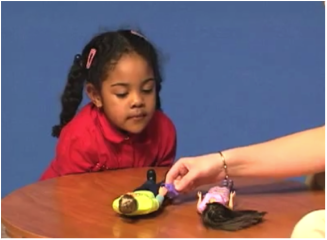 Tags: children/youth, gender, psychology/social psychology, cognitive-development theory, gender constancy, socialization, 00 to 05 mins
Year: 2009 Length: 0:41 Access: YouTube Summary: This short clip is useful for teaching cognitive-development theory or, the way child development affects gender socialization. Specifically, the clip demonstrates and challenges the concept of gender constancy and how our understanding of gender as something constant and immutable is not inherent. Rather, what we consider natural or obvious is the product of social learning, i.e., socialization. Note that the older girl seems to regard the categories of "boy" and "girl" as more stable and less susceptible to change. Submitted By: Michelle Sandhoff 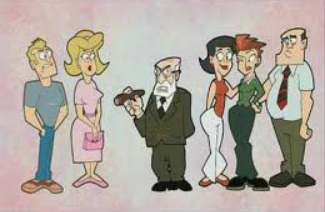 Tags: biology, lgbtq, psychology/social psychology, sex/sexuality, birth order, ex-gay ministry, nurture vs. nature, socialization, sexual orientation, 00 to 05 mins
Year: 2007 Length: 4:44 Access: YouTube Summary: Sociologists almost always find strong evidence of nurture over nature in our studies, but there is one research arena where the environment and socialization has little influence: sexual orientation. The lack of nurture’s influence on sexual orientation is explained in this parody of an educational video from the documentary The Bible Tells Me So. The cartoon highlights that while social scientists cannot find links between being gay and socialization factors like parenting styles, biological determinists find strong evidence for their nature arguments that claim sexual orientation depends largely on genes, hormones, and birth order. The video also highlights how the research reflects our patriarchy by focusing almost exclusively on gay men and not lesbians. Unfortunately, this biology-based video does equate male homosexuality to “feminization,” whereas sociologists know cultural constructions of femininity have little to do with sexual orientation and everything to do with stereotypes of gay men. Notwithstanding, the core message of this video is still very sociological because it outlines that since sexual orientation is neither an outcome of socialization or a lifestyle choice, “reparative” or “conversion” therapy is not only ineffective, but can actually become a damaging socialization experience itself. Submitted By: Jason T. Eastman |
Tags
All
.
Got any videos?
Are you finding useful videos for your classes? Do you have good videos you use in your own classes? Please consider submitting your videos here and helping us build our database!
 |
 RSS Feed