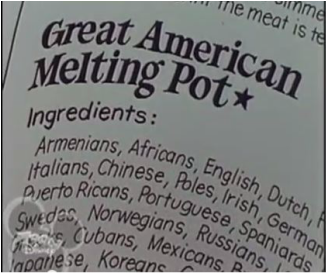
 What does this imagery evoke in the American context? What does this imagery evoke in the American context?
Tags: culture, education, immigration/citizenship, multiculturalism, nationalism, race/ethnicity, american, cultural assimilation, melting pot, 00 to 05 mins
Year: 1976 Length: 3:20 Access: YouTube Summary: This episode of "The American Melting Pot" is from Schoolhouse Rock!, the popular animated and musical education series for children. While it sought to promote awareness of immigration and diversity, it also illustrates the concept of cultural assimilation and the ideology of the US as a melting pot. The song's chorus communicates "Lovely Lady Liberty / With her book of recipes / And the finest one she's got / Is the great American melting pot." The animation reveals her book of recipes (e.g. Irish Stew) from various immigrant groups, but also a recipe for "The Great American Melting Pot," with these ingredients: "Armenians, Africans, English, Dutch, Italians, Chinese, Poles ..." The concept of the melting pot is that these cultures have peacefully intermixed throughout American history, thus building and then becoming a part of a dominant culture of American values and customs—which continues to welcome immigrants that "melt" or assimilate into a unified mainstream American culture (Native American culture and its destruction are never mentioned). It's clear intention is to promote equality: "You simply melt right in / It doesn't matter what your skin / It doesn't matter where you're from / Or your religion, you jump right in / To the great American melting pot." But in an educational context, its ideological effect can be to obscure that race and religion both mattered at the time the series was aired in the 1970s, and that they continue to matter today. Proponents of multiculturalism have critiqued this concept and suggested new metaphors (e.g. salad bowl, cultural mosaic, or kaleidoscope) where different ethnic groups maintain their own cultural identities within a shared space. The video does, however, suggest a more nuanced notion of the melting pot when it states "How great to be an American / And something else as well" while it reveals a flag-waving grandmother's button that reads "Kiss me, I'm Polish." Thank you to Nicole Spitzer for recommending this clip! Submitted By: Paul Dean
3 Comments
 Vox debunks the race myth in a new video Vox debunks the race myth in a new video
Tags: biology, immigration/citizenship, inequality, knowledge, prejudice/discrimination, race/ethnicity, science/technology, social construction, caucasian, mexican, racial formations, scientific racism, subtitles/CC, 00 to 05 mins
Year: 2015 Length: 3:08 Access: YouTube; Vox Summary: It often surprises students to learn that sociologists and other social scientists regard race as little more than a creation of the collective imagination, or as the above video from Vox argues, race isn't real. Contrary to popular belief, racial categories do not consistently correspond to biological observations; nor are the racial categories used today a particularly ancient means of categorizing human societies. They are, in fact, both flimsy and recent. • The social theorist David Theo Goldberg argues that starting in the sixteenth century racial thinking and racist articulation became increasingly common in European societites. As Vox explains in the above video, one crucial moment of racist articulation appears to have occurred nearly two centuries later when in 1779 German scientist Johan Friedrich Blumenbach is credited with attempting to establish a scientific, race-based system of classification. Although his work has long been discredited, it is worth noting that he arrived at five hierarchically organized racial categories: "Caucasian, the white race; Mongolian, the yellow race; Malayan, the brown race, Ethiopian, the black race, and American, the red race." Not surprisingly, he ranked Caucasians highest on his racial hierarchy. • For those who remain unimpressed by the fact that racial thinking is a relatively recent phenomenon in human history, consider the fact that racial categories and their hierarchical arrangement have been shown to change with political priorities. In academic parlance, racial formations have continued to be created, transformed, and destroyed. For instance, the video explains that the U.S. Census categorized people with Mexican ancestry as white until 1930, at which point the Census began categorizing these whites as an emergent racial category known simply as "Mexican." The change in Census categories reflected a developing racial discourse in the American Southwest but it also played a role in temporarily limiting immigration from Mexico, and fewer immigrants from Mexico meant higher wages for whites. • Properly contextualized, the reason for the emergence of racial thinking in Western Europe seems fairly clear. Although it is assumed race is based on natural, biological differences, the truth is that racial thinking has had very little to do with accurately describing natural variation in human populations and far more to do with whites maintaining power, privilege, and resources at the expense of nonwhites. Although race isn't real in a biological sense, as the video explains, it has become hugely important in a social sense. The racial categories to which we're assigned can determine real life experiences. Submitted By: Lester Andrist  Dr. Shiobara uses a comparative methodology to examine how policies of multiculturalism shape different cultures. Dr. Shiobara uses a comparative methodology to examine how policies of multiculturalism shape different cultures.
Tags: culture, demography/population, globalization, immigration/citizenship, methodology/statistics, multiculturalism, race/ethnicity, australia, japan, migration, multiculturalism, subtitles/CC, 00 to 05 mins
Year: 2014 Length: 4:17 Access: YouTube Summary: In this video, Professor Yoshikazu Shiobara of the Keio University Department of Political Science (Faculty of Law) discusses his research on multiculturalism in Japan and Australia. As noted by Dr. Shiobara, "I study various changes in societies associated with globalization, changes in industrial structures, multi-ethnic and multicultural developments in nation-states, migration of people, and growth in immigration. In particular, I specialize in the concept and policies of multiculturalism, and I investigate how they affect people in the host society which accepts ethnic minorities, in the form of immigrants, social minorities, and indigenous peoples. I research these issues in terms of both theory and evidence." His work compares multiculturalism in Australia, which was one of the first to implement a policy of multiculturalism, and Japan, which has yet to systematize policies at the national level. This approach identifies social policies of migrants in these two countries, and their impacts on dominant cultures, migrating cultures, and indigenous populations. This is a useful example of comparative research methods, cross-cultural studies, migration, and global sociology. A full transcript of the short clip is available in the video's description on YouTube. Submitted By: Bhoomi K. Thakore 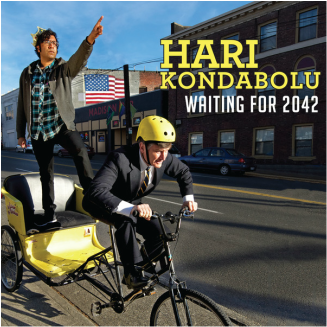 Kondabolu criticizes the hype of whites as the minority in 2042. Kondabolu criticizes the hype of whites as the minority in 2042. Tags: demography/population, immigration/citizenship, race/ethnicity, hispanic, majority-minority relations, racial identity, white, 00 to 05 mins Year: 2013 Length: 2:55 Access: YouTube Summary: As comedian Hari Kondabolu writes in the description to this stand-up routine, "According to the US census, white people will be the minority in 2042 and Hari Kondabolu doesn't give a shit." On the one hand, the numerical turning point marks an important transition point in American racial demographics: there will be more racial minorities than white people, reflecting a more racially diverse society spurred on by immigration. On the other hand, the political significance of this turning point is very limited. As Kondabolu points out, "49% doesn't make you the minority." Sociologists discuss this in terms of majority-minority relations. The group in the majority is not the numerical majority, but rather is in a superordinate position in wealth, power, and/or prestige. A minority group is in a subordinate position in wealth, power, and/or prestige. In this case, racial minorities in the US will be like black South Africans who are the numerical majority in their country--but they are the minority group in terms of power and wealth. Kondabolu continues "49% white only makes you the minority if you think the other 51% are exactly the same ... that 51% is not a united front." The issue, in part, is about racial identity and consciousness. A "Black guy" and a "Korean guy" do not necessarily see themselves as experiencing the same struggles; they do not possess the same racial identity through which they make sense of the world and engage in collective action. And while white people also do not have a collective identity (they are divided across various ethnic groups), whites are clearly positioned atop the racial hierarchy with a clear set of advantages. The clip concludes by emphasizing race as a social construction. Kondabolu states: "white isn't a thing, race isn't a thing; it's a social construct ... it's a way to separate us." In previous historical periods, the Irish, Jewish people, etc, were not white. They became white as meanings of race were contested and changed throughout history. As 2042 approaches and fades into history, meanings of whiteness, Hispanic, and other racialized groups and boundaries will continue to change. Thanks to Nathan Madonich for suggesting this clip! Submitted By: Paul Dean  What was apartheid in South Africa? What was apartheid in South Africa? Tags: capitalism, education, immigration/citizenship, inequality, organizations/occupations/work, political economy, prejudice/discrimination, race/ethnicity, apartheid, racism, south africa, 00 to 05 mins Year: 2013 Length: 2:56 Access: YouTube Summary: In this short video from Al Jazeera's AJ+ web series, host Francesca Fiorentini provides a brief history of apartheid in South Africa. As Fiorentini explains, apartheid is an Afrikaans word that means separateness, but it came to represent a formal system of racial segregation that governed South Africa for nearly 50 years. People were classified by the categories "white," "black," "Indian," and a fourth category, "colored," which designated people of mixed race. Using this classification system, people were separated into different residential areas called homelands, which were typically rural, poor, and overcrowded. The movement of blacks outside of their homelands was tightly controlled through the pass laws. Under these laws, blacks had to carry permits at all times and obey strict curfews. Schools for blacks were underfunded, and in a system seemingly designed to funnel blacks into menial migrant labor, mandatory education for blacks ended at age 13. Lacking stable employment in economically deprived homelands, blacks were pushed to find work as migrant laborers. However, wages were low for such workers, and because it was illegal for them to strike, they had little recourse. As mentioned in this video, it is important not to lose sight of the political economy of apartheid. This system of separateness did not last for 50 years simply because of the deeply held prejudices of white South Africans; instead, apartheid was the edifice upon which South African companies could hang their profits. By upholding the apartheid system, powerful gold mining magnates could legally exploit black workers for deep profit with the consent of the state. Many Americans continue to read the story of apartheid in South Africa as a shameful and unrecognizable relic of ancient history, but the system was still in place as recently as 20 years ago. And while it was the law of the land for 50 years in South Africa, Jim Crow segregation prevailed in the United States for nearly 90 years. The truth is, apartheid is neither ancient nor unfamiliar to Americans. Note that another video on The Sociological Cinema explores the striking similarities between racial inequality in South Africa and the United States, and this Pinterest board explores the anti-apartheid movement. Submitted By: Lester Andrist 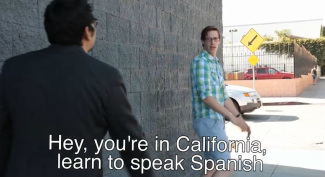 This humorous clip turns the table on whites. This humorous clip turns the table on whites. Tags: discourse/language, immigration/citizenship, inequality, nationalism, prejudice/discrimination, race/ethnicity, hispanic, microaggressions, whiteness, 00 to 05 mins Year: 2014 Length: 1:55 Access: YouTube Summary: This satirical video features a Hispanic male and female commenting to white individuals about white culture and norms. Some topics they address include: white food, white sports commentators, white standards of dress, white families, white names and pronunciation, beauty standards, and immigration status. They say things such as: "My nanny was white so I totally get it. I feel like I am part white because of my nanny"; "Is it true that white people all have small, quiet families? I wish I had that"; "You went to Princeton? Oh, you're white, that's how you got in." Like common stereotypes about Hispanics and other racial groups, the comments all imply that white culture is homogenous and that all white individuals experience their whiteness in the same way. It turns the table on the white respondents by implying that they are speaking as members of their race, which racial minorities are often expected to do. Perhaps the more fundamental challenge is that it forces white respondents (and viewers) to consider whiteness as a part of their identity, which is something that is not often experienced or commented upon by whites (this is an example of white privilege). Again, this is often not the case for racial minorities, whose racial identity cannot so easily be ignored because they continuously experience situations where others identify them by their racial group. White viewers might be encouraged to consider what it would feel like to experience these types of comments on a daily basis. In particular, it suggests various ways in which Hispanics experience microaggressions, or the “brief and commonplace daily verbal, behavioral, or environmental indignities, whether intentional or unintentional, that communicate hostile, derogatory, or negative racial slights and insults toward people of color” (Sue, et. al. 2007). The clip adopts a similar strategy as this other satirical video that addresses frequent stereotypical comments that Asian-Americans experience from white Americans. Submitted By: Alan Neustadtl  In second grade, Facundo's name was un-renameable. In second grade, Facundo's name was un-renameable. Tags: children/youth, discourse/language, education, immigration/citizenship, multiculturalism, race/ethnicity, hidden curriculum, identity, language politics, mexican-americans, subtitles/CC, 00 to 05 mins Year: 2012 Length: 1:51 Access: YouTube Summary: This video is one of several animated short videos that make up the larger StoryCorps oral history project, an archive of over 45,000 interviews with nearly 90,000 participants from across America telling their stories. The story recounted in this video is told by Ramón "Chunky" Sanchez. As described here, Chunky "was raised in a small farming community in southern California in the 1950s. As was common practice at that time, teachers at his local elementary school Anglicized the Mexican American students' names." The anglicisation of personal names is the practice by which non-English-language personal names are either changed so that their spellings are closer to English sounds or English personal names are substituted for non-English names. This practice can be a personal choice or it can be imposed upon people by (more powerful) others, such as immigration officials or, in the case of Chunky's story, school administrators. While sociologists and others have documented the ways in which immigrant groups have strategically chosen to adopt or reject "American-sounding names," Chunky's story is one in which he and his classmates were subject to this practice without choice. Children with "Mexican-sounding" names had their names anglicized. For example, as Chunky explains, Maria became Mary and Juanita became Jane. Chunky's own name, Ramón, was changed to Raymond. Yet, Chunky recounts a time in second grade when his teachers had a difficulty renaming the new kid in class, Facundo. After watching the video, viewers might consider some of the following questions: (1) Why did teachers anglicize the names of students in Chunky's class? What messages did this renaming send to the students? (2) In Chunky's story, why is Facundo celebrated as a hero, and his non-renaming a victory? Each StoryCorps conversation is preserved at the American Folklife Center at the Library of Congress, and weekly StoryCorps segments are broadcasted on NPR’s Morning Edition. For more on Chunky Sanchez and the making of this short animation, click here. Submitted By: Anonymous  SooJin Pate explains microaggressions SooJin Pate explains microaggressions Tags: discourse/language, education, immigration/citizenship, inequality, nationalism, prejudice/discrimination, race/ethnicity, social mvmts/social change/resistance, theory, microaggressions, subtitles/CC, 00 to 05 mins Year: 2013 Length: 5:06 Access: YouTube Summary: Microaggressions are something that happens every day, but which not many people really understand. This is a five-minute video about microaggressions featuring Professor SooJin Pate, who received her Ph.D. in American Studies at the University of Minnesota. In the video, she explains microaggressions with a couple of every day examples along with a personal anecdote, and then goes on to give advice for interrupting microaggressions. This is a great piece for helping students understand microaggressions and contextualize how they can interrupt them both as a microaggressor and a victim of microaggressions. Many students find SooJin Pate's radical approaches of kindness and activism to be an empowering way of understanding their role in achieving social justice. It is great both as an introduction to microaggressions, for students just becoming familiar with the topic; and also for students already familiar with concepts like Critical Race Theory and the Pedagogy of the Oppressed, as another perspective on the interruption of discrimination in their daily lives. Note that The Sociological Cinema has also explored the concept of microaggressions in an earlier post. Submitted By: Macalester College Department of Multicultural Life 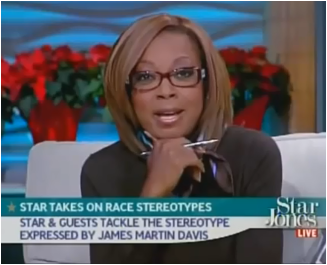 Star Jones analyzes the racism of one of her guests Star Jones analyzes the racism of one of her guests Tags: children/youth, crime/law/deviance, discourse/language, gender, immigration/citizenship, inequality, intersectionality, media, prejudice/discrimination, race/ethnicity, sex/sexuality, stereotypes, 06 to 10 mins Year: 2008 Length: 8:50 Access: YouTube Summary: Star Jones briefly hosted a live talk show from August 2007 until February 2008, and in one of the show's segments she covered the story of Kelsey Peterson, a 25-year-old teacher who sexually assaulted her 13-year-old student, who happened to be an undocumented immigrant from Mexico. The above video features a telephone interview, where Jones asks Peterson's attorney, James Martin Davis, whether he believes it is possible for a 13-year-old child to give consent. Martin responds, "I resent the word 'child.' You're baby-fying this kid. This kid is a Latino machismo teenager...Is there anyone in the world who has a higher sex drive than a teenage boy." Jones admonishes Martin for his casual racism and ends the interview. In a follow-up segment, she invites the attorney for the victim, Amy Peck, and scholar Marc Lamont Hill to discuss the racist exchange, as well as the impact of racial thinking on the case. Although Star Jones and her guests largely frame the interview in terms of race, this video offers a nice foray into a larger discussion about how multiple dimensions of inequality intersect to shape the way people experience the criminal justice system and whether victims of crime become the recipients of public sympathy. Jones suggests a useful thought experiment by asking people to imagine that the race and gender of the participants are reversed. The question can be usefully posed: How would the story be discussed and reported by the media and interested parties if the victim was a young white girl and the perpetrator an older Latino man? Also, what difference does it make that the teenager was an undocumented Mexican immigrant, and how might the current discourse surrounding Mexican immigrants shape sympathy for the victim? Submitted By: Lester Andrist 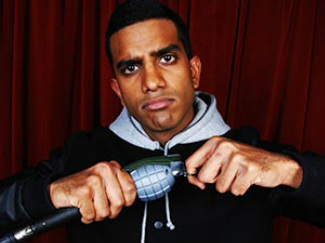 Aamer Rahman contemplates reverse racism Aamer Rahman contemplates reverse racism Tags: discourse/language, immigration/citizenship, inequality, prejudice/discrimination, race/ethnicity, war/military, comedy, beauty standards, colonialism, eduardo bonilla-silva, imperialism, institutional discrimination, new racism, slave trade, slavery, white privilege, 00 to 05 mins Year: 2013 Length: 2:49 Access: YouTube Summary: In this short clip, comedian Aamer Rahman explains that a lot of white people don't like his comedy. Rahman is an Australian stand-up comedian, best known as one half of comedy duo Fear of a Brown Planet, and much of his material is a not-so-thinly-veiled critique of white supremacy. Here, Rahman notes that he is often accused by whites of engaging in "reverse racism," a charge which leads him to openly ruminate about what it would take for a person of color to do something racist against a white person. He explains that his sardonic jabs at white society would be racist if he traveled back in time, convinced leaders in Africa, Asia, the Middle East, Central and South America to invade and colonize Western Europe, and begin exporting their natural resources. These new colonizers would then set up a trans-Asian slave trade where white laborers become one of the resources exported to giant rice plantations in China. The experience of being colonized would ruin Europe over the course of several centuries so that whites would want to leave Western Europe and settle in the homelands of the black and brown colonizers. In their new countries, whites would be forced to navigate social institutions that privilege people of color. Rahman concludes that if after hundreds of years of such colonization and institutional racism, he got on stage to crack jokes at white people's expense, then he would be guilty of "reverse racism". All laughing aside, the joke is actually an incisive, sociologically-informed analysis of racism. Rahman correctly describes racism as something more than just an instance of one person discriminating or being cruel to another person (TSC remarks on how comedians are uniquely positioned to level social critiques here). "Instances" of racism are so named because they are the products of a system of power--a system that derives its strength from a colonial history and a system that is encoded deeply within the workings of modern social institutions. To accurately label a practice as racist, one must take into account the historical and social context within which the practice occurred. Thus there can be no such thing as "reverse racism"; there is only racism, and in a context where people of color lack institutional power, they simply cannot be racist. The sociologist Eduardo Bonilla-Silva has recently noted that the growth in charges of reverse racism by whites is in fact evidence of the emergence of a "new racism", which seeks to operate in a more covert manner and attempts to confound understandings of racism by decontextualizing the way race works in and through contemporary institutions. Submitted By: Lester Andrist |
Tags
All
.
Got any videos?
Are you finding useful videos for your classes? Do you have good videos you use in your own classes? Please consider submitting your videos here and helping us build our database!
 |
 RSS Feed